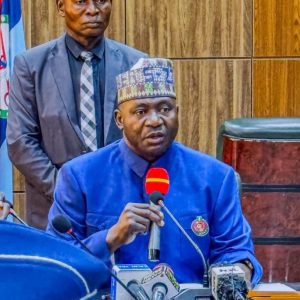




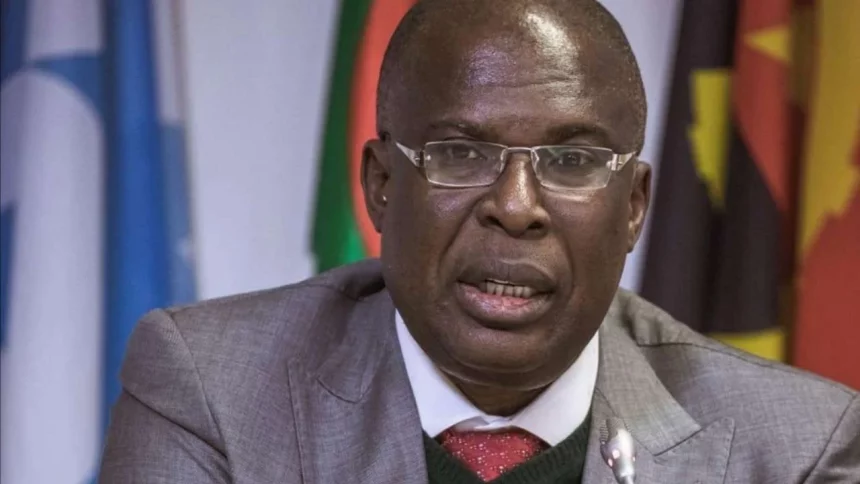
Chief Julius Bokoru, the Special Assistant on Media and Public Affairs to former Minister of State for Petroleum Resources, Chief Timipre Sylva, has questioned the pattern of reports on allegations linking his principal to an alleged coup plot.
Bokoru, in a statement issued on Friday, said some media reports of the matter, had gone beyond ordinary investigative reporting and appeared to be reinforcing a particular narrative against Sylva.
Bokoru stated that he had yet to establish contact with his principal since the controversy began, but stressed that his statement was not intended as an attack on investigative journalism.

He stated, “Nigerian journalism has, at its best, played a courageous and indispensable role in holding governments, institutions and powerful individuals to account.”
Bokoru, however, appealed to journalists and media organisations to also scrutinise the sources and methods behind information supplied to them before going to press.
“The allegations have been repeatedly serialised, repackaged and amplified in a manner that increasingly gives the impression of a deliberate campaign to cement a particular narrative in the public mind,” he stated.
Bokoru queried the source and timing of materials reportedly forming the basis of some media reports.
He continued, “Where are these materials coming from? Who is supplying them? Why are sensitive investigative documents appearing in carefully sequenced instalments?
“And why does virtually every new report seem calculated to reinforce the same conclusion about Sylva, even though the allegations have yet to be established in court?”
Bokoru said he was not accusing any media organisation of being sponsored by any individual or organisation because he had no evidence to support such a claim.
“I will say plainly that the pattern of this coverage increasingly raises the uncomfortable question of whether some organisations are pursuing their own stories or, knowingly or otherwise, acting from someone else’s script,” he said.
Bokoru maintained that allegations contained in investigative materials should not be presented as established facts, insisting that guilt could only be determined through due legal process.
“There is also a fundamental distinction that should never be blurred: an allegation is not evidence; an investigator’s theory is not a conviction; and a statement contained in an investigative file is not a judicial finding of guilt,” he said.
Bokoru urged organisations interested in reporting the matter to allow any evidence against Sylva to be properly tested, saying that if there was a prosecutable case, the appropriate authorities should bring it before the courts.
“If there are allegations, report them as allegations,” Bokoru insisted.
Sylva’s aide expressed concern that the repeated publication of allegations could amount to prosecuting the matter in the court of public opinion, where, he noted, there was no cross-examination or formal testing of evidence.

“The more troubling possibility is that confidential investigative materials may be selectively finding their way into the media in order to shape public opinion,” he said.
According to Bokoru, if such a practice was occurring, the newspaper should examine whether it was independently investigating the matter or inadvertently becoming part of an information strategy by other interests.
He said Nigerian journalism had a responsibility to remain independent irrespective of the identity or influence of the sources providing information.
“Our journalists have fought too hard for the freedom to investigate power to become unwitting instruments of power,” he said.

Bokoru acknowledged the media’s right to investigate and report on Sylva, but said Nigerians also had the right to scrutinise their methods, sources, timing and editorial decisions.
He added, “If the evidence is solid, publish it. If it is an allegation, call it an allegation. If it is a leaked narrative, tell the public that it is a leaked narrative. But do not repeatedly dress accusation in the language of established fact.”
He warned that repeated publication of an allegation did not automatically transform it into proof, saying, “There is a danger in allowing repetition to become a proof.”
Bokoru called on media organisations to maintain their independence and pursue the truth without becoming captive to any political, governmental or security narrative.
“Nigeria deserves a fearless press. But a fearless press must also be an independent press,” he said.
Stay ahead with the latest updates!
Join The Podium Media on WhatsApp for real-time news alerts, breaking stories, and exclusive content delivered straight to your phone. Don’t miss a headline — subscribe now!
Chat with Us on WhatsApp