

By Mayowa Michael Adeleye
Dangote Petroleum Refinery and Petrochemicals FZE PLC and Dangote Fertiliser FZE PLC are separate businesses within the Dangote Group, reflecting the Group’s investments in energy, industrial manufacturing and agriculture.
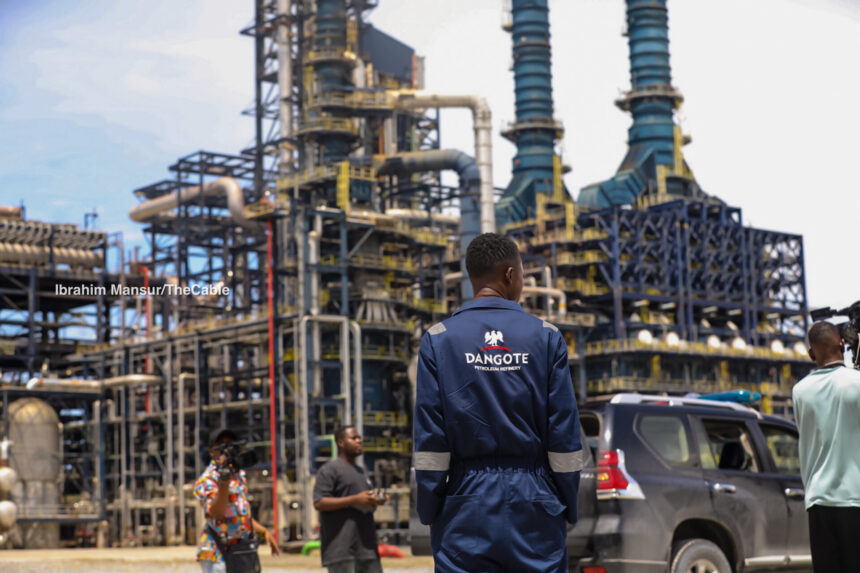
On September 14, 2026, Dangote Petroleum Refinery and Petrochemicals opened its initial public offering (IPO) ahead of its anticipated listing on the Nigerian Exchange. The refinery is located in Ibeju-Lekki, Lagos, with a current refining capacity of 700,000 barrels of crude oil per day and an ambitious plan to increase capacity to 1.4 million barrels per day by Q1 2029.
Once completed, the expansion would represent a major industrial milestone for Nigeria. For comparison, 1.4 million barrels per day is equivalent to about 10% of the United States’ total operable crude refining capacity recorded at the beginning of 2026.
Dangote Refinery & Petrochemical has indicated an ambition to pursue a U.S. NYSE stock-market listing in 2029 once the 1.4m bpd capacity expansion is completed. Although the New York Stock Exchange’s standard initial listing requirements include a minimum share price of US$4, that requirement does not establish a guaranteed future price for each Nigerian-listed share. The eventual listing structure, including any share consolidation or depositary receipt arrangement, would determine the relationship between the U.S.-listed security and the underlying Nigerian shares.
With Dangote Group’s subsidiary, Dangote Engineering Procurement and Construction Ltd, the engineering and project delivery team in the in-house controlled company will drive the massive construction and expansion strategy. The proposed approach involves engaging international engineering expertise and construction experience that developed and delivered the existing Lagos refinery.
This capability is also envisaged for the proposed Dangote East Africa refinery and petrochemical project in Kenya, described as a planned 700,000-barrel-per-day facility.
Beyond increasing fuel and other refined petroleum products production, the stated expansion ambitions extend to petrochemicals. Reported proposed figures include annual polypropylene capacity of approximately 2.4 million tonnes, alongside a proposed linear alkylbenzene—LAB—production target of 400,000 tonnes per year. LAB is an important feedstock used in manufacturing detergent ingredients. With these production capacities (once achieved), Dangote Refinery will become the world’s largest producer of PolyPropylene and LAB.
The proposed LAB expansion also deserves attention. Egypt and Algeria currently provide regional benchmarks for LAB production in Africa. The two African facilities produce 50,000 and 100,000 tonnes annually, while the facility is described as the current global leader at 200,000 tonnes annually. Dangote’s proposed annual capacity of 400,000 tonnes of LAB by 2030 would be twice the cited global benchmark, representing a substantial expansion in the supply of raw materials for detergent manufacturing.
If the proposed investments are completed and operate at the stated capacities, they will substantially increase Africa’s supply of refined petroleum products and industrial raw materials, support local manufacturing, reduce dependence on imports and strengthen export dollar earnings.
Dangote’s strategy therefore extends beyond its confirmed refining operations: its broader stated ambition is to develop industrial capacity that supplies fuel, agricultural inputs, and essential materials to businesses across Africa and international markets.
Dangote Group’s ambitions extend beyond petroleum refining to fertiliser production, regional fuel distribution and aviation fuel supply. Together, these investments aim to strengthen Africa’s industrial capacity, agricultural productivity and energy security.
Dangote Fertiliser’s facility in Ibeju-Lekki, Lagos, has an established annual urea production capacity of approximately 3 million tonnes. The broader expansion ambition is to increase capacity to 12 million tonnes annually by 2029 once the Dangote Refinery & Petrochemical’s capacity hits 1.4mbpd.
The fertiliser production strategy also envisages massive investments in phosphate and potash resources, alongside a proposed annual production target of approximately 2.2 million tonnes of diammonium phosphate, commonly known as DAP.
These products serve complementary agricultural purposes. NPK refers to nitrogen, phosphorus and potassium—the three primary nutrients represented in NPK fertilisers. Urea supplies nitrogen; DAP supplies nitrogen and phosphorus; and potash supplies potassium. Expanding access to these inputs could help farmers across Africa access made-in-Nigeria fertilisers suited to different crops, soils, and planting seasons.
The ambition is to position Dangote among the world’s leading fertiliser producers. The ambitious expansion would have Nigeria surpass Qatar as the world’s largest fertiliser producer.

Financing and access to capital will be central to delivery. Aliko Dangote has confirmed that the US$6 billion Afreximbank line of credit facility is dedicated to the fertiliser business. Similarly, he confirmed the proposal for Dangote Fertiliser FZE PLC 2028 Nigerian Exchange IPO listings.
Alongside fertiliser production, Dangote’s proposed African fuel-distribution network would combine pipelines with storage terminals to improve access to refined petroleum products.
The Southern African proposal outlined involves approximately US$3.5 billion of investment in a pipeline network extending about 2,650 kilometres, with connections serving Namibia, Botswana, Zimbabwe and South Africa. Associated tank farms would support storage and distribution.
The intended benefit is more dependable fuel delivery, particularly to inland markets exposed to lengthy transport routes and high distribution costs.
Additional proposals involve a Djibouti–Ethiopia pipeline project connection and a separate pipeline connection between Kenya and Ethiopia.
All together with other routes, the broader network described would extend approximately 4,000 kilometres across Africa. September 24 2026 is the groundbreaking day for the East Africa pipeline project.
The East African strategy also includes a proposed Dangote refinery and petrochemical complex in Kenya, with an envisaged processing capacity of 700,000 barrels per day and an estimated investment of US$17 billion.
Dangote EPC Limited is identified in the plans outlined here as the intended engineering, procurement and construction contractor, with a targeted delivery period of approximately three years.
Aviation fuel represents another opportunity. The Lagos refinery has become an increasingly important supplier to Europe. Reuters reported that it exported approximately 80,000 barrels of jet fuel per day during the second quarter of 2026 and described it as Europe’s largest external jet-fuel supplier. This supports its growing significance.
As airlines expand their fleets – with over 1500 new aircraft on order for 2030 delivery to major airline companies across the world – reliable access to aviation fuel meeting the required specifications will remain essential. Dangote’s stated ambition is to expand its role in supplying aviation markets across Africa, Europe and Asia by 2030.

Taken together, the fertiliser, refinery, pipeline and storage proposals reflect a broader strategy: to produce more of Africa’s essential industrial inputs within the continent and build the infrastructure needed to deliver them reliably to regional markets.
Mayowa is the CEO of Mayjorad Global Investment LTD (Nigeria & Canada)
corporate@mayjorad.com
Stay ahead with the latest updates!
Join The Podium Media on WhatsApp for real-time news alerts, breaking stories, and exclusive content delivered straight to your phone. Don’t miss a headline — subscribe now!
Chat with Us on WhatsApp