




By Collins Nweke
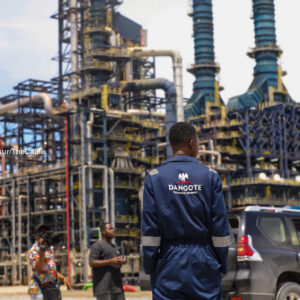
Dangote Refinery is more than a Nigerian industrial success. It is a continental test of whether Africa can turn scale, capital, and productive ambition into regional energy security, deeper value chains, and broadly shared prosperity.
Africa has spent decades exporting what it extracts and importing what it consumes. Crude oil leaves the continent; refined fuel returns at a premium. Cocoa departs as beans and comes back as chocolate. Critical minerals cross our borders in raw form, while the technologies built from them are purchased at far greater cost. This pattern is not simply a trade imbalance. It is a structural surrender of value, skills, fiscal capacity and strategic leverage.

That is why the rise of Dangote Petroleum Refinery matters beyond Nigeria. Its planned public offering, its announced $14.3 billion programme to double capacity to 1.4 million barrels per day by 2029, and its growing intake of Nigerian crude signal something larger than one company’s expansion. They test whether Africa can build industrial assets at consequential scale and then organise the institutions, markets and value chains that allow such assets to serve continental transformation.
The refinery’s reported financial turnaround strengthens that case. An after-tax profit of $1.82 billion for the first half of 2026, after a loss in the previous full year, and reported crude allocations of about 520,000 barrels per day for October suggest operating momentum rather than industrial aspiration alone. Africa should acknowledge the achievement. But celebration is the beginning of the policy conversation, not its conclusion.
Africa’s problem is not endowment but conversion.
The continent is not poor in resources. It is poor in the systems that consistently convert resources into productive power. Oil reserves do not automatically create energy security. Minerals do not automatically create technology industries. A young population does not automatically become a skilled workforce. A large market does not automatically function as an integrated market.
Dangote Refinery disrupts one part of this pattern. Nigerian crude is increasingly being converted on African soil. Refined products can serve domestic and regional markets. Petrochemicals can feed manufacturing. African capital markets may gain a strategic industrial listing of unprecedented scale. The significance lies in the conversion: an African resource is being joined to African processing capacity, African enterprise and potentially African ownership.
This is precisely the shift Africa’s development agenda requires. The continent must move from possessing assets to performing power: from extraction to processing, from fragmented consumption to organised demand, and from policy declarations to disciplined implementation. The refinery is therefore not merely a petroleum story. It demonstrates what becomes possible when scale, capital, and execution meet.
A continental asset must serve a continental market.
The natural economic horizon of a refinery of this scale is not one national market. It is West Africa and, increasingly, the wider African market. Many African countries remain dependent on imported refined products, often purchased through distant trading and refining centres at considerable foreign-exchange cost. A competitive African supplier can shorten supply chains, improve regional availability and retain more value within the continent.
This is where the African Continental Free Trade Area must become operational, not ceremonial. Tariff preferences alone will not create an African energy market. Efficient ports, harmonised product standards, interoperable customs systems, trade finance, reliable coastal shipping, rail and road corridors, and rules that prevent arbitrary border disruptions are equally essential. Without them, Africa may possess world-class productive capacity while remaining commercially fragmented.
Regional integration must also be reciprocal. Neighbouring states should not be treated merely as outlets for Nigerian production. The refinery’s expansion should generate opportunities for African shipping firms, storage operators, insurers, engineering companies, laboratories, distributors and financial institutions. Continental value is created when a large asset strengthens a network of capable enterprises across borders.
Success can create a new dependence.
However, there is a danger in confusing African ownership with automatic public benefit. A continent can reduce its dependence on overseas refiners while becoming excessively dependent on a single African producer. If one facility commands an overwhelming share of fuel supply, absorbs a major portion of national crude and becomes critical to regional trade, its operational and financial health acquires public consequence.
This is not an argument for hostility towards a national champion, nor for state ownership. Private capital succeeded where public institutions had struggled for decades, and that achievement should not be punished. The lesson is that scale must be matched by institutional capacity. Africa needs champions, but it also needs rules strong enough to govern champions and markets open enough to produce challengers.

Nigeria therefore requires transparent feedstock rules, independent regulation, strategic reserves, credible emergency arrangements and a firm competition framework without becoming arbitrary. Other refiners must have a fair route to entry and expansion. At regional level, ECOWAS and AfCFTA institutions should anticipate supply concentration, cross-border standards and emergency coordination before a disruption forces improvisation. A national champion should anchor an African ecosystem; it should not become its only pillar.
African capital needs African-market discipline
The proposed public offering adds another continental dimension. Africa frequently laments the scarcity of patient capital while vast pools of African savings remain disconnected from productive assets. Pension funds, institutional investors and individual savers need credible ways to participate in the continent’s industrial growth. A major listing can deepen Nigeria’s capital market and show how African enterprise may finance expansion through African ownership.
But patriotic importance is not investor protection. Prospective shareholders must be able to assess valuation assumptions, the durability of refining margins, crude-supply terms, borrowing costs, related-party exposures, expansion financing and dividend policy. Where controlling ownership remains highly concentrated, minority investors depend on board independence, transparent disclosure, rigorous listing rules and fair treatment in connected transactions.

This matters across Africa. If citizens are encouraged to invest in national champions, they must be treated as owners with enforceable rights, not as donors to an industrial cause. The success of the offer is measured not only by its size or subscription numbers, but by the quality of governance that follows the listing. Africa will mobilise more domestic capital when its markets can demonstrate that scale and political access do not weaken accountability.
Do not build Africa’s industrial future on a temporary windfall
The current global market also demands restraint. Conflict, shipping disruption and tight fuel supplies can lift crude prices and refining margins. A well-positioned African enterprise can benefit from these conditions. Yet policymakers and investors should not mistake a geopolitical windfall for permanent competitiveness.
Margins will fluctuate. New capacity will enter global markets. Environmental standards will tighten. Electric mobility, energy efficiency and alternative fuels will gradually reshape petroleum demand. The durable case for the refinery must rest on efficient operations, reliable feedstock, competitive logistics, product quality, petrochemical integration and disciplined capital allocation.
Africa should avoid the false choice between industrialisation and energy transition. The continent needs dependable fuels today and a credible pathway to cleaner energy tomorrow. New refining investment should therefore incorporate emissions management, energy efficiency, cleaner-fuel standards and adaptability. The strategic objective is not to reproduce yesterday’s carbon-intensive model at a larger scale, but to use today’s industrial capacity to finance and prepare for tomorrow’s economy.
Build the African ecosystem around the asset.

The central policy task is to ensure that the refinery’s success produces capabilities beyond its perimeter. Five priorities stand out.
First, supplier development must become continental and systematic. African engineering, fabrication, maintenance, inspection, testing, maritime and logistics companies need transparent routes into procurement chains. Local-content policy should reward demonstrated capability, technology transfer and performance rather than politically connected intermediation.
Second, petrochemical output must connect to downstream manufacturing. Packaging, industrial chemicals, fertiliser inputs, textiles, pharmaceuticals and consumer goods can support thousands of smaller enterprises. That potential will remain theoretical without dependable electricity, industrial infrastructure, working capital and common standards.
Third, Africa must build the logistics of its own integration. Coastal shipping, storage terminals, pipelines where viable, modern ports and efficient border processes are the physical foundations of continental trade. AfCFTA cannot deliver value through legal texts alone.
Fourth, African development finance and capital markets should help replicate productive capacity rather than merely finance consumption. The refinery should prove that projects of scale can be built, governed, and financed on the continent. It should lower the psychological and institutional barriers facing the next generation of African industrial projects.
Fifth, competition, environmental compliance and public-market governance must be enforced consistently. National importance cannot become immunity from scrutiny. Strong governance protects the enterprise as much as it protects the public, because predictable rules reduce political risk and sustain investor confidence.
Partnership with the world must reinforce African production
Africa’s external partners must also update their proposition. The historic model in which African raw materials were processed abroad and sold back as finished products is becoming less defensible and, in several sectors, less viable. A more productive relationship reinforces African conversion capacity.
European, Asian, American and Middle Eastern partners can contribute process technology, shipping, storage, safety systems, industrial efficiency, emissions verification, water treatment and specialised finance. But partnership should develop African suppliers, train African engineers, strengthen African standards and help African enterprises occupy higher-value stages of production.
The objective is not isolation from global markets. It is a more balanced integration into them. Africa should welcome capital and technology while negotiating for capability, resilience and value retention. The question must no longer be how much investment enters the continent, but what productive power remains after the investment has matured.
From a Nigerian achievement to an African proposition
Dangote Refinery has challenged the assumption that projects of exceptional scale cannot be conceived and executed in Africa. That is a significant psychological and industrial breakthrough. Yet the more important test now lies beyond the refinery’s gates.
Can Nigeria translate corporate scale into competitive markets and strong institutions? Can West Africa build the infrastructure and rules required for reliable regional supply? Can AfCFTA turn productive capacity in one country into value chains across many? Can African citizens participate in ownership without surrendering investor protection? Can the continent use today’s petroleum revenues and capabilities to prepare for a changing energy future?
The answers will determine whether the Dangote moment remains the story of one extraordinary African company or becomes a foundation for a more productive continent. Africa should celebrate the champion. Its greater responsibility is to build the ecosystem.
“The true measure of an African national champion is not simply the scale it achieves, but the productive capabilities, competitive markets and shared value it helps create beyond itself.” — Collins Nweke.
Stay ahead with the latest updates!
Join The Podium Media on WhatsApp for real-time news alerts, breaking stories, and exclusive content delivered straight to your phone. Don’t miss a headline — subscribe now!
Chat with Us on WhatsApp