



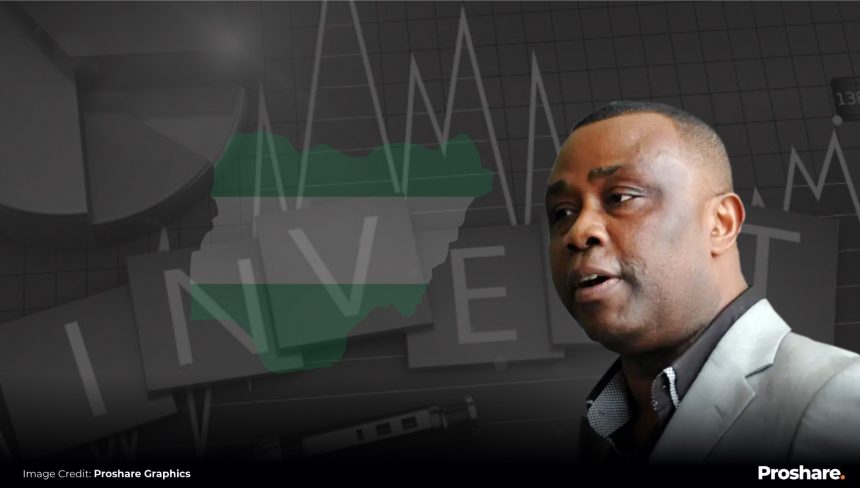
Collins Nweke, an economic diplomacy practitioner with three decades of engagement across European and African markets and author of “Economic Diplomacy of the Diaspora”, writes ahead of the Belgium-Luxembourg-Nigeria Investors Roundtable, hosted by Access Bank in Lagos on 24 June 2026, where the case for sustainable, bankable cross-border investment along the corridor will be examined. His argument begins from an unfashionable premise. Capital is the last thing to move. Trust, confidence, governance and institutions move first, and capital merely follows.
Nweke organises the OpEd around the questions that would be put to the panel, including Bolaji Bakare of Sao Capital, John Uwajuomogu of the Presidency, and Proshare’s Chairman, Olufemi Awoyemi, who delivers the keynote intervention. The questions are deliberately practical. Whether investors are pricing actual risk or perceived risk, what predictability Nigeria can credibly offer over the next decade, and whether the country mobilises domestic capital before courting foreign commitment.
Beneath them sits a single proposition; that investors fund narratives they believe rather than spreadsheets, and that a nation unable to articulate and sustain its economic story struggles to attract long-term capital.

Proshare publishes the OpEd because its central distinction, between a shortage of capital and a deficit of credibility, speaks directly to the work of moving institutional money from interest to commitment. The world is not short of capital. It is short of environments where capital feels safe enough to stay. We commend the piece in the spirit of calibration rather than promotion.
On 24 June 2026, policymakers, investors, business leaders, financiers, diplomats, and development practitioners will converge at the Belgium–Luxembourg–Nigeria Investors Roundtable hosted by Access Bank and taking place at its Headquarters in Lagos. The theme is straightforward enough: unlocking sustainable, bankable cross-border investment along the Belgium–Luxembourg–Nigeria corridor.
Yet beneath the language of investment promotion lies a more profound question: Why does capital flow so easily to some places and hesitate before others?
After decades of working at the intersection of public policy, economic diplomacy, local governance, international trade, and diaspora engagement, I have come to believe that investment is never fundamentally about money. Money is the last thing that moves. Trust moves first. Confidence moves before money. So too are governance, ideas, and institutions. They all move, and then capital merely follows.
That is why I am both curious and excited about a conversation with the distinguished panellists assembled for this roundtable: Bolaji Bakare of Sao Capital, John Uwajuomogu, Special Adviser to the President, and Olufemi Awoyemi, Chair of Proshare Nigeria Limited. Should the opening question be how much investment Nigeria needs, or why investment still hesitates? This is because before we discuss billions of dollars, we must confront billions of doubts.
Private Capital
The first conversation should be with Bolaji Bakare. Not because investors possess all the answers, but because they often possess the clearest view of where confidence begins to break down. Left with Bolaji, I’d first want to know: “When international investors look at Nigeria today, are they responding to actual risk or perceived risk?”
The distinction matters enormously. Many countries have risks. Few countries suffer from a narrative deficit. Nigeria is one of them.
I have spent three decades engaging European investors, chambers of commerce, development institutions, and corporate executives. I have watched boardrooms discuss Nigeria with a mixture of excitement and apprehension. The same market that attracts admiration for its scale often provokes anxiety about policy continuity. The same entrepreneurial energy that inspires investors can be overshadowed by concerns regarding regulatory uncertainty.
So, I would be curious to know: “At what point does perception become more damaging than reality?” And perhaps even more importantly: “What specific instruments can help de-risk investment sufficiently to move institutional capital from interest to commitment?” This is because investment attraction is no longer merely a government function. It is increasingly an exercise in risk engineering.
Government
If I have John Uwajuomogu sitting next to me, I’d be curious why, as a government, they frequently ask investors what more they require. Investors usually respond with a version of the same answer: Predictability, not perfection. Predictability. In which case, he would know what assurances Nigeria can realistically offer investors regarding policy consistency over the next decade. The question is neither partisan nor ideological. It is practical. Investors can manage challenges. They struggle to manage uncertainty.
The reform programme of the current administration has undeniably involved difficult choices: subsidy removal, foreign exchange reforms, and fiscal restructuring. These decisions have imposed real costs on citizens while promising longer-term gains. The challenge now is no longer announcing reforms. It is institutionalising them. And so, I’d look John straight in the eyes and ask: “What evidence should investors examine today that demonstrates these reforms are creating a more durable investment environment?” And because this roundtable concerns Public-Private Partnerships, I would push further: “What lessons has government learned from past PPP successes and failures?”

The future of African infrastructure cannot be financed solely through public expenditure. Nor can it be outsourced entirely to private capital. The future belongs to intelligent partnerships. But partnerships require trust. And trust requires accountability on all sides.
Economic Governance
Olufemi Awoyemi would have given a keynote address earlier at this investors’ roundtable. Few observers have spent as much time analysing Nigeria’s economic trajectory through the lenses of governance, capital markets, and institutional performance as Femi. If I were to grill him, I would therefore push him a deceptively simple question: “What is Nigeria’s investment story today?” Not its aspiration. Not its potential, but its story. This is because, as he knows too well, investors do not invest in spreadsheets. They invest in narratives they believe. A nation unable to articulate its economic story struggles to attract long-term capital. And a nation unable to sustain that story struggles even more.
And so, out of curiosity, the audience should be impatient to know: “What role does economic governance play relative to infrastructure, security, and market size?” And perhaps the most uncomfortable question of all: “Is Nigeria doing enough to mobilise domestic capital before seeking additional foreign capital?” This matters because sustainable investment ecosystems are rarely built from outside. They are usually built from within. Foreign investors often gain confidence when they see local investors demonstrating confidence first. It’s not different from a diaspora trying to convince a foreign businessperson to invest in Nigeria. One of the first questions they ask is if you are already investing in Nigeria.

The Belgium–Luxembourg–Nigeria Opportunity
The roundtable itself represents something larger than a business event. It reflects an emerging strategic corridor. Belgium offers world-class logistics, industrial expertise, and global connectivity through institutions such as the Port of Antwerp-Bruges. Luxembourg brings deep strengths in finance, investment structuring, and international capital mobilisation. Nigeria contributes scale, entrepreneurship, demographics, and market opportunity.
The question is whether these strengths can be combined into something greater than the sum of their parts. That is why the audience would be keen to know from all three panelists: “What sectors offer the most realistic opportunities for transformative collaboration between Belgium, Luxembourg, Nigeria, and the wider West African region?”
Not theoretical opportunities. We are talking of bankable opportunities. The kind capable of moving from conference halls to factory floors. From memoranda to investments. From announcements to outcomes.
The Diaspora Question Nobody Should Ignore
There is, however, one final question I would insist on introducing into the conversation. It is a question that has occupied much of my recent work, including my book Economic Diplomacy of the Diaspora.
I would ask:
“What role can diaspora professionals, entrepreneurs, and investors play in reducing information asymmetry and de-risking cross-border investment?”
Because diaspora engagement remains one of the most underutilised instruments of economic diplomacy. The diaspora understands both sides of the investment equation. The source market. And the destination market. It understands culture, institutions, expectations, language, risk, and opportunity. In many respects, diaspora communities are natural translators of trust. And trust remains the most valuable investment currency of all.
The Conversation We Must Have
If I have learned anything from years spent moving between Europe and Africa, between governance and business, between public institutions and private enterprise, it is this: The investment challenge facing Nigeria is not fundamentally a shortage of capital. The world is awash with capital. The challenge is creating environments where capital feels safe enough to stay. This requires honest conversations. Conversations between the government and investors. Between policymakers and markets. Between ambition and execution. Between promise and performance.
That is why the most important outcome of the Belgium–Luxembourg–Nigeria Investors Roundtable will not be the speeches delivered or the business cards exchanged. It will be a matter of whether we are willing to confront difficult questions with the seriousness they deserve. Because sustainable investment is ultimately not built on optimism alone. It is built on credibility. And credibility begins with the courage to ask the right questions.
As stakeholders gather in Lagos on 24 June 2026, that is the conversation I hope they will have. And if they have it honestly enough, perhaps the capital will follow.
About the AUTHOR
Collins NWEKE is an International Trade Consultant & Economic Diplomacy researcher. He was a former Green Councillor at Ostend City Council, Belgium, where he served three consecutive terms until December 2024. A first-generation migrant who transitioned from civil society activism into elected office, he writes frequently on democracy, governance, and Africa–Europe relations. He is the author of the book ‘Economic Diplomacy of the Diaspora’. He is also a Distinguished Fellow of the International Association of Research Scholars and Administrators, serving on its Governing Council. A columnist for The Brussels Times, Proshare, and Global Affairs Analyst with a host of media houses, Collins writes from Brussels, Belgium. X: @collinsnweke E: admin@collinsnweke.eu W: www.collinsnweke.eu
Stay ahead with the latest updates!
Join The Podium Media on WhatsApp for real-time news alerts, breaking stories, and exclusive content delivered straight to your phone. Don’t miss a headline — subscribe now!
Chat with Us on WhatsApp