



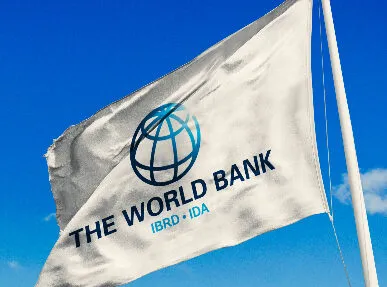
The World Bank has raised its projection for Nigeria’s economic growth rate for 2026 to 4.3 percent.
The Washington-based institution announced the projection in its October 2026 Africa Economic Update released on Tuesday.
World Bank also projected that Nigeria’s economy will grow by 4.4 percent annually in 2027 and 2028.

“Economic activity in Nigeria is projected to strengthen from 4.0 percent in 2025 to 4.3 percent in 2026, before edging up to 4.4 percent annually in 2027–28, supported by improving macroeconomic stability, strengthening investor confidence, and a gradual recovery in private investment,” the financial institution said.
The projection comes after Nigeria’s real gross domestic product (GDP) grew by 4.43 percent year-on-year in the second quarter of 2026, according to data from the National Bureau of Statistics (NBS).
World Bank said Nigeria was among African countries where growth forecasts were upgraded, reflecting the impact of reforms and improved economic management.
The bank also raised its growth forecast for sub-Saharan Africa to 4.3 percent in 2026, from 4.1 percent previously.
Andrew Dabalen, World Bank chief economist for Africa, said the region had remained resilient despite a difficult global environment, including higher energy prices linked to disruptions caused by the Iran conflict.
However, the financial institution warned that stronger economic growth has yet to translate sufficiently into poverty reduction, as growth in per-capita income continues to lag overall economic expansion across the region.
For Nigeria, the World Bank said growth remains insufficient to generate enough productive jobs and materially reduce poverty.
“However, the pace of poverty reduction is likely to remain constrained by elevated fuel prices associated with the conflict in the Middle East, which continue to weigh disproportionately on
low-income households,” the report added.
World Bank said sustained reforms, greater private investment, improved infrastructure, human capital development and stronger productivity would be needed to translate macroeconomic stability into better living standards.
The bank also urged African governments to embrace artificial intelligence (AI) and digital technologies to raise productivity and create jobs, saying the continent needs to take advantage of new technologies while addressing infrastructure and skills gaps.
Stay ahead with the latest updates!
Join The Podium Media on WhatsApp for real-time news alerts, breaking stories, and exclusive content delivered straight to your phone. Don’t miss a headline — subscribe now!
Chat with Us on WhatsApp