
Collins Nweke returns to a conversation he did not have at the Nigeria Belgium Luxembourg Business Forum in Brussels with John Uwajumogu, the President’s Special Adviser on Industry, Trade and Investment, and Adesuwa Ladoja, chief executive of Lagos Free Zone. His subject is the industrial capacity Nigeria already has, and what can be done to keep a viable factory producing when its foreign shareholder decides to leave.
Nweke separates the timing of corporate exits from their causes. Unilever announced its home care withdrawal in March 2023, and ExxonMobil agreed its sale to Seplat in 2022, both before President Bola Tinubu took office. He then traces how subsidy removal and the move to a market-based exchange rate reached manufacturers through costlier dollars, higher transport costs and weaker household demand, drawing on the Procter & Gamble and GSK Consumer Nigeria cases.
Guinness Nigeria anchors his argument. In the year to June 2024, the brewer earned N25.4 billion in operating profit but reported an after-tax loss of N54.8 billion as foreign-exchange losses mounted. Under Tolaram’s majority ownership, it reported N41.2 billion in after-tax profit for the 18 months to December 2025, and its breweries kept producing through the transfer.

Nweke proposes that the Nigerian Investment Promotion Commission convene state officials, regulators and lenders while an owner is still weighing its options, that any public support be disclosed, time-limited and tied to measurable commitments, and that the industry ministry publish output, employment and local procurement figures twelve months after a major sale or closure.
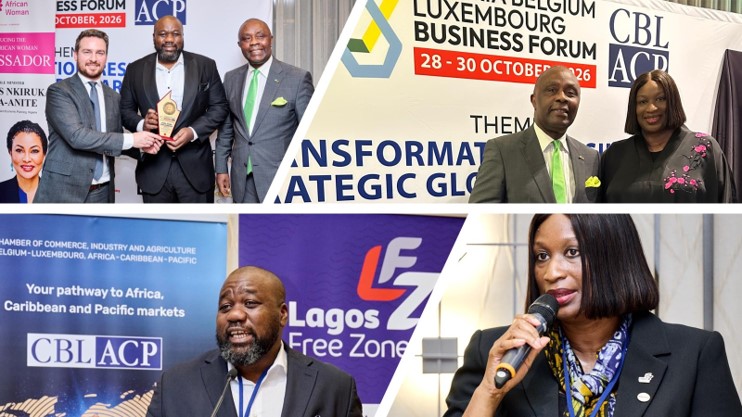
There was one conversation I never got around to having at the Nigeria Belgium Luxembourg Business Forum in Brussels. John Uwajumogu, the President’s Special Adviser on Industry, Trade and Investment, was one of our institutional guests. Adesuwa Ladoja, managing director and chief executive of Lagos Free Zone, a project promoted by Tolaram, gave one of the keynotes. She was making the case for new investment in Nigerian manufacturing. Her presence, alongside Uwajumogu’s, gave me an opening to ask about the industrial capacity we already have. What can Nigeria do to keep a viable factory producing when its foreign shareholder decides to leave?
I would have started with two products a shopper could still find on a Nigerian shelf. In 2024, Diageo sold its controlling stake in Guinness Nigeria to Tolaram. The breweries stayed open and Guinness continued to be brewed under licence. Procter & Gamble announced in December 2023 that it would serve Nigeria through imports and went on to wind down much of its local operation. The brands remained familiar. For a factory worker or a supplier whose orders depended on local production, the difference was substantial.
I would have asked Uwajumogu to start by looking at when companies made their decisions. Unilever announced its withdrawal from home care in March 2023, before his boss, President Bola Tinubu, took office. ExxonMobil agreed to sell Mobil Producing Nigeria Unlimited to Seplat in 2022 and completed the transaction in 2024. Counting departures by the date they made headlines can obscure both what prompted the decision and what happened to the assets afterwards. The cases that tell us most about this administration’s choices are those where we can trace how the reforms changed the economics of operating in Nigeria.
How the reforms reached the factory floor
The Tinubu administration inherited scarce foreign exchange and a costly petrol subsidy. There was a strong case for addressing both. Within weeks of taking office, the administration removed the subsidy and moved towards a market-based exchange rate. A manufacturer that had struggled to obtain dollars could now face a much higher naira bill for the dollars it needed. Transport costs rose at the same time, and households had less room to absorb higher prices. The company had to decide whether to keep a line open while its costs were rising and its customers were cutting back.
I would have asked Uwajumogu what the government would do differently about that overlap. A credible timetable for clearing verified foreign-exchange arrears would have helped firms plan supplier payments. Earlier relief for households most exposed to higher transport costs could have cushioned the fall in purchasing power. The government had room to make choices about timing and relief, and those choices mattered to firms deciding how much they could still afford to produce.
P&G’s finance chief spoke of the difficulty of generating dollar returns in Nigeria. The company’s annual report put Nigeria and Argentina within a wider restructuring of markets facing difficult economic and fiscal conditions. The Nigerian operating environment plainly weighed on the decision. The public disclosures leave open which measure, if any, would have persuaded the parent to keep manufacturing locally.
GSK Consumer Nigeria gives a further reason to ask what could have been done earlier. The listed company made an after-tax profit in each of the five years to 2022, though its pre-tax margins were modest. It then reported difficulty obtaining foreign exchange to pay suppliers. When its principal suppliers switched to third-party distribution, the company wound down trading. The episode brings two vulnerabilities into view. A business can be profitable on paper while struggling to pay for stock, and its future can depend on distribution decisions taken elsewhere.
What Tolaram took on
Ladoja’s appeal to European manufacturers made me think about what Tolaram had already taken on at Guinness Nigeria. I would have asked her what that case might teach prospective investors about keeping a plant running through a change of ownership. In the year to June 2024, Guinness Nigeria earned N25.4 billion in operating profit. A net foreign-exchange loss of about N93 billion helped push it to an after-tax loss of N54.8 billion, and current liabilities exceeded current assets by N119.1 billion. The brewery could make an operating profit while the company’s obligations, some of them denominated in foreign currency, put it under severe financial pressure. Any buyer had to assess the business on both counts.
Diageo presented the sale as part of a move to a licensing model. The accounts show the severity of the currency shock, while Diageo’s announcement explains the commercial structure it chose. Under Tolaram’s majority ownership, Guinness Nigeria reported N41.2 billion in after-tax profit for the 18 months to December 2025. The preceding accounts covered 12 months, and the published figures give us limited grounds for assigning the turnaround to any one factor. What matters for the conversation I wanted to have in Brussels is that the breweries kept producing through the transfer and the company subsequently returned to profit.
For another manufacturer facing a sale, I would want to know whether an incoming owner could finance wages, stock and supplier payments from day one. I would also ask which licences, quality approvals and technical agreements had to be in place before the handover. These details determine whether a buyer can take over a working business or spends months trying to restart one.

What Abuja should do before a plant closes
When the government launched its industrial policy in February 2026, it acknowledged high production costs, infrastructure gaps and policy inconsistency. I have yet to hear a clear public answer from the administration about who acts when a major employer puts a viable Nigerian plant under review. Those asking voters to entrust them with the economy owe us an answer as well. Who gets the call, how soon do they act, and what result should the public expect?
I would start with the Nigerian Investment Promotion Commission. It could convene state officials, regulators and lenders while the owner is still weighing its options. Their first task would be to assess whether the plant could compete at realistic power, input and financing costs and at the volumes it could reasonably sell. They could then identify specific obstacles within their power to address and set deadlines. The clearance of most blocked airline funds in 2024, followed by Emirates’ announcement that it would resume Lagos service, illustrates what government can do when it has identified a specific obstacle and has the means to act on it.
Where the plant can compete and its owner still wants to sell, the Commission can bring credible buyers and lenders into the discussion early and coordinate the necessary approvals. A buyer needs financing the business can service from its earnings, alongside working capital and access to the technical support that keeps production going. Any public support should be disclosed, time-limited and tied to measurable commitments. Where there is no credible path to viability, the priority should be helping workers find new jobs and suppliers find new customers.
I would ask the industry ministry to publish what happened to output, employment and local procurement twelve months after a major sale or closure, using the last full year of operation as a baseline. A reopened plant running a single shift may still buy far less from Nigerian suppliers than it once did. The figures would let the government see where its intervention helped and give those seeking office a concrete record against which to set out their own proposals.
If I had found the time in Brussels, that is where I would have brought the conversation back to Uwajumogu and Ladoja. A shareholder can decide where to invest its capital. What I want to know from Abuja is how early it can act, and what I want to understand from buyers like Tolaram is what makes a handover work. A year after the deal, I would look at how much the factory is producing, how many people still earn a living there and how many Nigerian suppliers are still getting orders.
About the AUTHOR
Collins NWEKE is an international trade consultant and economic diplomacy researcher. He is a former Green Councillor at Ostend City Council, Belgium, where he served three consecutive terms until December 2024. A first-generation migrant who transitioned from civil society activism into elected office, he writes frequently on democracy, governance and Africa–Europe relations. He is the author of the book ‘Economic Diplomacy of the Diaspora’. He is also a Distinguished Fellow of the International Association of Research Scholars and Administrators and serves on its Governing Council. A columnist for The Brussels Times, Proshare, and Global Affairs Analyst with a host of media houses, Collins writes from Brussels, Belgium. X: @collinsnweke E: admin@collinsnweke.eu W: www.collinsnweke.eu
Stay ahead with the latest updates!
Join The Podium Media on WhatsApp for real-time news alerts, breaking stories, and exclusive content delivered straight to your phone. Don’t miss a headline — subscribe now!
Chat with Us on WhatsApp