



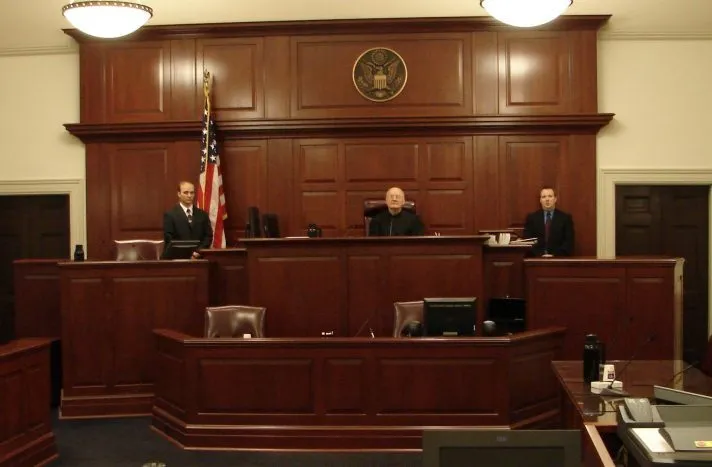
The U.S. Supreme Court on Monday declined to hear an appeal by Judge Pauline Newman, effectively leaving in place her ongoing suspension from active service on the U.S. Court of Appeals for the Federal Circuit over concerns about her fitness to continue hearing cases.
Newman, 98, has served on the Federal Circuit since 1984, where she built a reputation over four decades as a prolific dissenter, authoring more than 300 dissenting opinions and earning the informal nickname “the Great Dissenter.” The court hears appeals involving patents, trademarks, international trade, veterans’ benefits, and monetary claims against the federal government.
Her suspension began after the Federal Circuit’s Judicial Council—made up of active judges on the court—raised concerns about her health and ability to manage her workload. Chief Judge Kimberly Moore told Newman she could retire or take senior status, a form of semi-retirement with a reduced caseload, but Newman declined both options.

Moore later issued an order citing a judicial complaint that found probable cause to believe Newman’s health had affected her capacity to perform her duties and that delays in her work were harming the efficient administration of justice. The order referenced health issues in 2021, a fainting episode in 2022, and concerns raised by judges and staff about her ability to keep up with cases.
A special committee of two Federal Circuit judges investigated and required Newman to undergo neurological and neuropsychological evaluations, submit medical records, and participate in an interview. Although Newman provided reports from two doctors, the committee recommended she be barred from hearing cases for one year, subject to renewal, a recommendation later approved by the Judicial Council in 2023. The suspension was renewed in 2024 and again in 2025.
Newman challenged the decision, arguing that it amounted to an unconstitutional removal from office despite life tenure protections and violated her due process rights. She also asked the Judicial Conference of the United States to review the suspension, but that request was rejected in 2024.
The U.S. Court of Appeals for the District of Columbia Circuit ruled against her, finding that federal law governing judicial discipline limits certain constitutional challenges to actions taken by judicial councils. The Justice Department, representing the Federal Circuit judges, urged the Supreme Court not to take up the case, and the court ultimately declined to intervene.
Newman’s legal team, backed by the New Civil Liberties Alliance, argued that her suspension reflected an improper effort by colleagues to sideline a judge known for frequent dissent, and that it undermined constitutional protections for judicial independence. They warned that the case raised broader concerns about whether judges could be removed through internal disciplinary mechanisms without full judicial review.
Following the Supreme Court’s decision not to hear the case, the New Civil Liberties Alliance said it was disappointed and vowed to continue seeking her reinstatement, calling the outcome a setback for judicial independence and due process protections.
Stay ahead with the latest updates!
Join The Podium Media on WhatsApp for real-time news alerts, breaking stories, and exclusive content delivered straight to your phone. Don’t miss a headline — subscribe now!
Chat with Us on WhatsApp