



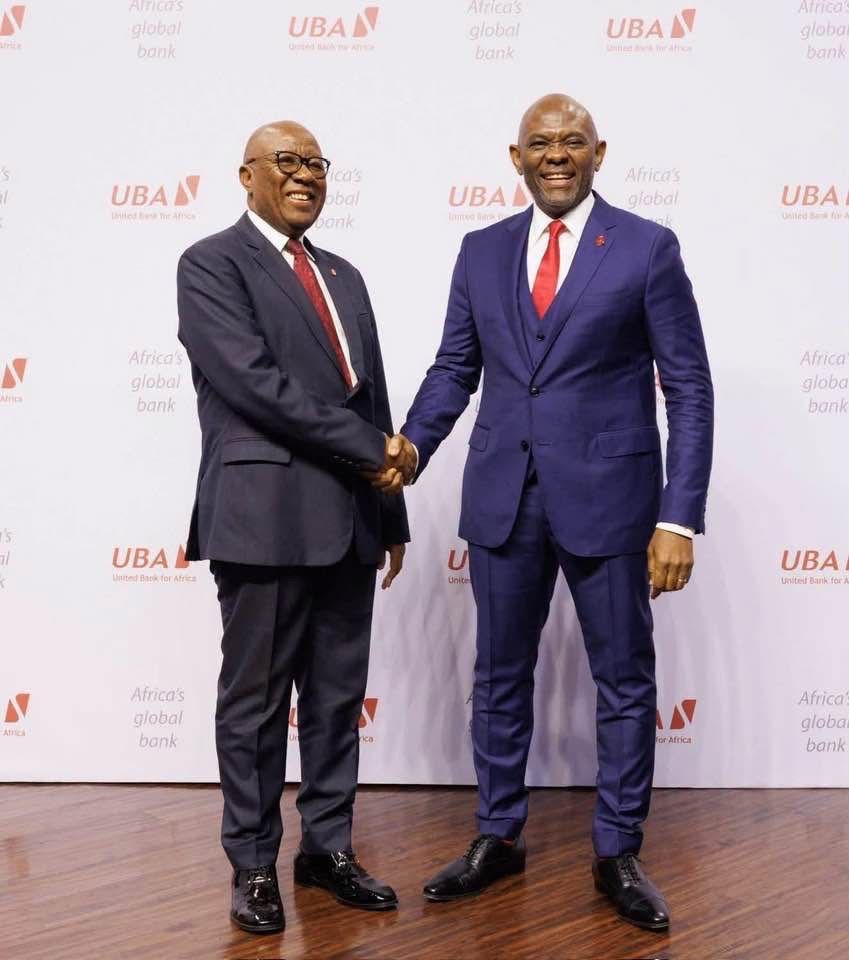
When Tony Elumelu steps down as Chairman of United Bank for Africa (UBA) Plc on August 21, 2026, it will mark the end of one of the longest and most influential leadership journeys in African banking. His departure is not the result of a strategic withdrawal or shareholder pressure but compliance with the Central Bank of Nigeria’s (CBN) corporate governance code, which prescribes a maximum tenure of 12 years for the chairman of a bank.
The regulatory requirement brings to a close a remarkable relationship between Elumelu and UBA spanning several decades. Before becoming Chairman in 2014, he had served as the bank’s Group Managing Director and Chief Executive Officer, leading one of the most significant transformations in Nigeria’s banking industry. His return as Chairman enabled him to provide strategic oversight while preserving the continuity of the vision he had championed as chief executive.
His exit, therefore, is more than a routine boardroom succession. It represents the conclusion of a leadership era that helped redefine not only UBA but also the possibilities of African banking.

In his farewell message, titled Celebrating an African Institution: My Farewell from UBA, Elumelu chose not to dwell on personal accomplishments. Instead, he reflected on a philosophy that has consistently shaped his career: Africa’s greatest challenge is not a shortage of talented people but a shortage of enduring institutions. That statement may well become the defining summary of his stewardship.
Corporate Africa has often struggled with succession. Many businesses remain heavily dependent on charismatic founders or dominant executives, creating uncertainty whenever leadership changes. Elumelu’s farewell appears deliberately crafted to demonstrate that UBA has moved beyond that model.
“Leadership is not about holding onto a position, but knowing when an institution is ready for the next chapter,” he wrote, underscoring a governance philosophy that places institutional continuity above individual prominence. His endorsement of Emmanuel N. Nnorom as his successor is equally significant. Rather than presenting the transition as a break with the past, Elumelu projects it as the natural continuation of a carefully nurtured institution.
The message is aimed as much at investors, regulators and shareholders as it is at employees: UBA, he suggests, is designed to thrive regardless of who occupies the chairman’s seat.
Elumelu’s association with UBA predates his chairmanship by many years. As Group Managing Director and Chief Executive Officer, he was instrumental in reshaping the bank following the consolidation era of the Nigerian banking industry.
Under his leadership, UBA pursued an ambitious expansion strategy that transformed it from a predominantly Nigerian financial institution into one of Africa’s leading pan-African banking groups. His subsequent role as Chairman allowed him to guide the institution through another phase of expansion and consolidation while strengthening its governance framework.
Today, UBA serves more than 50 million customers, operates in 20 African countries and maintains a presence across four continents. Few African financial institutions have built such an extensive geographical footprint while retaining a distinctly African identity. This transformation is central to Elumelu’s legacy.
Perhaps the most compelling element of Elumelu’s farewell is his insistence that Africa should be viewed as one integrated economic opportunity rather than 54 isolated markets. “I have never been able to look at Africa and see only borders,” he writes.
That vision closely aligns with the aspirations of the African Continental Free Trade Area (AfCFTA), whose success depends in part on strong financial institutions capable of supporting cross-border trade, investment and payments.
UBA’s continental presence positions it to play an increasingly strategic role as African economies become more integrated. Ironically, the same regulatory framework that now compels Elumelu’s retirement also reinforces the governance principles he champions.
The Central Bank of Nigeria introduced tenure limits to prevent excessive concentration of power, encourage board renewal and strengthen corporate governance within the banking industry.
Rather than resisting the rule, Elumelu’s farewell embraces its underlying philosophy by portraying leadership transition as evidence of institutional maturity. In doing so, he sends an important message to corporate Nigeria: strong institutions should never depend indefinitely on exceptional individuals.
Incoming Chairman Emmanuel N. Nnorom inherits a formidable institution but also a rapidly changing operating environment. African banks face growing competition from fintech companies, rising cybersecurity threats, evolving regulatory expectations and increasing demand for digital financial services. At the same time, they are expected to finance infrastructure, support regional trade and expand financial inclusion across the continent.

Maintaining UBA’s impressive continental momentum while responding to these emerging challenges will be the defining test of the new leadership.
Ultimately, Elumelu’s departure is not simply the retirement of a corporate leader. It is a significant moment in the evolution of African corporate governance.
Few executives have influenced UBA from both the executive suite and the boardroom, serving first as Group Managing Director/Chief Executive Officer and later as Chairman. Fewer still have overseen the institution’s transformation from a Nigerian bank into what is now widely recognised as one of Africa’s leading multinational financial institutions.
His farewell message is therefore less an expression of nostalgia than a statement of confidence. It argues that the true measure of leadership is not how long one remains in office, but whether the institution is stronger when one leaves than when one arrived.
The coming years will determine whether UBA fully vindicates that philosophy. If the bank continues to flourish under new leadership, Tony Elumelu’s greatest legacy will not simply be the expansion of a bank across Africa, but the creation of an institution capable of thriving long after its most influential leader has stepped aside.

PHOTO: Elumelu (right) with Nnorom, the new Chairman of UBA.
Stay ahead with the latest updates!
Join The Podium Media on WhatsApp for real-time news alerts, breaking stories, and exclusive content delivered straight to your phone. Don’t miss a headline — subscribe now!
Chat with Us on WhatsApp