



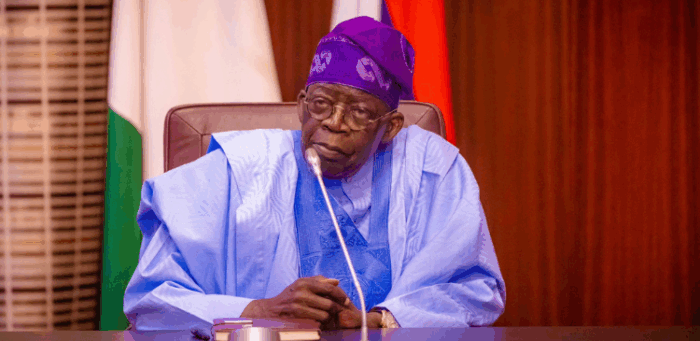
Bola Tinubu, Nigeria’s President, has unveiled an ambitious economic blueprint to propel Nigeria into a $1 trillion economy by 2030, anchoring the plan on massive infrastructure expansion, a five-port maritime corridor, energy development, manufacturing, exports and investment in human capital.
Tinubu spoke on Tuesday at the second edition of the APC Professionals Forum’s Policy Roundtable, tagged the Asiwaju Scorecard Series, with the theme, “Dissecting the Renewed Hope Deliverables & Achievements.”
Tinubu, represented by Nentawe Yilwatda, the All Progressives Congress (APC) National Chairman, at the event held in Abuja, said the administration’s economic reforms were beginning to strengthen the foundations for sustainable growth.

Tinubu said the next phase of the Renewed Hope agenda must therefore convert macroeconomic stability into “microeconomic prosperity.”
As the 2027 elections approach, the President warned against reversing the reforms, asking Nigerians to choose between returning to the past and consolidating the gains of the current administration.
“The foundation has been laid. The opportunity is before us. The work has begun. Now we must take Nigeria from reform to results, from results to growth, from growth to prosperity, and from prosperity to a $1 trillion economy by 2030.
“The $1 trillion economy is not merely a number, but a national mission; a Nigeria that produces more, exports more, attracts more investment, creates more jobs and gives its young people a greater stake in the future,” he said.
The president said his administration inherited an economy weighed down by fuel subsidy distortions, multiple exchange-rate windows, weak revenue mobilisation, foreign-exchange shortages and rising debt-service pressures.
He said the removal of petrol subsidy and foreign-exchange reforms were difficult but necessary decisions to reposition the economy.
“The evidence increasingly shows that the foundation is strengthening,” Tinubu said. He cited gross external reserves of about $52.7 billion as of August 2026.
He also said consolidated non-oil revenue increased from about N13.63 trillion in 2023 to N16.4 trillion in the first two quarters of 2026, while merchandise trade surplus rose from about N44.8 billion in 2023 to N7.54 trillion in the first quarter of 2026.
According to him, real GDP grew by 4.43% in Q2 2026, while inflation declined to about 15%. However, Tinubu acknowledged that improved economic indicators must ultimately translate into better living conditions.
“These figures do not mean that our economic challenges have disappeared, but they demonstrate that the direction of travel has changed. Macroeconomic stability is not the destination; it is the foundation. The ultimate test is when stability translates into cheaper food, more jobs, affordable credit, reliable electricity and greater purchasing power for Nigerians,” he said.
He identified infrastructure as central to achieving the economic target, unveiling plans for an integrated five-port maritime and logistics corridor linking Lagos, Ondo, Ibom, Port Harcourt and Calabar with rail and road networks.
Tinubu said the network would connect Nigeria’s ports to production centres and markets across the Northwest, Sahel and Central Africa, positioning the country as a major maritime and logistics hub.
He added that industrial parks, export-processing zones, logistics parks, agro-processing clusters and manufacturing centres would be developed along the corridors.

Stay ahead with the latest updates!
Join The Podium Media on WhatsApp for real-time news alerts, breaking stories, and exclusive content delivered straight to your phone. Don’t miss a headline — subscribe now!
Chat with Us on WhatsApp