


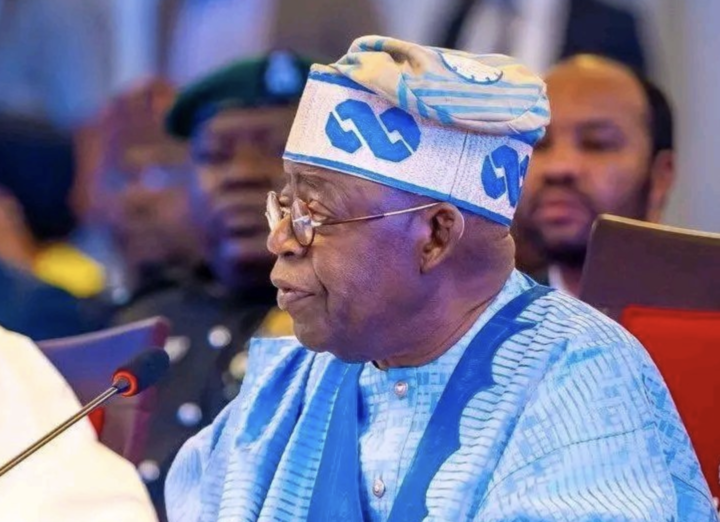
President Bola Tinubu says Nigeria will spend $11.6 billion on debt servicing in 2026.
According to a statement by Bayo Oyenuga, special adviser to the president on information and strategy, Tinubu spoke at the Africa Forward Summit in Nairobi, Kenya, on Tuesday.
Tinubu said nearly half of Nigeria’s projected revenue for 2026 would go into servicing debt under the current global financial system.

According to Tinubu, every dollar spent on debt repayment is reducing investment in critical sectors of the economy.
“Every single dollar that leaves our treasury to pay punitive interest rates is a dollar that did not go into our steel sector, our textile mills, our agro-processed, or our digital industries,” the president said.
“It is a dollar that did not train a young Nigerian engineer or provide affordable power for our factories.”
Tinubu said African countries are being treated as permanent high-risk borrowers despite reforms and fiscal adjustments implemented by many governments across the continent.
“Our industrial base is being starved of the blood it needs – long-term, affordable finance – while creditors and rating agencies treat African sovereigns as permanent high-risk borrowers, regardless of our fiscal performance,” Tinubu said.
The president added that the current international financial architecture is undermining Africa’s industrialisation drive by making access to affordable capital difficult.
“How can an African manufacturer compete with a competitor in Europe, Asia, or North America when the cost of borrowing in our nations is five to ten times higher?” Tinubu said.
“How can we build cross-border industrial value chains under the African Continental Free Trade Area when our infrastructure projects face a financing gap deepened by the very institutions meant to bridge it?.
“The answer is plain – we cannot. The international financial architecture, as currently constituted, is an instrument of industrial disarmament for Africa.”
Also, Tinubu said Nigeria had undertaken “painful, homegrown decisions” to stabilise the economy, including the removal of petrol subsidies, exchanges rate unification, banking recapitalisation, and exiting the Financial Action Task Force (FATF) grey list.
“These reforms were sovereign choices, not external conditions. They have delivered a declining debt-to-GDP ratio, now projected at 32.3 percent in 2026, stronger external reserves of $45.5 billion, and a return of investor confidence,” he added.
According to the president, Nigeria needs a financial system that supports industrialisation across Africa rather than one that keeps countries dependent on commodity exports.
The president said Nigeria is not asking for charity, but a financial system that intentionally enables Africa to industrialise, to process its own minerals, refine its own crude oil, manufacture its own pharmaceuticals, and compete fairly in a global market.
Stay ahead with the latest updates!
Join The Podium Media on WhatsApp for real-time news alerts, breaking stories, and exclusive content delivered straight to your phone. Don’t miss a headline — subscribe now!
Chat with Us on WhatsApp