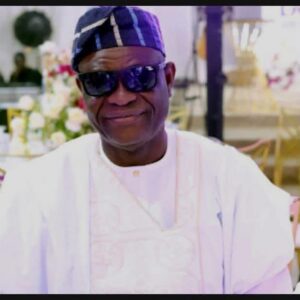

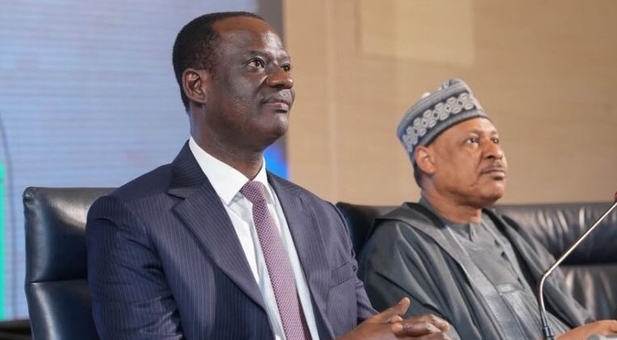
Taiwo Oyedele, minister of finance and coordinating minister of the economy, says now is the wrong time for governments to impose new taxes or increase the tax burden on vulnerable people and productive sectors of the economy.
Oyedele spoke on the sidelines of the 2026 annual meetings of the International Monetary Fund (IMF) and World Bank in Bangkok, Thailand, where he presented the communiqué of the Intergovernmental Group of Twenty-Four (G24).
The minister, who chairs the G24, said governments should balance revenue mobilisation with the need to protect vulnerable populations from additional financial pressure.

“This is the wrong time to impose new taxes or increase the burden of tax, particularly on the vulnerable population and productive sectors of the economy,” Oyedele said.
Responding to a question on how developing countries could reduce debt-servicing costs without cutting essential public spending, the G24 chair said governments should look inward for savings and improve revenue mobilisation without imposing additional burdens.
“The measures, like you ask, will be first for every country to look inwards, looking inward to find areas of savings, areas of revenue mobilisation, but also bearing in mind this is the wrong time to impose new taxes or increase the burden of tax, particularly on the vulnerable population and productive sectors of the economy,” he said.
Oyedele said borrowing remains necessary for economic growth but should be used to support job creation and inclusive development.
“Borrowing and debt financing is a necessary condition for growth, and every country emerging, developing must be able to apply debt financing in a way that is overall of positive impact, particularly to stimulate job-rich and inclusive growth,” he said.
He also said public financing, which is often constrained, should be directed towards essential services such as healthcare and education, while private capital could help support other investment needs.
On the balance between taxation and borrowing, he said neither option should be considered in isolation.
“If you collect taxes, you raise the money now, and that itself has a lot of trade-offs. What taxes are you collecting? You collect taxes from the most vulnerable, and this will deprive them of money to provide food, health, education,” he said.
According to Oyedele, “debt is future taxes, so it’s not one or the other. It’s to strike a balance, bearing in mind ultimately that the essence of tax and of debts is to cater for the people”.
Stay ahead with the latest updates!
Join The Podium Media on WhatsApp for real-time news alerts, breaking stories, and exclusive content delivered straight to your phone. Don’t miss a headline — subscribe now!
Chat with Us on WhatsApp