



Majeed Javdani is a Board Member of Mercator Group and an internationally recognized practitioner in law and business.
For most of modern business history, communication has been designed around one central objective: the transfer of knowledge. Organizations hired experienced people, captured what they knew, documented best practices and built systems to distribute that expertise across teams and generations of employees. The value of communication was measured by how effectively it could move knowledge from one person to another.
Knowledge occupied the highest practical layer of communication because it represented the “how.” Data gave us facts. Information organized those facts. Knowledge transformed them into action.

The emergence of generative AI didn’t simply introduce another productivity tool into the workplace. It’s changing humanity’s relationship with knowledge itself. Today, almost anyone can access procedural guidance within seconds. AI can explain complex concepts, generate frameworks, summarize research, recommend solutions and provide operational direction at a level that was previously available only through specialized expertise.
For the first time, the “how” is becoming universally accessible.
The Distinction Between Knowledge And Wisdom
This doesn’t mean human expertise is disappearing. It means expertise is no longer the exclusive differentiator it once was. When everyone can access procedural understanding on demand, communication must evolve beyond knowledge transfer alone.
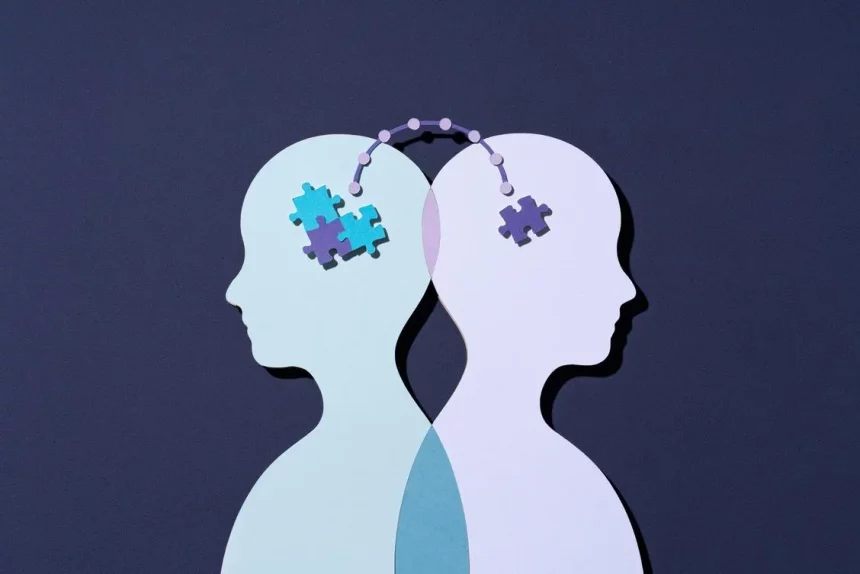
We’re entering a period where the next level of communication isn’t transfer of knowledge but transfer of wisdom. The distinction matters more than many organizations currently realize. Knowledge explains how something works. Wisdom explains why it matters.
Knowledge can teach someone how to build a successful company. Wisdom explains why that company should exist, what responsibility it carries and what long-term impact it should create. Knowledge can optimize a process. Wisdom determines whether the process serves people in a meaningful way.
This distinction becomes especially important as organizations navigate an environment defined by rapid technological acceleration. AI can increasingly guide execution, but execution without purpose eventually creates detachment. Employees today aren’t only looking for instruction. They’re looking for meaning.
Searching For Context
For years, leadership communication focused heavily on clarity, alignment and efficiency. Leaders communicated objectives, deadlines, key performance indicators (KPIs), strategies and operational expectations. Those elements remain necessary, but they no longer create differentiation on their own because procedural guidance is becoming increasingly automated.
What employees now seek from leadership is context.
Why are we making this decision? Why does this organization exist beyond quarterly outcomes? Why are certain trade-offs accepted while others are rejected? Why should people commit their energy and creativity to this mission?
The Intent Behind Decisions
The same transformation is becoming visible in public administration. Governments historically communicated through information distribution: laws, regulations, policies, directives and announcements. But modern societies are more interconnected, emotionally reactive and distrustful of institutions than at any point in recent memory. Citizens no longer evaluate decisions based solely on outcomes. They evaluate intent.
When public communication explains only what decisions are being made without communicating why they’re being made, people fill the gap themselves. Assumptions replace understanding. Polarization replaces nuance. Distrust grows in the absence of context.
Wisdom-centered communication addresses that gap by helping people understand the reasoning behind decisions, including the competing priorities, ethical considerations and long-term objectives involved. It doesn’t eliminate disagreement, nor should it. But it creates conditions where disagreement can coexist with understanding.
The rise of AI is forcing institutions to confront an uncomfortable reality: Information and procedural knowledge are no longer enough to create cohesion. Organizations must be capable of communicating purpose with credibility and depth.

Leaders can’t function only as distributors of information because information itself is becoming abundant. Leadership increasingly depends on the ability to interpret complexity, communicate intent and help people navigate uncertainty with clarity of purpose.
Wisdom Transfer At Its Core
That’s the essence of wisdom transfer. Wisdom transfer isn’t motivational language or corporate storytelling packaged as inspiration. It’s the communication of judgment. It’s the ability to explain not only what decisions are being made but also the values and reasoning that shape those decisions. It involves communicating context, consequences, trade-offs, ethics and long-term perspective in ways that help people think more deeply rather than simply comply more efficiently.
Most importantly, wisdom transfer changes how people relate to their environments.
Knowledge transfer traditionally prepared individuals to operate within systems. Wisdom transfer prepares them to adapt and improve those systems. It develops people who can navigate ambiguity because they understand intent, not just instruction.

That capability becomes increasingly important in a world where disruption is constant. Skills evolve quickly. Technologies become obsolete faster than organizations can restructure around them. Static expertise has a shorter lifespan than ever before.
Developing Judgment
People who understand only procedures struggle when conditions change. People who understand purpose can evolve with changing conditions while remaining aligned with larger objectives.
This may ultimately become the defining communication challenge of the AI era. As machines become increasingly capable of generating answers, human communication must become more capable of developing judgment.
Machines can produce knowledge at extraordinary scale. They can explain processes, synthesize information and automate analysis. But wisdom still depends on human interpretation of meaning, ethics, culture, emotion and societal consequence.
Conclusion
In many ways, AI is pushing humanity upward in the communication hierarchy. If technology increasingly handles the transfer of knowledge, human beings must become better at transferring wisdom.
This has implications far beyond business strategy. It affects education, leadership, governance and culture itself. Institutions built around control of information will need to redefine their value. Communication will become less about access to knowledge and more about helping people understand how to think about complexity responsibly.

In the years ahead, communication may be judged by how effectively it develops human understanding. Because in a world where knowledge is becoming instantly available, wisdom becomes the rarest and most valuable capability of all.
Source: Forbes
Stay ahead with the latest updates!
Join The Podium Media on WhatsApp for real-time news alerts, breaking stories, and exclusive content delivered straight to your phone. Don’t miss a headline — subscribe now!
Chat with Us on WhatsApp