



Nigeria is betting big on a power overhaul. The federal government now targets 277 gigawatts of installed electricity capacity by 2060, with renewable energy and private capital at the center of the plan.
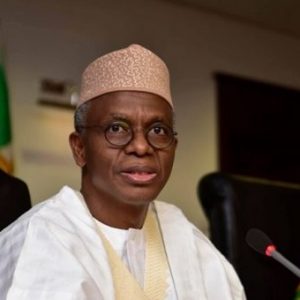
Minister of Power, Joseph Tegbe, disclosed this on Wednesday at the Lagos Chamber of Commerce and Industry Renewable Energy Outlook Conference 2026 at Commerce House, Lagos. Theme: “Powering Nigeria’s Energy Transition: Policy, Investment and Industrial-Scale Deployment.”
—“Diesel generator era is ending”—

Tegbe told manufacturers their dependence on diesel and petrol generators will soon be history.
“This invisible shadow grid, consuming billions of naira annually in imported fuel, represents a structural tax on Nigerian competitiveness that we can no longer afford to pay,” he said. “The era of the diesel generator as your primary power source is drawing to a close.”
He said the Energy Transition Plan is designed to tackle climate goals, energy poverty, and industrial productivity at once. But moving to a renewable-dominated mix will require $10 billion in additional investment yearly above current spending. In return, Nigeria could save about $121 billion in fuel costs.
—From 13,000MW installed to 4,901MW delivered—
Tegbe called the sector a paradox: Nigeria has over 13,000MW installed capacity, Africa’s largest economy and population, yet less than half reaches consumers reliably. Grid capacity available to the public remains around 4,901MW for 220m+ people, LCCI President Leye Kupoluyi noted.
Recent nationwide grid collapses in late 2025 and early 2026, he said, exposed the urgency for reform. The Electricity Act 2023 is the new foundation. For the first time, electricity moved off the Exclusive Legislative List, letting states generate, transmit, distribute and regulate power locally.
About 20 states have passed subnational electricity laws. 12 states have either taken over or are advancing transfer of regulatory oversight from NERC. The Federal Executive Council approved the National Integrated Electricity Policy in May 2025 to replace the outdated 2001 framework.
—Grid gets 8,500MVA boost, $1.16bn digital upgrade—
Government has ramped up infrastructure spending: 82 power transformers installed between 2024-2025, adding over 8,500MVA transmission capacity. More than 30 transmission projects completed in the same period pushed grid wheeling capacity to ∼8,700MW.
A $1.16 billion grid digitalisation project is 69% complete. Over 3,000km of fibre optic cable deployed. 100+ substations now have advanced monitoring. The Nigerian Independent System Operator, NISO, set up in 2025, is expected to improve grid management and market efficiency.
The Presidential Power Initiative with Siemens is upgrading transmission to reliably handle up to 7,000MW.
—$2bn private money already in, gas as transition fuel—
Reforms are pulling cash. Tegbe said power sector reforms attracted over $2bn in fresh private investment. Market revenues nearly doubled from ~N850bn in 2023 to >N1.5trn in 2025 after tariff adjustments.

For baseload power, natural gas is the bridge. Nigeria holds ∼202 trillion cubic feet of proven gas reserves. Solar will dominate long-term. Nigeria and South Africa led Africa’s solar growth in 2025, driven by private sector participation, supportive policy, and Nigeria’s high irradiation of ∼5.5 kWh/m²/day.
—“Treat mini-grids as industrial infrastructure” — REA—
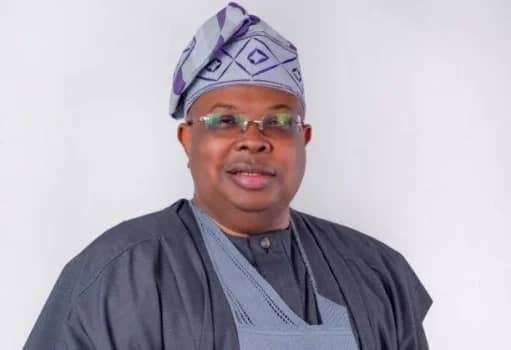
REA Managing Director Dr. Abba Abubakar Aliyu urged a mindset shift: renewable energy isn’t just for rural villages. Mini-grids, solar-plus-storage, embedded generation and distributed energy should power agro-processing clusters, industrial parks, markets, hospitals and data centres.
Global data centre electricity demand will more than double by 2030, he warned. Reliable power will decide competitiveness.

Regulation is catching up. NERC’s Mini-Grid Regulations 2026 now allow isolated mini-grids up to 5MW and interconnected ones up to 10MW. A Net Billing framework will let consumers generate renewable power and export excess to the grid.
Aliyu also pushed for local manufacturing of solar panels, batteries, inverters and meters instead of import dependence. Programmes like DARES, public sector solarisation, Energising Education and healthcare electrification should drive supply chains.
He called on banks to expand green bonds, blended finance, local currency loans and carbon market instruments. The Lagos-Ogun industrial corridor, with its concentration of manufacturing, ports and tech, is prime for renewable-powered industrialization.
—Measuring success beyond megawatts—
LCCI’s Kupoluyi said Nigeria has no business tolerating energy poverty with 37 trillion cubic feet of gas and world-class solar. Unreliable power keeps raising costs and limiting expansion.
Tegbe and Aliyu agreed: the next phase won’t be judged by capacity alone. “It will be measured by what that capacity enables: factories, jobs, food preservation, healthcare, competitiveness and economic growth,” Aliyu said.

Stay ahead with the latest updates!
Join The Podium Media on WhatsApp for real-time news alerts, breaking stories, and exclusive content delivered straight to your phone. Don’t miss a headline — subscribe now!
Chat with Us on WhatsApp