




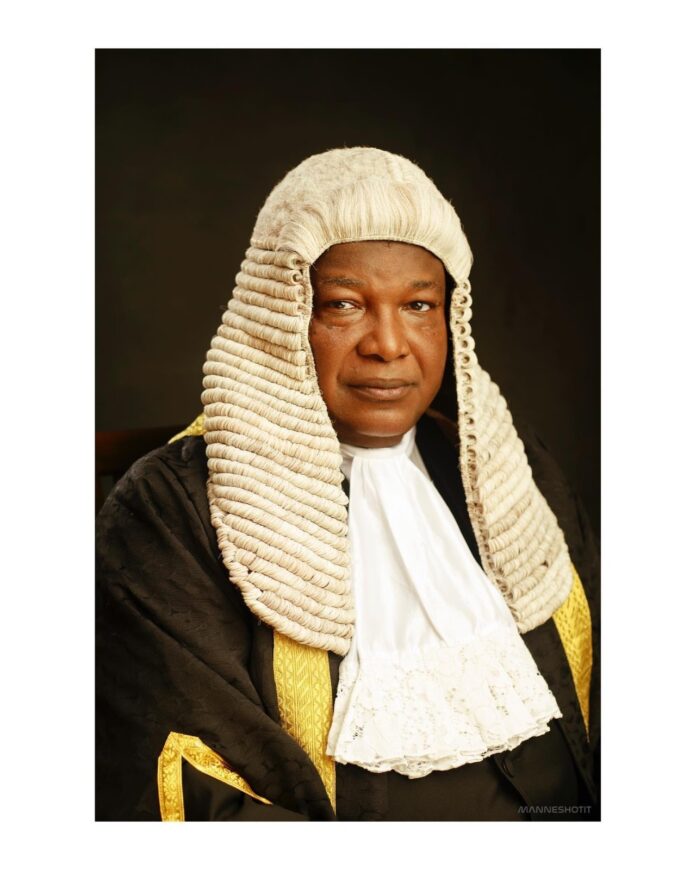
Senior Advocate of Nigeria and University of Lagos lecturer, Dr Wahab Shittu, has backed the House of Representatives’ decision to investigate assets recovered by government agencies since 1999, calling for an immediate and comprehensive audit.
Shittu said the exercise was necessary to establish the value, location and current status of assets seized, forfeited, recovered, managed, disposed of or repatriated by public institutions since Nigeria returned to democratic rule.
He spoke on Thursday during an interview on *Frontline*, a current affairs programme on Eagle 102.5 FM, Ilese-Ijebu, Ogun State.

His comments followed Wednesday’s resolution by the House of Representatives directing a comprehensive review of recovered assets held or managed by government agencies.
“I agree with the House of Representatives. An immediate audit should be taken so that we know all assets that have been recovered from 1999 to date,” Shittu said.
The senior lawyer warned that recovered assets must not be diverted by officials entrusted with their custody or management, insisting that anyone found to have participated in such diversion should be prosecuted.
“Nothing should be missing. Whoever is found to have connived or to be trying to connive in the diversion of these assets should be brought to book,” he said.
According to Shittu, the main purpose of the audit should be to prevent assets recovered from criminals from being looted for a second time.
He said Nigeria also needed a stronger statutory and administrative framework to ensure recovered property and funds were managed transparently and deployed for the benefit of citizens.
“The reason is simple, to ensure that these assets recovered from criminals are not re-looted,” he said.
Shittu argued that the investigation should cover every government institution involved in asset recovery rather than focusing only on the Economic and Financial Crimes Commission and the Independent Corrupt Practices and Other Related Offences Commission.
He listed the Code of Conduct Bureau, police, intelligence agencies and other institutions that may have seized or recovered assets over the years.
“All the agencies involved in the recovery of assets should be included. We should set up a special panel to undertake this,” he said.
The legal scholar also called for a review of previous asset-recovery exercises, including the work of the Justice Ayo Salami-led panel, to help establish a complete national record.
He said the audit should determine how many assets had been recovered, the amount of recovered funds lodged in the Consolidated Revenue Fund through the Central Bank of Nigeria and whether any money or property had disappeared.
Shittu added that investigators should establish how much of the recovered wealth had been returned to victims and how much remained under government control.

“I am aware that the Salami panel tried to compile some of these assets. They should call for the work of the Salami panel to understand how many assets were recovered and how much of the funds we have in the Consolidated Revenue Fund,” he said.
He maintained that a credible inventory could increase government revenue and provide additional resources for infrastructure and development.
According to him, recovered funds could also be distributed among the different tiers of government where the law permits, provided they were applied transparently for public benefit.
“If that inventory is done diligently, effectively and efficiently, a lot of revenue will accrue to the federal government, which can be deployed for developmental purposes,” he said.

Shittu also advocated the centralisation of recovered-asset management under the agency established by the Proceeds of Crime Act.
He said all anti-corruption and law-enforcement bodies should report recoveries to a single institution to prevent duplication, concealment and poor record-keeping.
“The way to go is to centralise these recoveries in one agency,” he said.
The SAN said the proposed investigation offered an opportunity to build a transparent national database containing details of recovered cash, properties, businesses and other assets.
He urged the House of Representatives to ensure that all recovered assets were properly documented and deployed for the common good.
Shittu also praised recent forfeitures, convictions and recoveries recorded by the EFCC under its chairman, Ola Olukoyede, and by the ICPC.

He cited cases involving former public officials and maintained that Nigeria’s anti-corruption institutions had recorded some progress in recent years.
The legal scholar, however, said no country could completely eliminate corruption and urged the government to continue strengthening institutions, enforcement mechanisms and public accountability systems.
“There is no country that can totally eradicate corruption. What a country can do is put in place adequate measures for reducing the menace to the barest minimum,” he said.
Stay ahead with the latest updates!
Join The Podium Media on WhatsApp for real-time news alerts, breaking stories, and exclusive content delivered straight to your phone. Don’t miss a headline — subscribe now!
Chat with Us on WhatsApp