



At the 7th Freedom Online Yearly Lecture on Thursday, September 3, 2026, Nigeria’s political heavyweights set the tone for 2027 with a unified message: the next election will not be just about who wins power, but whether the country can consolidate 28 years of democracy through economic reform, security, and responsible leadership.
Held at the Sheraton Hotel, Ikeja, the lecture themed “2027 Elections: Economy, Security and Nigeria’s Future” brought together former Minister of Information Alhaji Lai Mohammed as Chairman, Senator Gbenga Daniel as Special Guest of Honour, and Lagos State Governor Babajide Sanwo-Olu as Special Guest Speaker.
—LAI MOHAMMED: “POLITICS MUST NEVER OVERRIDE GOVERNANCE”—

Chairing the session, Alhaji Lai Mohammed said the country stands at a critical juncture where foundations laid now must be strengthened, not merely critiqued.

“Security is the precondition for economic growth. No business thrives in an atmosphere of uncertainty,” he stated. “In turn, political stability depends on economic inclusion. When young people are gainfully employed, the political space becomes far less susceptible to manipulation and electoral violence.”
He warned that 2027 must be viewed “not merely as a contest for power, but as a commitment to continuity and nation-building.”
Turning to the media, Mohammed charged journalists to be “robust without being reckless; critical without being destructive; patriotic without becoming partisan.
“Sensationalism, fake news and incendiary rhetoric act as accelerants to instability. Responsible journalism elevates the discourse from tribal and partisan sentiment to policy, competence and concrete solutions.”
He acknowledged that the Federal Government faces “very difficult challenges” on security and economic reform, but urged “consistency, patience, institutional strengthening and, above all, national cooperation.”
—GBENGA DANIEL: “NIGERIA CANNOT HAVE A STRONG ECONOMY WITHOUT SECURITY”—
Senator Gbenga Daniel, in his preliminary remarks, framed the conversation around one central truth: the economy and security are inseparable.
“Nigeria cannot have a strong economy without security, and it cannot have lasting security without a strong economy,” Daniel said.
He noted encouraging GDP growth of 4.43% in Q2 2026, with agriculture and services improving. But he cautioned that real progress is measured by daily life: “Can a young person find decent work? Can a farmer safely reach the farm? Can a manufacturer produce competitively?”

Citing the abduction of more than 7,800 people between July 2025 and June 2026, Daniel said insecurity is “not only a security statistic. It is also an economic warning.”
He called for a shift “from oil wealth to human wealth,” stressing that the non-oil sector now accounts for 95.8% of GDP. “Our task is to convert these sectors into productive jobs, higher incomes and better living standards,” he said, adding that youth need “skills, employment, access to capital, technology and a society in which enterprise and hard work can lead to a better life.”
Using Lagos and Ogun as examples of what’s possible “when population, enterprise, infrastructure and opportunity come together,” he urged the country to extend that model nationwide.

His closing charge: “If we secure our farms, we strengthen food security. If we secure our roads, we strengthen commerce. If we secure our communities, we attract investment. If we create jobs and invest in our young people, we strengthen social stability.”
—SANWO-OLU: “WE HAVE MOVED PAST THE ERA WHEN EVERY ELECTION FELT LIKE IT MIGHT END THE REPUBLIC”—
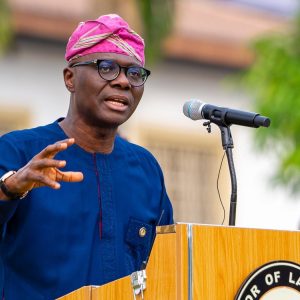
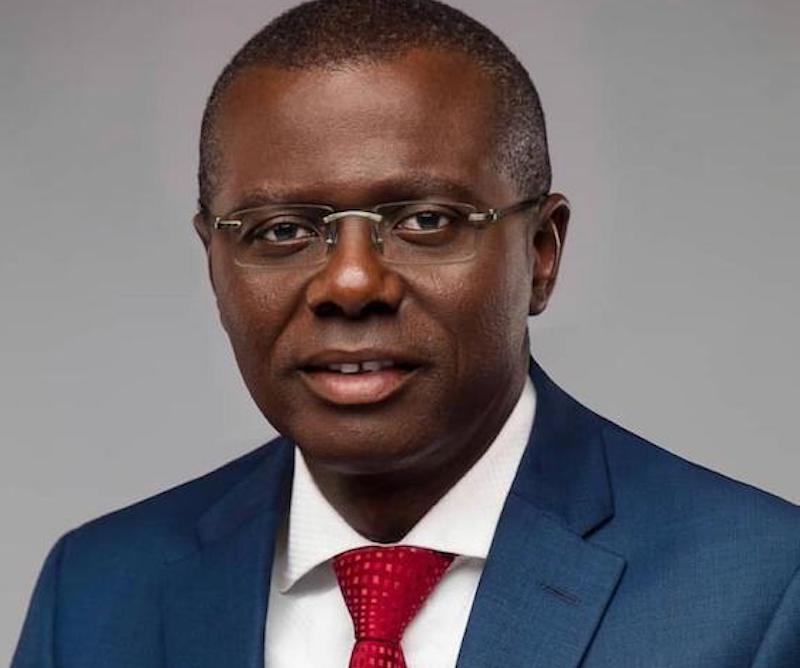
Governor Babajide Sanwo-Olu delivered the keynote with characteristic frankness, saying his status as a term-limited governor gave him “a certain freedom.”
He opened with history. By January 2027, the Fourth Republic will be 28 years old — more than twice the combined length of the First, Second and Third Republics. “In a region where the ballot box is under siege,” he said, referencing coups in Mali, Burkina Faso, Guinea and Niger, “Nigeria’s unbroken run of elections is the anchor.”

On the economy, Sanwo-Olu defended the subsidy removal as painful but necessary. “It was removed because it had become a hole in the national purse.” He then rolled out data: Q2 growth at 4.43%, agriculture up to 4.39%, reserves at $53 billion — highest since 2009, inflation down to 15.9% in June, and diaspora remittances hitting a record $947 million in July.
“For us in the APC, the position is simple. We intend to stay the course, to deepen the reforms, and to make sure that the benefits reach, quickly and visibly, the people who bore the cost,” he declared.
On security, he outlined federal actions: Army expansion to 12 divisions with 28,000 new personnel, new commands, Forest Guards, Mining Marshals, and joint operations with the U.S. that neutralized terrorist commanders in the Lake Chad Basin. He strongly backed State Policing, citing Lagos’ 20-year model with the Security Trust Fund and Neighborhood Safety Corps. “Security works best when the people who pay for it and the people who depend on it can see, and hold to account, the people who provide it.”
Sanwo-Olu stressed the nexus: “Poverty feeds insecurity, and insecurity strangles the very economy that would cure poverty.” He pointed to youth-focused programs — NELFUND, Consumer Credit Corporation, 3MTT, NYSC reform — as evidence of investment in what he called either Nigeria’s “greatest dividend or greatest danger.”
On democracy, he praised President Tinubu for conceding nothing less than a level playing field, citing the Osun governorship election of August 15 where the APC lost and the President called to congratulate the winner. “Under this President, the ruling party can lose a state… and the sky does not fall. That is what a maturing democracy looks like.”
He ended with a direct appeal to the media and citizens: “A mandate is only as strong as the process that produced it. No office in this land is worth the life of a single Nigerian.”
And to the press: “I am asking for a rigorous press. Check the facts. Call out disinformation… Tell the whole story. Patriotism is not propaganda; it is the refusal to let those who wish this country ill have the last word about it.”
His final vision: a $1 trillion economy by 2030. “Set the target, do the work, and let the scoffers keep the score.”
—ONE CONVERSATION, ONE LOAD TO LIFT—
Across all three speeches, the refrain was the same: 2027 is a test of continuity, not just competition.
Mohammed called for media responsibility and institutional strength. Daniel called for jobs, security and opportunity for youth. Sanwo-Olu called for staying the course on reforms and protecting the democratic process.
“As our elders say, one hand cannot lift a load onto the head,” Sanwo-Olu concluded. “The Federal Government has a part. The States have a part. INEC has a part. And you, the fourth estate, have a part that no one else can play. Let us lift this load together, and let 2027 be remembered not as the election Nigeria survived, but as the election at which Nigeria came of age.”
The Freedom Online Yearly Lecture, inaugurated in 2017, has become one of Lagos’ foremost platforms for interrogating Nigeria’s democratic and economic trajectory ahead of general elections.
Stay ahead with the latest updates!
Join The Podium Media on WhatsApp for real-time news alerts, breaking stories, and exclusive content delivered straight to your phone. Don’t miss a headline — subscribe now!
Chat with Us on WhatsApp