


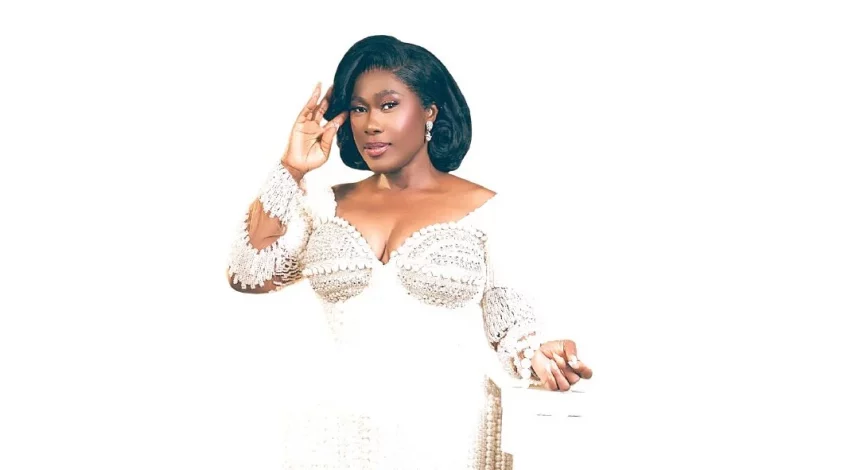
Actress and filmmaker, Uche Jombo, tells FAITH AJAYI about her career and other issues
Having spent nearly three decades in Nollywood, what do you consider the defining decisions that helped you remain relevant?
The most important decision I ever made was refusing to allow myself to be defined solely by the roles I was given. Very early on, I understood that if I was going to last in this industry, I couldn’t just sit and wait for someone to call my name. I had to keep thinking: What’s next? What can I build?

I watched a lot of incredibly talented people leave because the industry stopped needing them in the way it once did, and that taught me something crucial: talent alone doesn’t sustain a career.
The second thing is that I made a deliberate decision to invest in relationships; not networking in the hollow sense, but building genuine, long-term relationships with directors, writers, producers and crew members. Those relationships kept me in conversations that shaped the industry’s direction.
Then, there’s curiosity. I never stopped being curious about what was changing, what new platforms were doing and what audiences were beginning to want. For me, adaptation isn’t about chasing trends; it’s about understanding the deeper shifts happening beneath the surface.
You have worn different hats, including being actress, writer, producer, director and entrepreneur. Which of these roles has taught you the most about the business side of Nollywood?
I would say producing. When you produce a film, you’re involved in every single aspect of bringing a story to life; and I don’t just mean creatively. You’re managing budgets, negotiating with distributors, planning marketing campaigns, managing actors on set and dealing with investors whose expectations may not always align with your creative vision.
As an actress, someone else carries that financial responsibility and you’re focused on your performance. As a producer, you’re responsible for whether the film recovers its investment. That education is irreplaceable.
It also gave me a different level of respect for the business infrastructure that makes a creative industry function. I began to see Nollywood not just as a collection of stories, but as an economic system; one with genuine flaws that need to be addressed from within.
Many actors only begin to think about structure and career planning after experiencing setbacks. What lessons about career planning and professional management do you wish you had known when you first entered Nollywood?
I wish someone had sat me down and said, “Your face is not your brand. Your consistency, your choices and your reputation are your brand.”
When I started, I was very young and had no framework for thinking about a career. I was simply reacting to opportunities, to what was popular and to what people said I was good at. I didn’t understand that I needed to make proactive decisions, not just reactive ones.
Financial literacy is another area. Nobody in this industry—at least not in my generation—was talking about royalties, contracts or intellectual property. You showed up, performed, collected your payment and moved on.
The idea that you could negotiate terms or ask questions about distribution windows or residuals simply wasn’t part of the conversation when I was starting out. I had to learn all of that the hard way.
I would tell any young person entering this industry today to build structure early, before they actually need it.
What do you think the industry still gets wrong when it comes to talent management, and protecting creative professionals?
Talent management and managers are often viewed as optional rather than essential. Few producers and industry stakeholders truly understand the value that professional talent management can bring to industry development and structure.
Nollywood still lacks a structured mentorship pipeline, industry-wide contract standards and a robust conversation around the mental health and wellbeing of creative professionals. These are responsibilities that talent management companies often end up shouldering.
What are the hidden challenges people do not see behind the glamour of Nollywood?

The public sees the premieres, the red carpets and the social media highlights, and that’s wonderful. But behind all of that is a level of physical and emotional exhaustion that I don’t think is fully appreciated.
There are long shoots with unpredictable schedules, the emotional demands of playing traumatised or deeply troubled characters, and having to immediately return to being yourself at the end of the day. That takes a toll.
For many people in this industry, there is no support system to help them process those experiences. There is still significant stigma around discussing mental health in Nigerian professional spaces, and the entertainment industry is no exception.
I’ve seen colleagues go through very dark periods that the public never knew about because everyone felt they had to project strength.
There’s also the financial instability, which people rarely acknowledge. Even at the height of visibility, there are gaps, such as projects that fall through, payments that are delayed and the constant uncertainty about what comes next.
You learn to separate your public life from your private anxieties, and sometimes maintaining that divide is exhausting in itself.

At a time when filmmakers are increasingly creating content for global audiences, how do you balance international appeal with preserving your cultural identity?
This is a question I think about deeply because I’ve seen both sides of it up close.
There is a version of “going global” that simply erases cultural identity with a bigger budget, where everything specific and local is kept away to make a story more easily exportable. I’m not interested in that.
The truth is that the stories that have broken through internationally have done so precisely because they were culturally specific. Specificity creates emotional truth, and emotional truth is universal.
What we need to resist is the assumption that global audiences can’t handle complexity, follow cultural context or appreciate stories that don’t look like what they’re already familiar with. They absolutely can.
Where I think we need to be careful is in the production decisions that come with streaming deals, such as the gradual drift towards a generic “global” aesthetic that feels like it belongs nowhere in particular.
We have to enter those partnerships with a clear and protected understanding of what we are not willing to compromise.
Your films, including projects such as ‘Damage’ and ‘Holding Hope’, have often tackled social issues and difficult conversations. What draws you to stories that go beyond entertainment and attempt to provoke social reflection?
Film is one of the most powerful tools we have for changing how people see themselves and each other.
When I made ‘Damage’, people told me it was too uncomfortable, that audiences didn’t want to see those realities on screen. But the response we received told me something very different.
As a filmmaker, I am drawn to honest, complicated and raw stories that explore the complexities of being human, particularly as a Nigerian woman in this moment in history.
From your vantage point, how much progress has been made regarding opportunities for women behind the camera, and where do significant gaps still exist?
Progress has been made and I want to acknowledge that because it matters.
When I look at the generation of women directing, producing, writing and building production companies in this industry today, I feel proud. We fought for that space, and it is finally being occupied.
But, I also want to be clear that visibility is not the same as equity. Women are certainly more visible, but are women-led projects receiving the same level of financing as those led by men? Are female directors given the same level of creative trust? Are stories centred on women’s inner lives receiving the same distribution support as action-driven or male-focused narratives?
There is also significant underrepresentation of women in technical roles such as cinematography, sound and editing. These are the people who shape how stories are ultimately seen and heard, and the gender imbalance remains stark. We haven’t fixed that yet, and we need to be honest about it.
Have you ever encountered situations where your competence was questioned because of your gender?
I remember being in rooms as a producer where my creative decisions were questioned in ways I never saw happen to my male counterparts. I also remember being on set as a director and having to establish authority that I shouldn’t have needed to establish in the first place.
Over time, my response has been to refuse to make myself smaller just to make other people comfortable.
I show up prepared because excellence is an argument that is very difficult to dismiss.
But I also want to say this: the burden of proof should not rest on women. The fact that we often have to over-prepare, over-explain and over-deliver just to be taken as seriously as male colleagues who are accepted at face value is a structural problem, not a personal one.
Between cinema releases and digital platforms, where do you see the most sustainable future for Nollywood filmmakers?
I don’t think the answer lies in any single platform. The future belongs to filmmakers who understand how to work strategically across all of them.
Cinema still carries a cultural significance that streaming cannot fully replicate. There is something about the shared theatrical experience that creates a different kind of conversation around a film, and that matters for certain stories.
At the same time, streaming has opened up a much wider audience than would have been possible 10 years ago.
As a filmmaker and producer, what interests me most is the ownership model behind all of this.
Whether you release on Netflix, in cinemas or on YouTube, the fundamental questions remain the same: Who owns the rights? What are your contractual terms? What do you continue to earn if the film generates value over the next decade?
Those conversations need to become standard knowledge within this industry.
The platform is almost secondary to the deal structure. We’ve seen too many cases where Nigerian content attracts enormous global audiences, yet the financial returns to the actual creators remain far too small.
What differences stand out between the Nollywood you joined in 1999 and the generation currently entering the industry?
The generation entering the industry today is more informed than we were, and I mean that entirely as a compliment.
They have access to film education, global cinema and critical writing on the craft of storytelling in ways that many of us simply didn’t when we started. They know their references, understand their rights, come to set with ideas and opinions, and are not afraid to express them. I respect that.
What I sometimes find missing, however, is patience. The pressure of social media and the speed of today’s content cycle have created an expectation of very rapid success. Many young actors want to go from their first role to an award-winning lead performance within a year or two.
For some people, that does happen. But the craft deepens over time.
Learning how to inhabit a character, how to be still on screen, how to truly listen in a scene; those are skills that develop through experience, failure and taking on roles that may not perfectly fit you, then figuring out how to make them work anyway.
I hope this generation finds a way to embrace the longer journey, because lasting careers are built over time, not overnight.
How do you personally define success at this point in your career?
I define success by whether I am still doing work that means something to me.
There was a time when I measured success largely by external markers, such as how many films I was in, how much people talked about me and what the reviews said. All of that still matters to me, but these days, I return to a much simpler question: am I telling stories that need to be told in a way that honours the craft? When I finish a project, do I feel I gave it everything I had?
And perhaps even more importantly, am I building something that will outlast me?
I also measure success by freedom: the freedom to say no to projects that don’t align with my values, and the freedom to pursue stories that may be difficult or commercially risky simply because I believe in them.
That kind of freedom took years to earn, and I don’t take it lightly.
Stay ahead with the latest updates!
Join The Podium Media on WhatsApp for real-time news alerts, breaking stories, and exclusive content delivered straight to your phone. Don’t miss a headline — subscribe now!
Chat with Us on WhatsApp