



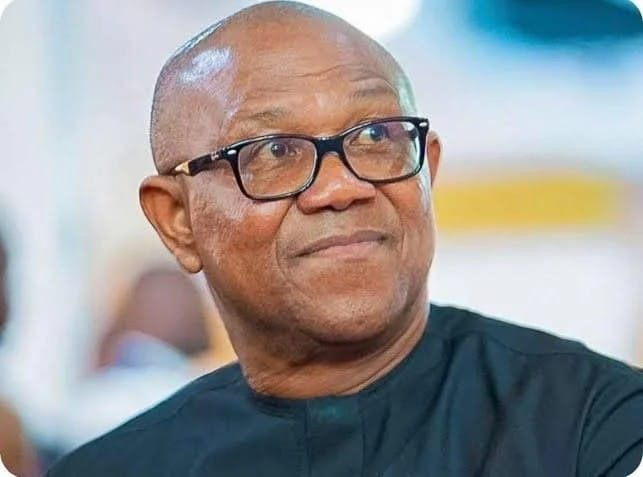
The Peter Obi Media Office has hit back at what it called “surrogate campaigners” of President Bola Tinubu, insisting that the Nigeria Democratic Congress, NDC, presidential flagbearer is not “overhyped” but is seeking the presidency on the strength of verifiable performance.
In a statement signed by Idris Zekeri Jnr and released on Saturday, the Obi camp presented a 10-point record from his tenure as Anambra governor as proof of readiness, and countered with 10 failures it attributed to the Tinubu administration.
“The fundamental question is not whether Tinubu inherited a difficult Nigeria. He did. The question is whether, after taking difficult decisions, Nigerians are better off today,” the statement said. “Your answer is an obvious capital NO.”

—THE CASE FOR OBI: “HE HAS MANAGED BEFORE”—
The media office argued that unlike typical campaign promises, Nigerians can examine Obi’s record as governor of Anambra State from 2006 to 2014.
It listed 10 points:
1.Executive experience
Obi served two terms as governor, surviving legal battles and finishing in 2014. The statement said he “emerged as the best-performing state governor in his time.”
2.Fiscal discipline
Anambra became one of the least-indebted states under his watch. The 2023 manifesto cited by the office records about $500 million in savings and investments, including $156 million in dollar-denominated bonds.
3.A culture of saving
“Government could save rather than merely spend,” the statement said, pointing to both local and foreign currency reserves left behind.
4.Education turnaround
The administration returned mission schools to original owners. WAEC/NECO results, it said, moved Anambra from 24th to 1st position nationally for three consecutive years.
5.Human capital focus
Beyond roads and buildings, the record includes scholarships, healthcare investments and poverty mapping aimed at improving “people’s productive capacity.”

6.Healthcare accreditation
More than 12 health institutions, including two hospitals, secured accreditation by the end of his tenure, compared to none at the start.
7.International partnerships
The Obi government engaged the World Bank, UNDP, DFID and the EU. He was also recognised by the MDGs Office and UNDP for programme implementation.

8.Data-driven governance
Initiatives included poverty mapping, aerial mapping and the Anambra Integrated Development Strategy, ANIDS, as a development framework.
9.Private sector background
Before politics, Obi worked in business and banking, including senior roles in the financial sector.
10.An auditable record
“Nigerians do not have to assess Peter Obi solely from campaign promises. They can examine what he did with Anambra’s resources when he had executive responsibility.”

The office concluded: “Peter Obi is not asking Nigerians to make him President so that he can learn how government works. He is asking Nigerians to entrust him with Nigeria after demonstrating… how he manages money, builds institutions, invests in human capital and plans for the future.”
–THE CASE AGAINST TINUBU: “10 FAILURES NIGERIANS CANNOT IGNORE”—
The statement then pivoted to a direct critique of the Tinubu presidency, listing 10 areas of concern:
1.Cost-of-living crisis
Subsidy removal and reforms have driven up food, transport and basic necessities.
2.Inflation and declining purchasing power
Wages have failed to keep pace with rising prices.
3.Naira instability
Depreciation has raised costs of imports, medicines and industrial inputs.
4.Fuel-price shock
Dramatic petrol price hikes have pressured households and businesses.
5.Rising poverty and hardship
The burden of reforms has “fallen disproportionately on ordinary Nigerians.”
6.Weak employment
Youth unemployment and underemployment persist despite government assurances.
7.Unresolved security
Banditry, terrorism, kidnapping and communal violence continue.
8.Transparency concerns
Questions over spending, appointments and procurement persist.
9.Political over institutional governance
Critics say focus has been on political consolidation and 2027 calculations rather than strong institutions.
10.Promise-experience gap
The reform narrative “has not yet translated into a sufficiently visible improvement in the daily lives of ordinary Nigerians” amid corruption allegations.
—POLITICAL CONTEXT—
The statement comes amid early positioning for the 2027 elections, with Tinubu’s allies recently dismissing Obi’s popularity as “overrated.”
The Obi camp says the back-and-forth proves that 2027 will be fought on records, not rhetoric.
With the NDC flagbearer already campaigning on prudence and human capital investment, the media office is framing the coming election as a referendum: competence versus continuity.
Stay ahead with the latest updates!
Join The Podium Media on WhatsApp for real-time news alerts, breaking stories, and exclusive content delivered straight to your phone. Don’t miss a headline — subscribe now!
Chat with Us on WhatsApp