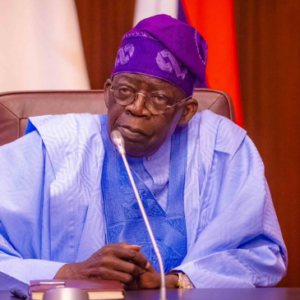




President Bola Tinubu yesterday declared that Nigeria would deploy its vast oil and gas resources to build a modern, diversified economy, challenging operators to reciprocate the incentives and regulatory reforms introduced by his administration with higher investment, increased production, local content development and compliance with work programmes.
Speaking at the 5th anniversary of the Nigerian Upstream Petroleum Regulatory Commission (NUPRC) in Abuja, Tinubu emphasised that the government had been listening to investors’ complaints about high operating costs, lengthy contracting processes and uncertainty surrounding fiscal terms, leading to a series of measures designed to make Nigeria more competitive for long-term capital.
The event, which marked five years of the Petroleum Industry Act (PIA) and the establishment of NUPRC, brought together government officials, regulators, operators, unions, host communities and industry groups under the theme, “From Uncertainty to Stability: Unlocking the Next Phase of Investment.”

Tinubu specifically cited the 2024 tax incentives and directives on local content and petroleum contracting costs and timelines, the 2025 upstream petroleum operations cost-efficiency incentive order, Executive Order 9 on oil and gas revenue remittances and the Deep Offshore Oil and Gas Projects Incentive Tax Remission Order 2026.
According to Tinubu, who was represented by the Vice President, Kashim Shettima, the latest deep offshore incentive framework was designed to unlock up to $50 billion in new investment, beginning with the Bonga Southwest project, while providing published criteria for qualifying projects.
“Five years ago, the PIA brought to an end two decades of waiting. It gave this industry clear routes, gave investors a predictable framework, and gave our host communities, for the first time, a legal stake in the resources beneath their land. NUPRC was created to give life to that law.
“We are here today to recognise how well it has done so and to look honestly at the work that remains. There is much to recognise. Only a few years ago, our oil and gas fields were losing a large share of their output to theft and vandalism. Today, through the joint effort of our security agencies, operators, host communities and the Commission, protection is steadier and stronger.
“Investors who once looked elsewhere are returning, and for two years running, Nigeria has been ranked Africa’s leading destination for upstream investment. Acreage is now awarded through open and competitive processes. More than 170 host communities are funding schools, health centres and other projects chosen by the communities themselves.
“Of all these achievements, that last one gives me the greatest satisfaction, because peace in our oil-producing communities is being built on fairness, and that is the most lasting kind of peace,” he stated.
The Nigerian leader pointed out that the administration’s objective was not to perpetuate Nigeria’s dependence on petroleum, but to use the sector to provide the energy, foreign exchange and investment required to build other areas of the economy.
“These gains matter well beyond the oil and gas industry. Under the Renewed Hope Agenda, we are building a diversified economy in which agriculture, manufacturing, the digital and creative industries all play their parts. We have already reduced our dependence on oil revenue and we intend to go further.
“A diversified economy still needs energy, foreign exchange and investment, and that is why this sector serves the nation. Our gas can power homes and factories. Petroleum mining supports a stable environment and helps fund the federation. A well-run upstream industry creates hope for Nigerian engineers and service companies.
“Our aim is to use our petroleum resources to build this wider economy rather than to depend on them. The PIA is a strong foundation, but the foundation is only the beginning,” the president stressed.
The president, however, warned that government incentives must translate into actual investment and production, charging operators that benefit from the new policy environment to deliver on their commitments.
He explained.“Laws set the rules. Investors decide on commercial terms. This is a listening government. And investors told us clearly that good rules were not enough while costs remained high. Contracting took too long and fiscal terms for complex projects were uncertain. We listened and we acted.
“Our message to the world is simple: Nigeria is open for long-term investment, and the terms are clear. Policy, however sound, achieves little until it is implemented, and that responsibility weighs in large part with the Commission. NUPRC is a bridge between government policy and investment on the ground.”

He charged the Commission to maintain clear processes and reliable timelines while working with sister agencies to eliminate overlapping requirements, stressing that the government would uphold the rule of law and sanctity of contracts.
Tinubu also called on operators enjoying incentives to fulfil their work programmes, local content, environmental and host-community obligations, while requiring the regulator itself to account publicly for its performance.
“Operators who enjoy incentives must deliver on their commitments to work programmes, local content, the environment and host communities. And the Commission must also account publicly for its own performance. We will uphold the rule of law and the sanctity of contracts so that disputes, where they arise, are resolved quickly and clearly,” he said.
Eyesan: $103bn Spending, Projections Realised in bid rounds

In her intervention, the NUPRC Chief Executive, Oritsemeyiwa Eyesan, said Nigeria had moved from an era in which uncertainty drove capital away from the country to one in which investment was increasingly returning, with the PIA providing the regulatory foundation for the change.
Eyesan said the delay in reform had contributed to Nigeria losing investment to Guyana, Namibia, Brazil and the United States Gulf of Mexico, while major discoveries such as Bonga Southwest, Zabazaba-Etan, Owowo, Preowei and Nsiko remained undeveloped.
“The PIA changed the terms of that conversation. The task of the Commission was to turn its provisions into working rules, and the rules into results. In consultation with industry, the Commission has developed and gazetted 19 regulations to operationalise the PIA. These regulations cover licensing, royalty, measurement, gas flaring, decommissioning, host communities and fees, among others.
“Discretion has given way to published rules. An investor can now read what is required before committing a single dollar. Since the PIA, the Commission has conducted the 2020 Marginal Field Bid Round, the 2022/2023 Mini-Bid Round, the 2024 Licensing Round and the 2025 Licensing Round. Together, these rounds account for about $103 billion in investment spent and projected.
“In the 2024 and 2025 rounds, entry costs were deliberately lowered to bring more bidders to the table. The objective is not licensing for its own sake. The objective is to put capital to work, develop resources and create value,” she stated.
Eyesan said capital was now returning, citing the $5 billion Bonga North project, which reached final investment decision in December 2024 and is expected to produce about 110,000 barrels per day at peak, as well as the Ubeta, HI and Ima gas developments.

She said: “Since 2024, the Commission has approved 120 field development plans, carrying about $47.6 billion in capital and the potential to add about 1.74 million barrels of oil per day and 13.9 billion standard cubic feet of gas per day. Among them is the $10.3 billion Zabazaba-Etan development in OPL 245, a field held back by dispute for more than 20 years.
“In 2025, Nigeria accounted for 38 per cent of all upstream investment sanctioned in Africa, against an average of four per cent between 2015 and 2023. For the second year in a row, Nigeria ranked first in Africa for upstream investment. And this investment is cost-conscious: the average unit technical cost of field development plans approved this year is about $13.55 per barrel of oil equivalent.”
She said the improvement was also reflected in production, which had risen from 1.44 million barrels per day in 2022 to an average of 1.75 million barrels per day in the first seven months of 2026, reaching 1.84 million barrels per day in April, while gas production increased from 6.83 billion standard cubic feet per day to about 7.97 billion standard cubic feet per day.
Eyesan said the Commission had also reduced approval time for reactivating shut-in wells from between two and six weeks to between two and four hours and approved 37 new crude evacuation routes.
On the next phase of the regulatory regime, she said NUPRC would move into what she described as the “age of compliance”, under which every licensee and lessee would be scored and the results published.
“For this reason, the Commission will begin to score the compliance of every licensee and lessee, and to publish the results. The scores will cover the obligations that matter: work programme delivery; payment of royalties, rents and fees; domestic crude and gas supply obligations; measurement and data reporting; gas flaring; health, safety and environment; decommissioning provisions; and host community trust contributions.
“The criteria will be clear, results will be verified, and operators will have the opportunity to correct factual errors before publication. Investors, financiers, host communities and the public will then be able to see who is keeping faith with the PIA,” she added.
She said NUPRC itself would be subject to the same culture of accountability, with the Commission finalising service-level agreements with industry that would establish timelines for approvals and enable operators to assess the regulator’s speed, consistency and complaint-resolution record.
Eyesan said the immediate priority was to restore more than 788,000 bpd of shut-in production across 63 operators, take offshore projects valued at between $30 billion and $50 billion to FID and raise domestic gas delivery from about two-thirds of the obligation to full delivery.
Ojulari: Oil Sector Stars More Aligned Now Than Ever
Also speaking, the Group Chief Executive Officer of the Nigerian National Petroleum Company Limited (NNPC), Bayo Ojulari, said the NNPC was increasingly being approached with investment opportunities, adding that the company was focused on growing reserves, increasing production, accelerating gas development and creating long-term value for Nigeria.
Ojulari said the evolution of NUPRC had shown that effective regulation went beyond oversight to enabling businesses, facilitating investment and creating sustainable value.
“Five years in the life of an institution appears relatively short. However, NUPRC’s journey has demonstrated what can be achieved when vision, professionalism and commitment align with national aspirations. You can see what can be achieved even in one year as you listen to our CCE. A lot can be achieved when the stars are aligned.
“And I can tell you confidently that the stars in our industry have never been more aligned than what we have today. As a strategic industry partner, NNPC Limited has harnessed the evolution that NUPRC has been through firsthand. The Commission has increasingly demonstrated that effective regulation goes beyond oversight. It is also about enabling businesses, facilitating investment and being a catalyst for sustainable value creation,” he said.
According to him, constructive engagement, regulatory clarity, improved approval processes and collaborative problem-solving had helped create an environment where operators could concentrate on delivering value while maintaining safety, compliance and operational excellence.
He said the next phase required policy consistency, regulatory predictability, operational discipline and continued collaboration between regulators and operators.
“Most of the great countries that we admire, whether it’s Aramco, whether it’s Brazil, whether it’s Petronas, what drives them is co-creation between the regulators and the operators to differentiate the country and put the country in the leadership position.
“That is what we have today, and that is what we want to consolidate. NNPC Limited therefore looks forward to further deepening its partnership with NUPRC. We remain committed to constructive engagement with the Commission and our industry partners as we work together towards an efficient, competitive, investable industry that delivers enduring economic value to the Federal Republic of Nigeria,” he said.
Lokpobiri Says Nigeria Now Top Investment Destination
Also, the Minister of State for Petroleum Resources (Oil), Heineken Lokpobiri, said the Commission’s performance should ultimately be judged by the businesses and production it enabled rather than simply by the number of regulations it issued.
He cited Nigeria’s rising oil production as a plus for the economy, describing the increase as a major improvement, while pointing to a sharp increase in drilling activity as an important indicator of future production.
“One thing that you didn’t say in your own achievements is the level of drilling campaign we have. The level of drilling campaigns going on in the industry is unprecedented. When we came, we had less than 10 active rigs. Today we have over 70 active rigs, and still counting.
“And so, the drilling campaign of today is what will produce the barrels of tomorrow. Our ambition to do 3 million barrels will be a mirage unless we have a sustainable and increasing campaign in this industry.
“Having said that, it is important for me to say that NUPRC has done well in five years. Continue on this trajectory of rendering excellent services that will guarantee sustainable growth in this industry. Do the best you are doing to ensure that we are not sent back to Egypt. Let us continue on this road to Israel,” he advised.
Lokpobiri said Nigeria’s large reserves would only become economically meaningful if regulatory processes enabled technically and financially capable businesses to develop them.
“Nigeria all of a sudden seems to be one of the most attractive investment destinations in the world…What we need to assure them is the predictability of our environment. What we need to assure them is that our fiscal and regulatory frameworks are globally competitive and even better than any other jurisdiction in the world.
“Once we are able to do that, I believe that all those people who are coming with their dollars are bound to come to Nigeria because we are located in such a strategic location,” he argued.
He urged NUPRC to make swift and transparent decisions in the next five years, warning that delays could divert capital to competing jurisdictions.
Chairman of the NUPRC Governing Board, Senator Magnus Abe, said the Commission’s progress had been supported by Tinubu’s executive orders, policy direction and non-interference in its regulatory processes.
Abe said NUPRC had made significant strides in implementing the PIA, strengthening regulatory processes and creating a more transparent and investment-friendly upstream environment, while urging the Commission to continue evolving into a modern, professional, technology-driven and globally respected regulator.
In his remarks, NMDPRA’s Chief Executive, Rabiu Umar, said the creation of NUPRC and NMDPRA under the PIA represented complementary reforms rather than separate purposes, stressing that upstream production could not thrive without functioning midstream and downstream markets.
He said investors required clear rules, credible institutions, predictable approvals, respected contracts, working infrastructure and trusted data, adding that policy continuity was critical for investors operating on 20- to 30-year horizons.
Sarkin Adar, the Executive Secretary of the Nigeria Extractive Industries Transparency Initiative (NEITI), represented by Jane Onwumere, said NUPRC had replaced regulatory ambiguity with predictability.
He explained that transparency, accountability, data openness and the rule of law remained essential to attracting long-term capital.
In his goodwill message, President of the Petroleum and Natural Gas Senior Staff Association of Nigeria (PENGASSAN), Bosun Olabiyi-Agoro, noted that regulatory clarity had contributed to increased industry activity but urged NUPRC to pay greater attention to workers, particularly contract staff in the upstream sector.
He said the disparity in compensation between permanent and contract workers remained a major concern and called for greater clarity and fairness in the treatment of contract staff by international and indigenous operators.
For its part, the Independent Petroleum Producers Group (IPPG) said its contribution to national production had risen from about 3 per cent when the organisation was established more than a decade ago to 52 per cent last year, attributing the growth to an enabling regulatory environment.
Its President, Adegbite Falade, lauded the NUPRC for creating the right environment for the indigenous oil companies to thrive.
Representative of the Oil Producers Trade Section (OPTS) and Managing Director of ExxonMobil, Jagir Baxi, said a strong, fair and predictable regulatory framework was good for both business and Nigeria, noting that consultation between operators and NUPRC had produced more practical and globally aligned regulations.
He said dialogue, transparency and efficiency in approvals had improved, adding that the industry still needed to tackle production constraints, gas development, costs and security to attract long-term investment.
FG Opens 2026 Oil Bid Round, Offers 40 Blocks
Meanwhile, the federal government yesterday opened the 2026 Nigerian oil licensing round, offering 40 oil blocks across land, shallow water and deepwater terrains as it intensified efforts to attract fresh capital into the upstream sector.
The NUPRC, which announced the round on the sideline of the commission’s 5th anniversary celebration, said the new process would introduce stronger transparency measures, including mandatory disclosure of the beneficial owners of all bidders, fuller publication of evaluation methodology and results, and strict adherence to a published bidding timetable.
Commission’s Chief Executive Officer, Oritsemeyiwa Eyesan, said the exercise had received the approval of President Bola Tinubu and the Minister of Petroleum Resources, adding that the blocks would be open to investors with the technical competence, financial capacity and commitment required to develop Nigeria’s petroleum resources.
“Ladies and gentlemen, the wait is over. It is with great joy that I announce that pursuant to the approval of His Excellency, President Bola Tinubu, GCFR, President and Commander-in-Chief of the Armed Forces of the Federal Republic of Nigeria and Honourable Minister of Petroleum Resources, the Nigerian 2026 Licensing Round is hereby announced.
“This round offers 40 blocks across land, shallow water and deepwater terrains…They are open to investors with the technical competence, financial capability and, above all, the commitment to develop Nigeria’s petroleum resources.
“We will not rest on our oars. Competition for upstream capital is fierce, and it grows fiercer by the day. Investors have choices. They go where the rules are clear, where the process is predictable and where data can be trusted,” she stated.
Eyesan’s announcement followed the completion of the 2025 Nigerian Licensing Round, which attracted substantial interest from both domestic and international investors.
Eyesan disclosed that 143 companies submitted 200 bids in the 2025 exercise, with 31 companies emerging as winners of 37 blocks. The exercise also generated interest in frontier basins outside the traditional Niger Delta producing areas, including the Anambra Basin, Benue Trough, Chad Basin and Benin Basin.
Since the Petroleum Industry Act (PIA) came into force in 2021, the NUPRC said it had conducted three licensing exercises, the 2022 Deep Offshore Mini Bid Round, the 2024 Nigerian Licensing Round and the 2025 Nigerian Licensing Round, resulting in the award of 57 Petroleum Prospecting Licences.
Eyesan said the 2026 exercise would build on lessons from previous rounds and recommendations by the Nigeria Extractive Industries Transparency Initiative (NEITI), stressing that petroleum acreage would no longer be awarded at the discretion of officials.
“Five years ago, the Petroleum Industry Act 2021 gave birth to the Nigerian Upstream Regulatory Commission and placed in our hands a sacred trust to administer Nigeria’s petroleum resources for the benefit of all Nigerians.
“Of all the reforms the PIA brought, none speaks more to who we are than this: in Nigeria, petroleum acreage is won, not given. It is no longer discretionary. The PIA made transparent and competitive bidding the rules for the award of Petroleum Prospecting Licences and Petroleum Mining Leases. Clear rules have taken the place of discretion. We have honoured that reform,” she added.
She said the commission had accepted recommendations from NEITI’s review of the 2022 to 2024 licensing rounds, which found the exercises generally professional, transparent and inclusive, but identified areas requiring improvement.
According to her, the recommendations focused on evaluation methodology, disclosure of results, public access to bidding information and beneficial ownership disclosure.
“The guidelines will also set out our evaluation methodology in full, provide for fuller publication of results and require disclosure of beneficial owners of every bidder, in keeping with NEITI’s counsel,” she said.
Eyesan also promised that the timetable for the 2026 round would be published at the outset and adhered to, arguing that certainty over the process was critical to investors seeking board approvals, mobilising funds and preparing bids.
“In 2025, when we published, there was a lot of scepticism about whether we would meet the timeline. And we proved all our skeptics wrong. We were right on time, not one day late. Investors must plan. Boards must approve. Funds must be mobilised. Every one of these decisions depends on dates that hold. We will certainly hold,” she stated.
The regulator also stated that it plans to improve engagement with prospective bidders through its licensing website and portal, virtual data room, webinars and a dedicated help desk.
Eyesan said all material clarifications made during the process would be communicated to every participant to prevent any bidder from gaining an information advantage.
“And every material clarification will be shared with all participants. No bidder will know what others do not,” she said.
The commission said the new licensing round was part of efforts to raise Nigeria’s crude oil and condensate production, increase reserves and expand gas development, disclosing that assets offered in the previous licensing exercises, subject to successful development, could add about 500 million barrels of reserves and at least 300,000 barrels per day of crude oil and condensate production within five years.
She said the expected additions would support Nigeria’s ambition of raising production to 3 million barrels per day by 2030.
The assets, she added, were also expected to contribute about 20 trillion cubic feet of gas reserves and 50 million standard cubic feet of gas per day of production, in support of the federal government’s ‘Decade of Gas’ initiative.
However, Eyesan warned prospective winners that securing acreage would not be an end in itself, insisting that successful bidders would be expected to move quickly into exploration and development.
“To those who will win, my message remains the same: Drill or Drop. A licence is a commitment to Nigeria, not a trophy on the wall,” she said.
She urged Nigerian and international investors to participate in the exercise, saying the NUPRC was determined to make Nigeria a more competitive destination for upstream investment.
“I want Nigeria to win that contest. I want Nigeria to remain the destination of choice for hydrocarbon investments. So, we will make our award processes more consistent and more predictable and we will put comprehensive, current and investment-ready technical data in the hands of bidders so that they can evaluate with confidence and bid competitively.
“The Nigeria 2026 Licensing Round guidelines will clearly set out the eligibility criteria, bid parameters, evaluation criteria and conditions of award. They will be applied consistently so that every eligible investor, large or small, Nigerian or international, competes on a level playing field,” the upstream regulator noted.
According to the NUPRC, the full details of the 40 blocks, qualification requirements, bid parameters and participation procedures will be published by the commission on its website and dedicated licensing portal in the coming days.
Stay ahead with the latest updates!
Join The Podium Media on WhatsApp for real-time news alerts, breaking stories, and exclusive content delivered straight to your phone. Don’t miss a headline — subscribe now!
Chat with Us on WhatsApp