



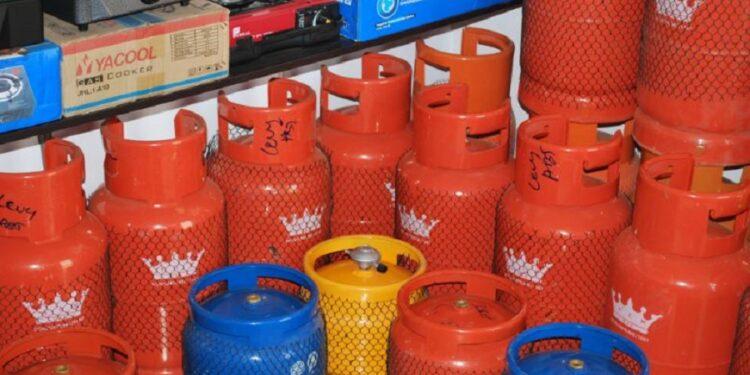
The Nigerian Midstream and Downstream Petroleum Regulatory Authority (NMDPRA) says liquefied petroleum gas (LPG) wholesalers and retailers are charging non-cost reflective prices, pushing cooking gas prices as high as N2,100 per kilogram despite significantly lower indicative prices issued by the regulator.
The authority disclosed this in a presentation delivered by Rabiu Umar, chief executive officer (CEO) of the NMDPRA, at an emergency stakeholders’ meeting convened by the ministry of petroleum resources over rising LPG prices.
According to NMDPRA, consumers across the country are paying far above the regulator’s indicative pricing benchmarks due to marketer profiteering and distribution bottlenecks.

The NMDPRA said cooking gas sells for between N1,600/kg and N2,100/kg in the south-west despite an indicative price range of N1,018/kg to N1,177/kg.
In the north-central, LPG prices range from N1,550/kg to N1,950/kg against an indicative benchmark of N1,066/kg to N1,224/kg, while consumers in the south-south pay between N1,400/kg and N2,000/kg compared with an official guide of N1,021/kg to N1,179/kg.
The authority attributed the disparity to “non-cost reflective pricing” by wholesalers and retailers as well as infrastructure constraints affecting product distribution.
On May 25, TheCable reported cooking gas price rose to N2,000/kg in Lagos and N1,600 in Abuja.
CHEVRON EXPORTED ALL LPG PRODUCED BETWEEN JANUARY AND MAY
The regulator also raised concerns over domestic supply shortages, saying a significant portion of locally produced LPG is being exported instead of being supplied to the domestic market.
According to the presentation, Chevron Nigeria Limited produced 148,222 metric tonnes of LPG between January and May 2026 but exported the entire volume.
The authority said Chevron accounted for 22.93 percent of total LPG production during the period.
NMDPRA said engagements would be required with the Nigerian Upstream Petroleum Regulatory Commission (NUPRC) and the ministry of petroleum resources to address the situation and secure additional volumes for the domestic market.
The report showed that Nigeria LNG (NLNG) remained the largest producer during the period with 187,559 metric tonnes, representing 29.01 percent of total output, followed by the Dangote Petroleum Refinery with 105,127 metric tonnes or 16.26 percent.
‘NIGERIA RECORDS 91,966MT LPG SUPPLY GAP’
The authority further said Nigeria recorded a year-to-date LPG supply deficit of 91,966 metric tonnes between January 1 and June 18, 2026.
According to the report, total supply during the period stood at 565,106 metric tonnes, compared with a benchmark requirement of 657,072 metric tonnes.

The deficit reduced market coverage efficiency to 86 percent, down from 88.4 percent recorded in 2025.
NMDPRA attributed part of the shortfall to poor import performance by oil marketing companies (OMCs).
It said marketers allocated import quotas totalling 390,000 metric tonnes for the second quarter achieved only 4.2 percent of the approved volume.
The NMDPRA added that Nigeria could face a supply gap of 165,000 metric tonnes in the third quarter if current supply challenges persist.
The authority also identified middlemen as a major contributor to rising prices.
According to the regulator, traders rather than terminal operators are now the dominant off-takers of LPG from producers, forcing operators with storage and distribution infrastructure to buy products through intermediaries.
NMDPRA said it has commenced audits and enforcement actions aimed at increasing the number of terminal operators that can purchase products directly from producers.
The regulator added that recent interventions have improved LPG stock sufficiency from 11 days to 22 days.
As of June 21, Nigeria’s LPG stock stood at 85.87 million kilograms, while average daily supply increased to 5,040 metric tonnes in June from 4,262 metric tonnes recorded in May.
The authority said it is also working to improve foreign exchange access for imports, deploy technology-driven product tracking systems and expand gas infrastructure through the Midstream and Downstream Gas Infrastructure Fund (MDGIF).

NMDPRA also said the Anoh Gas Processing Plant is expected to contribute additional volumes to the domestic market from July 2026.
Stay ahead with the latest updates!
Join The Podium Media on WhatsApp for real-time news alerts, breaking stories, and exclusive content delivered straight to your phone. Don’t miss a headline — subscribe now!
Chat with Us on WhatsApp