



Whose Precedence Shows Capacity to Govern?
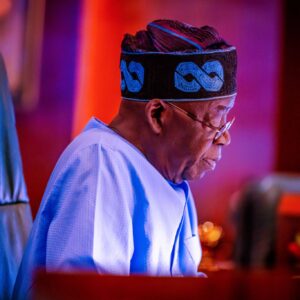
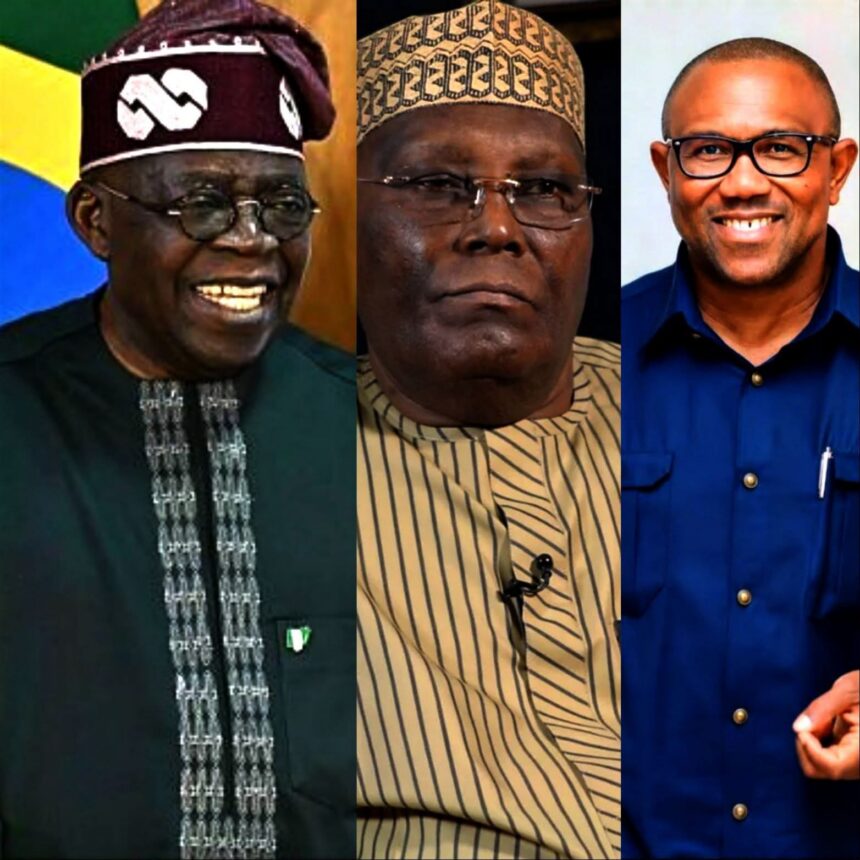
Politicians promise expansively; societies judge conservatively. A leader may pledge heaven and earth, but his precedent remains the only reliable predictor of what he will deliver. As Nigeria approaches the 2027 Presidential election, the nation faces three distinct choices in President Bola Tinubu, Mr Peter Obi and Alhaji Atiku Abubakar. Of the three, Tinubu is the easiest to assess: he has governed for three and a half years as President and his record is public, measurable and consequential.
Our task is clear. We will project how each man is likely to govern by interrogating his precedent. To do this, we apply Precedent Analysis Theory, the socio‑political framework that evaluates future leadership through the consistency and outcomes of past administrative behaviour.

TINUBU: The Architect of Structural Governance
The Leader Who Fought the State Itself
Bola Ahmed Tinubu’s precedent begins with a constitutional confrontation unprecedented in Nigeria’s Fourth Republic. For thirty‑nine months, the Federal Government seized Lagos State’s local government allocations, defying even a Supreme Court judgment ordering their release. Tinubu governed without the statutory funds constitutionally due to his councils, forcing Lagos to survive on internal ingenuity alone. This crucible forged his governing philosophy: confront structural injustice directly, build alternative systems when institutions fail, and treat adversity as a catalyst for institutional redesign. Lagos did not collapse; it adapted. That single episode remains the clearest window into the type of president he is: a leader who responds to structural sabotage with structural innovation.
The Man Who Built a Wall Against the Atlantic
Tinubu’s second defining precedent is the audacity with which he confronted Lagos’ greatest natural disaster. For decades, the Atlantic Ocean swallowed Bar Beach, threatening to erase Victoria Island entirely. The Federal Government’s sand‑pumping palliatives failed repeatedly. Tinubu rejected the cycle of temporary fixes and pursued a permanent engineering solution: an 8.5‑kilometre, 9‑metre‑high seawall tested in Copenhagen and built through private capital. The Great Wall of Lagos did more than stop the ocean; it reclaimed ten million square metres of land and birthed Eko Atlantic City. This is not merely infrastructure, it is a governing instinct. Tinubu’s precedent shows a leader who converts existential threats into generational assets, and who sees private capital not as a rival to the state but as a partner in national survival.
The Architect of Modern Fiscal Autonomy
Tinubu’s fiscal precedent is equally instructive. Whether one adopts the Lagos State baseline of ₦600 million to ₦8.2 billion monthly IGR or the CBN‑audited baseline of ₦1.2 billion to ₦6.9 billion, the trajectory is unmistakable: Lagos became financially sovereign under his watch. He built a revenue architecture that outlived him, expanded under his successors and today anchors a 7,400% growth over 22 years. His method was institutional engineering. He created LASTMA, LAMATA, LASAA, LCDAs, LASEMA and LASAMBUS. He completely reformed LAWMA, created the operational blueprint for BRT, drove the IPP strategy, restructured and heavily funded the Lagos RRS, conceptualised and initialised the LFTZ masterplan, the 20‑year Lagos masterplan and the electronic revenue system that blocked leakages. His electricity philosophy also has deep roots. In 1999, he signed an independent‑power agreement with Enron to bring electricity barges to Lagos, but the project was blocked by the Obasanjo administration and NEPA because power generation and transmission sat on the federal exclusive list. The experience shaped his conviction that Nigeria’s power sector was structurally over‑centralised. As president, he corrected the constraint by signing the Electricity Act 2023, which de‑monopolised the sector and authorised states to create their own electricity markets. He applied the same philosophy to local‑government finance, securing a Supreme Court victory that granted full financial autonomy to all 774 councils. He is now enforcing compliance nationwide. Tinubu governs by building systems that outlast political cycles.
The Shock‑Therapist Who Prefers Long-Term Stability Over Short-Term Comfort
Tinubu’s Lagos years reveal a leader willing to absorb political pain to secure fiscal stability. In 1999, he confronted leakages immediately despite the risk of backlash. As president, he repeated the pattern: removing the fuel subsidy on day one, floating the naira, and triggering painful but necessary macroeconomic corrections. His critics see shock therapy; his defenders see structural honesty. Yet the precedent is clear: Tinubu does not postpone difficult decisions. He pairs harsh reforms with institutional buffers, from outright WASSCE fee payments in Lagos to the national student loan system today. His presidency mirrors his governorship: confront distortions, endure turbulence, and build stabilisers to protect the vulnerable. Whether one agrees with his methods or not, his precedent shows a leader who prioritises long-term solvency over short-term applause.
The Technocrat Who Governs Through Institutions, Not Impulse
Tinubu’s final precedent is his reliance on technocratic think tanks. His 1999 Transition Work Group birthed the agencies that modernised Lagos. Today, his presidency mirrors that architecture: the NEC 90‑day dashboard, the Ministry of Marine and Blue Economy, the Presidential Metering Initiative, the national grid overhaul, and the Lagos‑Calabar Coastal Highway built through PPP models reminiscent of Eko Atlantic City. His governing instinct is institutional, not improvisational. He builds committees, dashboards, regulatory frameworks, and long‑term masterplans. This is the most important projection of all: Tinubu governs through systems, not slogans. His precedent shows a president who will leave behind institutions, not anecdotes or vagueness.
ATIKU: The Reformist With a Bundle of Contradictions
The Liberaliser Whose Reforms Delivered Breakthroughs and Catastrophic Failures
Atiku Abubakar’s most consequential precedent lies in his stewardship of Nigeria’s early‑2000s privatisation programme. As Chairman of the National Council on Privatisation, he championed market liberalisation when Nigeria’s economy was still dominated by state monopolies. The telecom revolution including the licensing of GSM operators and the dismantling of NITEL’s monopoly, emerged from this era and remains one of the most transformative economic shifts in Nigeria’s history. But the same programme produced some of the most controversial transactions in Nigeria’s commercial history. The Federal Government invested between $3.2 billion and $3.5 billion to build ALSCON; yet the plant was sold for $250 million, with $120–$130 million immediately written off for dredging the Imo River. Crucially, the Imo River was never dredged under that arrangement. The net cash received by government was roughly $130 million, just about %3.71% of the public investment. And ALSCON was not alone. A significant majority of the enterprises privatised or concessioned during the Obasanjo–Atiku era eventually collapsed, became moribund, or were stripped of their assets. Atiku’s precedent is therefore dual: he is a liberaliser whose reforms delivered historic gains and historic losses in equal measure.
The Administrator Whose Economic Influence Was Real, But Not Total
Atiku’s economic role deserves both credit and correction. He was central to institutional restructuring, enterprise reform, and the first‑term liberalisation agenda. His influence in the privatisation council was real, documented, and consequential. But The Cable’s fact‑check confirms that he did not lead the Economic Management Team in Obasanjo’s second term. That responsibility shifted to Ngozi Okonjo‑Iweala, who drove debt relief negotiations, macroeconomic stabilisation, and fiscal reforms. Atiku’s imprint is therefore uneven: strong in structural reform, limited in macroeconomic policy. Any projection of his presidency must distinguish between what he actually controlled and what he did not. He is not the architect of Nigeria’s debt relief; he is the architect of its privatisation era, with all its successes and failures.
The Federalist Advocate Whose Record Contains a Structural Contradiction
Atiku has spent two decades advocating restructuring, fiscal federalism, and state autonomy. Yet his tenure as Vice President sits inside a government that executed one of the most centralising actions of the Fourth Republic: the withholding of Lagos State’s constitutionally guaranteed local government funds for 39 months. The administration he served defended this position all the way to the Supreme Court, and lost. This contradiction matters. It raises a serious question for precedent analysis: does Atiku’s federalism advocacy reflect a long‑standing ideological conviction, or is it a post‑tenure political position shaped by Nigeria’s evolving discourse? His record often shows consistency in rhetoric, but inconsistency in institutional action. Nigerians must weigh both.
The Politician Whose Longevity Reflects Ambition, Not Elite Consensus
Atiku’s political durability, spanning four decades and multiple presidential bids, is occasionally mistaken for elite consensus. It is not. His repeated candidacies have placed him at odds with the Northern political establishment, which has largely maintained the unwritten rotational understanding that power should return to the North only in 2031. In this context, Atiku is viewed not as an elite consensus candidate but as a renegade, a politician whose personal ambition overrides regional strategy. His durability reflects persistence, not establishment endorsement. This matters for precedent analysis: Atiku’s governing instinct is not elite alignment but elite defiance. He is a coalition‑builder when necessary, but he is also willing to fracture long‑standing political expectations to pursue his objectives.
The Reformist Whose Presidency Would Be Defined by Negotiated Change, Not Structural Shock
Atiku’s combined precedents such as privatisation, bureaucratic negotiation, federalism advocacy, and political defiance point to a clear projection: he would govern through negotiated reform rather than disruptive overhaul. He is not a shock‑therapist like Tinubu, nor a fiscal minimalist like Obi. His instinct is to reshape institutions through bargaining, persuasion, and political persistence. This approach can produce stability, but it can also dilute urgency. Nigerians must decide whether negotiated reform matches the scale of the nation’s current crises. Atiku’s record is not revolutionary; it is transactional. It is not improvisational; it is managerial. It is not ideologically pure; it is strategically adaptive. His precedent suggests a presidency defined by incremental liberalisation, political bargaining, and selective federalism.
PETER OBI: The Leader Who Managed Crises Without Transforming Systems

The Governor Who Faced an Ecological Catastrophe Without Flinching
Peter Obi’s most formidable governance challenge was environmental, not political. Anambra entered his tenure with over 500 active gully‑erosion sites, one of the worst ecological disasters n Nigeria. Entire communities in Nanka, Oko, Obosi and Agulu were collapsing into ravines, swallowing homes, severing roads and displacing families. Obi frequently claimed he inherited poorly engineered roads without drainage, but this narrative is contested by both his predecessor and successors, who argue that Ngige’s roads were durable and that many of Obi’s own roads deteriorated quickly.
His response to the erosion crisis was institutional rather than improvisational. He lobbied the Federal Government and the World Bank to include Anambra in NEWMAP, a federal–World Bank programme designed in Abuja and approved by IDA in 2012. Obi did not originate NEWMAP; he simply positioned Anambra early by paying the ₦500 million counterpart funding ahead of other states. He then built reinforced concrete channels, retaining walls and redesigned road alignments to slow the devastation. These interventions stabilised critical corridors and protected vulnerable communities, but they did not alter the underlying drivers of erosion. His approach relied on coordination, external leverage and targeted civil‑works responses.
The Administrator Who Works Within Constraints, Not Against Them
Obi’s governing temperament was cautious, incremental and rooted in constraint. He managed problems rather than redesigning systems and preferred stabilisation to structural reform. He often presented this restraint as fiscal discipline, claiming to have cut running costs and left a ₦75 billion asset portfolio. The revenue record, however, is mixed. Anambra’s IGR under Ngige stood at ₦7.3 billion in 2005, fell to ₦4.6 billion in 2006, Obi’s first full year, and rose to ₦8.7 billion in 2013, his last full year. His handling of the 2011 minimum‑wage crisis projected a temperament that favoured minimalist, within‑reach solutions rather than structural reinvention. As Chairman of the South‑East Governors’ Forum, he tied full implementation to a federal review of the revenue‑allocation formula, arguing that the Federal Government retained too much of the national pool and that Anambra’s average ₦3 billion monthly FAAC could not sustain an across‑the‑board increase without pushing recurrent expenditure above 70% of state revenue. He warned that smaller states would “pay wages and shut down.” Labour unions rejected his compromise salary table as an “evil chart,” booed him at a rally in Awka and forced a mediated settlement involving biometric audits and the intervention of state elders. His successors later argued he left more than ₦127 billion in liabilities and over 100 unfunded road contracts. His administrative style relied on controlled expenditure, selective intervention and institutional collaboration, but it did not produce systemic transformation or a redefinition of the state’s operational standards.
The Politician Who Defaults to Flight, Not Consolidation
Obi’s political instinct is markedly different from his administrative caution. When confronted with organisational conflict or strategic uncertainty, he often chooses exit over engagement. After completing his tenure, he left APGA for the PDP rather than consolidating the party he had governed under. At the Labour Party, he abandoned the platform instead of resolving its internal crisis or stabilising the movement that carried him. At the African Democratic Congress, he withdrew rather than contesting the presidential primary. Even after securing more than six million votes in the 2023 presidential election, he took no concrete steps to convert that momentum into a durable political base or a structured national coalition. Across these episodes, a consistent precedent emerges: Obi retreats when the moment demands consolidation, negotiation and political endurance. His instinct is flight, not the construction of lasting political architecture.
The Administrator Who Builds Partnerships, Not Paradigm Shifts
Obi’s tenure left a limited institutional footprint. He did not create new agencies or redesign existing ones, relying instead on frugality, direct intervention and the Anambra Integrated Development Strategy, a budgeting framework built around the UN MDGs. Supporters argue that this light architecture produced tangible outcomes, especially in education, where missionary‑managed schools received direct grants, computers and vehicles, and Anambra rose to the top of national WAEC and NECO performance tables by 2013. The improvement was real, though the baseline recovery began under Ngige and the period also saw a proliferation of unregulated “miracle centres,” 486 of which were shut down for malpractice shortly after Obi left office. His governance style delivered targeted gains in human capital, but it did not produce the institutional depth or structural redesign that defines a transformative administrative legacy.
Obi’s governance record shows competence in managing crises within existing structures, but not in redesigning those structures. He relied heavily on partnerships he did not control, from World Bank erosion programmes to federal ecological funds, and favoured frugality, direct intervention and targeted human‑capital gains rather than institutional expansion. His tenure delivered improvements in school performance and a GDP rise from roughly ₦735.8 billion to more than ₦2.13 trillion. IGR growth remained modest and uneven. Politically, he often chose exit over consolidation, leaving parties rather than resolving internal conflicts and failing to convert his 2023 momentum into a durable national base. His governance footprint was partnership‑driven, outcome‑focused and institution‑light. Nigerians must decide whether this temperament, frugal and structurally modest, matches the scale of the nation’s current crises.

Conclusion
Precedent does not flatter; it reveals. Each of the three men carries a flaw that is not speculative but documented in the architecture of his own record.
Bola Ahmed Tinubu entered office with a bold promise: uninterrupted electricity supply within his first term, and a public invitation to voters to reject him if he failed. He did not deliver on the promise. He probably underestimated the depth of Nigeria’s power crisis, the fragility of the transmission backbone, the depth of the legacy debts, and the scale of the metering deficit. Yet his precedent shows a leader who responds to systemic rots by building systems rather than excuses. The Electricity Act, the Presidential Metering Initiative, the decentralised state grids, the NISO overhaul, and the nationwide renewable deployments form the most comprehensive structural reform of Nigeria’s power sector since independence. Tinubu did not deliver the promise for regular electricity; but he has built the machinery that makes the promise achievable. He met the the net foreign reserves at about $4 billion and built it to over $46 billion despite clearing about $7 billion backlog of foreign exchange due for payment and meeting other obligations. He raised oil production from about 1mbpd to about 1.7mbpd. He has been aggressive in rolling out infrastructure pan Nigeria. He has tackled insecurity with the spine of a 5-star General. He acknowledged the pain his reforms caused but he maintained they were inevitable and they rescued Nigeria from imminent collapse. Nigerians must decide whether Tinubu deserves a second term for his rare audacity to confront inertia.
Atiku Abubakar’s flaw is more structural. The allegations of corruption levelled against him by his own pincipal, the controversies surrounding ALSCON, and the collapse of most privatised enterprises under his watch cast a long shadow over his reformist credentials. His record contains policy somersaults: federalism advocacy that contradicts the centralising actions of the administration he served; liberalisation that delivered both historic gains and historic losses; and political persistence that often placed him at odds with the very elite consensus he claims to embody. Atiku’s precedent is not one of ideological clarity but of strategic adaptation. Nigerians must weigh whether this adaptability is strength or drift.
Peter Obi’s flaw is inconsistency, both in rhetoric and in administrative posture. His record shows fiscal caution that sometimes becomes political evasion, selective compliance that becomes institutional friction and shifting narratives that complicate the reliability of his claims. His immediate predecessor and two successors have contradicted key elements of his stated achievements, creating a pattern that raises questions about the accuracy of his self‑presentation. The minimum‑wage crisis exposed a leader who struggled to balance legal obligation with fiscal restraint, while the erosion battle showed competence in partnership but limited appetite for structural reinvention. Obi’s precedent is cautious, but it is not transformative. It is frugal, but it is not structurally ambitious. Nigerians must decide whether caution is enough in a moment that demands structural courage.
Precedent Analysis Theory does not tell us who will win an election; it tells us how each man is likely to govern. Tinubu’s instinct is structural overhaul. Atiku’s instinct is negotiated reform. Obi’s instinct is administrative frugality. Their flaws are not footnotes; they are part of the projection. The question before Nigerians is simple: which flaw can the nation survive, and which strength can the nation build upon?

Atiku Abubakar
Tinubu Support Group -TSG
Rabiu Musa Kwankwaso
Kashim Shettima
Rt Hon Chibuike R Amaechi
All Progressives Congress
NDC -Nigeria Democratic Congress Rivers State chapter
African Democratic Congress HQ
#Nigeria
#2027Elections
#Tinubu
#Atiku
#PeterObi
Stay ahead with the latest updates!
Join The Podium Media on WhatsApp for real-time news alerts, breaking stories, and exclusive content delivered straight to your phone. Don’t miss a headline — subscribe now!
Chat with Us on WhatsApp