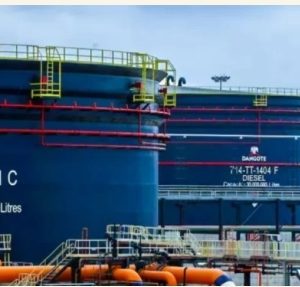




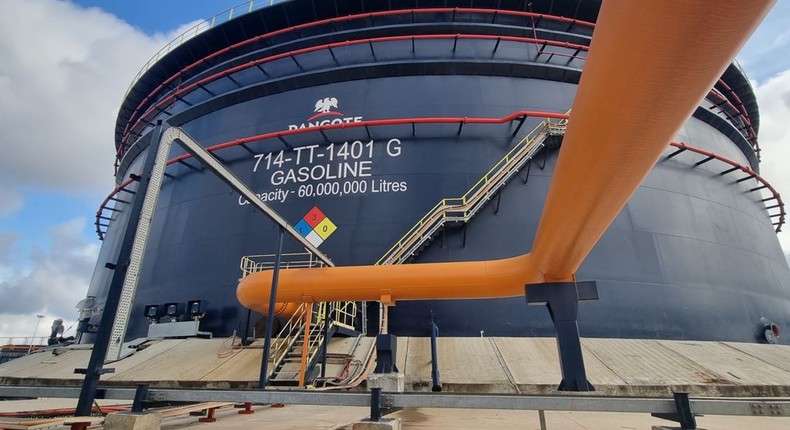
West Africa is stepping up efforts to develop its own petroleum pricing benchmark, as rising refining capacity led by Nigeria’s Dangote refinery begins to reshape a fuel market that has long depended on imports and price signals from outside the continent.
The push could mark another shift in the region’s petroleum trade. West Africa has historically exported crude oil while importing large volumes of refined products, leaving fuel prices heavily influenced by established trading centres in Europe and elsewhere.
The Dangote refinery is helping drive ambitions to turn West Africa into a fuel trading hub, as its growing output changes supply patterns across the region.

But Nigerian policymakers are pushing the ambition further, they want more of the region’s fuel to eventually be priced where it is produced and consumed.
“Our ambition should be that a product refined in West Africa should not have to leave West Africa before the market can credibly determine its value,” Olu Verheijen, special adviser on energy to President Bola Tinubu, said at the West Africa Refined Fuel Market Conference in Abuja on Tuesday.
She said a credible regional benchmark would have to be supported by actual transactions, reliable data, sufficient market liquidity and confidence in the institutions behind it.
Dangote changes West Africa’s fuel market
The push has become more realistic following the emergence of the 650,000-barrel-per-day Dangote refinery, which has significantly increased the volume of fuel produced within the region.
West Africa’s clean petroleum product imports fell to about 765,000 barrels per day in May from 997,000 bpd in April, a decline of roughly 23%, according to S&P Global Commodities at Sea data. The company attributed the changing trade pattern partly to increased output from Dangote.
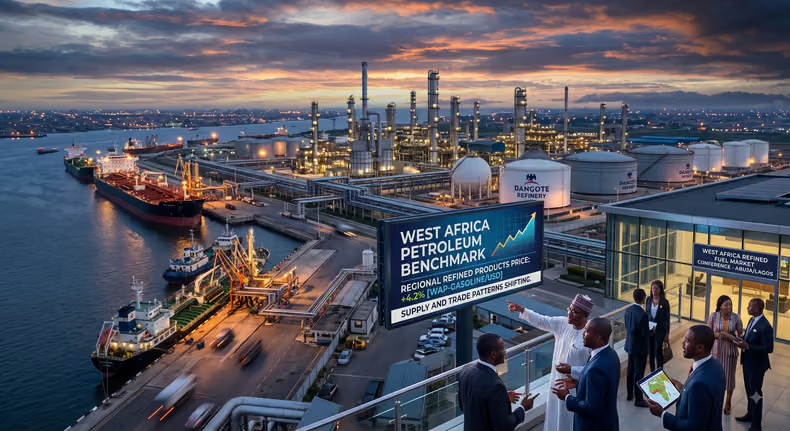
West Africa moves to break dependence on foreign fuel benchmarks as Nigeria pushes for homegrown petroleum pricing hub.[Gemini Generated Image] BI Africa
The refinery has supplied markets within West Africa while also exporting products to Europe and other international destinations, reducing a regional supply deficit that historically made West Africa heavily reliant on imported fuel.
That physical trade is important because a regional benchmark cannot simply be created by regulators.
Nigeria’s downstream regulator acknowledged that challenge in its roadmap presented at the Abuja conference.
“A reference price is not by itself a trading hub. A conference is not a market,” the NMDPRA said, noting that physical infrastructure, commercial liquidity and credible market information remain essential.
The next challenge
The region still lacks much of the infrastructure required to transform greater refining capacity into a deep, integrated trading market.

NMDPRA identified pipelines, storage terminals, jetties, ports, rail networks, road corridors and marine logistics among the assets needed to move petroleum products efficiently between West African markets.
S&P Global’s Platts has meanwhile begun developing the pricing architecture around that trade, including West African fuel assessments intended to reflect regional market fundamentals.
The challenge now is building enough transactions and market participation around those prices for them to become credible benchmarks.
For decades, West Africa’s shortage of refining capacity meant the region imported both fuel and much of the price signal used to value it.
Dangote’s emergence does not automatically end that dependence. But by creating significantly more physical supply within West Africa, the refinery is giving the region something essential to any attempt to establish its own benchmark, a larger market in which African-produced fuel is actually being bought, sold and transported.
Nigeria’s regulator says the eventual goal is a market sufficiently liquid and transparent that a benchmark does not need to be imposed.
When the infrastructure, transactions and participants are in place, it said, “the market itself will produce the benchmark.”
Stay ahead with the latest updates!
Join The Podium Media on WhatsApp for real-time news alerts, breaking stories, and exclusive content delivered straight to your phone. Don’t miss a headline — subscribe now!
Chat with Us on WhatsApp