



Nigeria’s counterfeit medicine crisis is rooted in longstanding weaknesses in the country’s pharmaceutical regulatory system, the Director-General of the National Agency for Food and Drug Administration and Control (NAFDAC), Professor Mojisola Adeyeye, has said.
Nigeria’s counterfeit medicine crisis is rooted in longstanding weaknesses in the country’s pharmaceutical regulatory system, the Director-General of the National Agency for Food and Drug Administration and Control (NAFDAC), Professor Mojisola Adeyeye, has said.
Adeyeye made the remarks during an interview on Channels Television’s Sunrise Daily on Wednesday, as NAFDAC faces increased scrutiny over the continued circulation of counterfeit and unapproved products in the country.

According to her, the removal and eventual return of responsibility for controlling patent medicine dealers contributed to the emergence of open drug markets, which she said became populated by people without adequate knowledge of medicines.
What Adeyeye is saying
Adeyeye traced part of the problem to the way Nigeria regulated patent medicine dealers and the distribution of medicines over the years.
She said the responsibility for regulating patent medicine dealers was removed from the Pharmacy Council of Nigeria (PCN) for a period and later returned, but by then, many people without adequate knowledge of medicines had entered the trade.
- “Decades ago, we had controlled patent medicine dealers and the Pharmacy Council of Nigeria was in charge, mandated to be the agency in control of that,” she said.
- “That responsibility was taken from the Pharmacy Council of Nigeria for many years, and it was returned, but by the time it was returned, the country is flooded with people that don’t understand anything about medicine,” she added.
The DG linked the situation to the country’s longstanding problem with substandard and falsified medicines.
- “So, in terms of substandard, falsified medicines, we created it in this country,” she said.
Adeyeye said the situation contributed to the growth of open drug markets, where medicines could be handled and sold outside the formal regulatory system.
Adeyeye said the problems that have existed for decades cannot be changed overnight, but added that NAFDAC is working to change the situation.
- “The problems that have been there for decades, you can’t change it overnight, but we’re changing it. We are changing it not overnight. It may be over five years, it may be over three years. We are changing it,” she said.
Adeyeye also pointed to changes in the way medicines are registered in Nigeria as part of efforts to improve the quality of products entering the market.
She said Nigeria had not consistently used international standards for drug registration in the past, noting that NAFDAC now uses the Common Technical Document as a template for registering medicines.
- “There’s what is called the Common Technical Document, and I’m talking about drugs now. It’s a template for registration. You’ve got to use international standards in whatever you do, and it takes time. It takes time,” she said.
Adeyeye stressed that international standards must be used in drug registration, while acknowledging that the process takes time.
Get up to speed
NAFDAC has come under increased scrutiny in recent weeks amid a persistent counterfeit product problem and stepped-up enforcement across the country.
- In August 2026, NAFDAC received 225 complaints about suspected counterfeit products, according to Adeyeye.
- NAFDAC has also intensified its enforcement operations. Between May and July 2026, the agency said its nationwide post-marketing surveillance activities led to the removal of 7,210 products and contributed to 64 convictions, as part of its efforts to tackle substandard and falsified products.
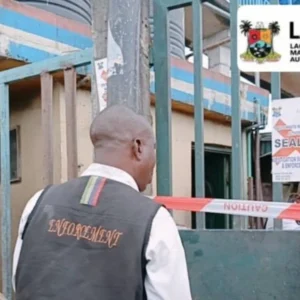
- NAFDAC has also stepped up action against unapproved consumer products. In August, the agency shut several shops at Lagos’ Trade Fair Complex over suspected dealings in unregistered cosmetics, with affected premises placed under NAFDAC HOLD pending further regulatory action.
The agency’s crackdown has, however, generated pushback from some businesses and traders affected by its enforcement measures.
- In August, Nairametrics reported that retailers protested NAFDAC’s enforcement of the ban on sachet alcohol and alcohol packaged in PET bottles below 200ml, saying the seizures had caused significant financial losses and threatened their livelihoods.
The scrutiny has also extended to the leadership of the agency. This month, Adeyeye publicly responded to calls for her resignation while defending her record at NAFDAC, adding to the broader debate over the agency’s enforcement approach and its handling of Nigeria’s counterfeit-product problem.
What you should know
Nigeria’s pharmaceutical industry remains heavily dependent on imported medicines and production inputs, leaving local manufacturers exposed to foreign exchange pressures and rising production costs.

Nairametrics reported in August 2026 that more than 70% of medicines in Nigeria are imported, while local pharmaceutical manufacturers import more than 96% of their raw materials and active pharmaceutical ingredients.
The situation has left the industry particularly vulnerable to naira volatility and higher input costs.
Stay ahead with the latest updates!
Join The Podium Media on WhatsApp for real-time news alerts, breaking stories, and exclusive content delivered straight to your phone. Don’t miss a headline — subscribe now!
Chat with Us on WhatsApp