
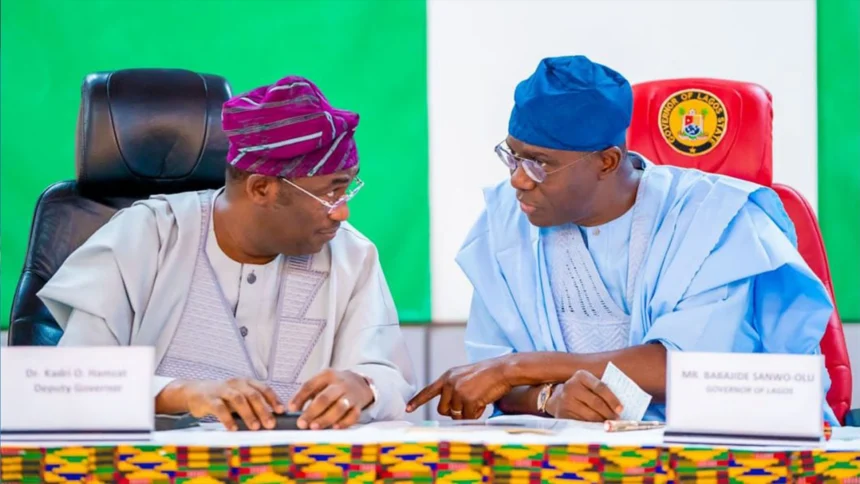
As the ruling All Progressives Congress (APC) seeks to extend its 27-year hold on Lagos State, its governorship candidate, Obafemi Hamzat, faces the challenge of convincing voters why the party deserves another term, amid lingering gaps in infrastructure, unkept promises and questions about the opposition’s capacity to offer a credible alternative, SEYE OLUMIDE reports.
For millions of Lagosians, the debate over who succeeds Governor Babajide Sanwo-Olu in 2027 is inseparable from the everyday challenges of expensive accommodation, traffic congestion, rising food and transportation costs, inadequate public healthcare and unemployment.
Beyond political endorsements and campaign promises, many residents want to know what another four years of APC government would mean for their welfare and quality of life.

Yet, the succession debate raises a fundamental question: what does another four years of APC government offer Lagosians, and why should they support a political establishment that has governed the state since 1999?
The question has gained prominence following Sanwo-Olu’s public endorsement of his deputy, Hamzat, as his successor. The endorsement, made at the unveiling of Hamzat’s governorship manifesto on October 30, reflected confidence in their working relationship but also brought the outgoing administration’s record and the case for continuity under closer scrutiny.
For Hamzat, securing the backing of influential party leaders is only part of the challenge. He must convince voters that his experience in government and the APC’s development record offer credible solutions to their economic and social concerns.
The burden and benefits of continuity
SINCE the return to democratic rule in 1999, Lagos has remained under the control of the same political establishment, beginning with the Alliance for Democracy (AD), which evolved through the Action Congress (AC) and Action Congress of Nigeria (ACN) before becoming the APC.
The administrations of former governors Bola Tinubu, Babatunde Fashola, Akinwunmi Ambode and incumbent Sanwo-Olu have pursued different development programmes, but continuity has remained the central argument for retaining power.
Tinubu’s administration (1999–2007) laid important foundations through revenue reforms, improved urban management and the development of institutions to support a rapidly expanding commercial centre. Fashola’s tenure (2007–2015) recorded further investments in roads, public transportation, environmental management and urban renewal.
These interventions helped improve Lagos’s infrastructure and administrative capacity. However, the central question for voters is whether the benefits of this transformation have reached residents across different income groups and communities.
For millions of Lagosians, the challenges remain expensive accommodation, poor drainage, traffic congestion, inadequate public healthcare, unemployment and the rising cost of transportation.
The APC’s case for continuity must therefore address the gap between Lagos’s ambition as a globally competitive commercial centre and the everyday experiences of ordinary residents.
What have Sanwo-Olu and Hamzat delivered?
SANWO-OLU’S endorsement of Hamzat rests substantially on their partnership since 2019. The governor has repeatedly described his deputy as an active participant in major policy decisions, including infrastructure development and the state’s response to COVID-19.
However, if Hamzat is to inherit the administration’s development agenda, voters will want to know what the partnership has delivered and what remains unfinished.
The administration can point to the commencement of commercial operations on the Blue Line rail system in September 2023, the introduction of the Red Line, and road construction, healthcare investments, and improvements in public transportation.
The state government disclosed in June 2026 that it had completed 362 roads, covering approximately 347 kilometres, since 2019. It has also reported investments in public facilities and urban infrastructure across the state’s five divisions.

Regarding transportation, the government has introduced interventions to improve access to public buses and reduce commuting costs. In April 2025, it said it had spent N14.9 billion on transportation subsidies over six years.
The Blue Line rail transported about 3.5 million passengers in 2025, averaging about 15,000 passengers per day. While the service represents an important addition to Lagos’s transport infrastructure, questions remain about its reach, affordability and impact on commuting time and costs.
Similarly, although the government said its transportation subsidy supported 18.54 million commuters in 2024, the extent of relief provided to regular commuters, particularly low-income earners, deserves closer examination.
Healthcare presents another test. Despite investments in primary healthcare facilities, concerns remain about staffing, essential drugs, infrastructure and access to quality services, especially in underserved communities.

The housing sector raises similar questions. The administration says it has delivered 10,623 housing units since 2019. However, with accommodation costs continuing to place pressure on household incomes, voters will want to know how accessible these homes are to low-income earners and young families.
Employment is equally important. Beyond skills acquisition and empowerment programmes, what measurable progress has been made in creating sustainable jobs for young people? How many beneficiaries have secured lasting employment or established businesses capable of supporting their livelihoods?
These are the issues that will shape public assessment of the Sanwo-Olu-Hamzat partnership. Hamzat must do more than defend the administration’s record; he must demonstrate how its policies have improved living conditions and what he intends to do differently.
In his manifesto, the deputy governor promised to increase Lagos’s public bus fleet from 1,000 to 4,000, upgrade 100 primary healthcare centres, increase maternal and child healthcare facilities from 10 to 15, and provide 580 additional hospital beds.
He also pledged to extend Ilera Eko health insurance coverage from nearly two million people to one in every three residents, build two general hospitals and expand rail, road and water transportation.
Other commitments include affordable housing through 10 per cent deposits and single-digit interest rates, vocational training and employment opportunities for youths, improved public school education, stronger neighbourhood security and better environmental management.

He further promised measurable performance targets and greater accountability in government.
Economic hardship and the cost of living
ANOTHER challenge confronting Hamzat is the economic environment created by the APC-led Federal Government under President Bola Tinubu.
The removal of petrol subsidy and foreign exchange reforms have had far-reaching consequences for household expenditure and business operations.
Although the Federal Government has defended the measures as necessary to improve public finances and stabilise the economy, their immediate effects have included higher transportation, food and production costs.
Nigeria’s headline inflation eased to 14.63 per cent in September 2026, but food inflation remained at 19.59 per cent, according to the National Bureau of Statistics.
A Lagos State economic outlook report also acknowledged that subsidy removal and exchange rate reforms worsened household welfare and business operating costs.
This presents a political challenge for Hamzat. Although state and federal responsibilities differ, voters may not necessarily separate their assessment of the two administrations when deciding whether to support another APC government.
He will therefore need to explain how his administration intends to protect household welfare, create employment, reduce the cost of urban living and expand access to essential services.
More infrastructure alone may not be sufficient if residents cannot afford transportation, housing and other basic necessities.
One of the major projects featured in Hamzat’s manifesto is the proposed Fourth Mainland Bridge, which he promised to deliver if elected. The project represents an important test of the APC’s development commitments.
First proposed during Tinubu’s administration in 2003, the bridge has survived successive administrations, revised designs, financing arrangements and repeated commencement announcements without reaching physical construction.
The Ambode administration signed an agreement with a consortium in 2016, but the arrangement was cancelled in 2017. Under Sanwo-Olu, a preferred bidder was announced in December 2022, followed by financing arrangements involving Afreximbank and Access Bank. However, as reported in January 2026, construction had yet to commence.
For residents who spend hours negotiating traffic between the mainland and the rapidly expanding Lekki-Epe corridor, the bridge represents more than an ambitious infrastructure proposal. Its prolonged delay has implications for mobility, business productivity and quality of life.
The question is whether Hamzat can finally deliver the project or whether it will remain another unfulfilled promise.
A commercial bus driver operating on the Ikorodu-Victoria Island-Ajah route, Salau Akanni, said completing the bridge within the next administration’s four-year tenure would address some of the transportation difficulties confronting Lagos residents.
Akanni told The Guardian that he spends between three and four hours travelling from Ikorodu to Ajah in the morning, with almost the same time behind the wheel on his return journey. He said the prolonged journeys increase fuel consumption, waste valuable time and take a toll on his health.
“We expect whoever is going to govern Lagos in the next four years to deliver the bridge,” he said.
Housing is another major concern. A 2025 report on the Lagos housing market estimated the state’s housing deficit at approximately 3.4 million units, raising questions about the effectiveness of successive interventions and the affordability of homes being delivered.
Hamzat’s manifesto proposes expanding transportation, healthcare and housing infrastructure. However, voters will expect clear differences between these commitments and previous promises, as well as credible guarantees of implementation.
The opposition’s challenge
DESPITE the social and economic difficulties confronting residents, opposition parties have struggled to dislodge the ruling political establishment since 1999.
The 2015 governorship election, in which APC’s Akinwunmi Ambode defeated the PDP’s Jimi Agbaje by 811,994 to 659,788 votes, demonstrated that the ruling party could face a substantial electoral challenge.
In 2023, the Labour Party’s Gbadebo Rhodes-Vivour also attracted considerable support, polling 312,329 votes against Sanwo-Olu’s 762,134. The result demonstrated the opposition’s capacity to mobilise voters, although it was insufficient to secure victory.
Opposition parties have continued to grapple with internal divisions, leadership disputes, defections, weak grassroots structures and competing political ambitions.
However, a former Lagos PDP chairman, Tunji Shelle, argued that their difficulties were not entirely self-inflicted.
He attributed the opposition’s challenges partly to internal divisions and partly to what he described as the ruling party’s Machiavellian tactics to divide and weaken its opponents.
Shelle also pointed to the APC’s longstanding political structure, its influence across local government areas, and its established grassroots networks as factors contributing to its dominance.
Opposition parties and civil society actors have also raised concerns about the political environment in which they operate, including the circumstances surrounding electoral competition.
The difficulties facing the opposition, therefore, cannot be attributed exclusively to either its internal weaknesses or the influence of the ruling party.
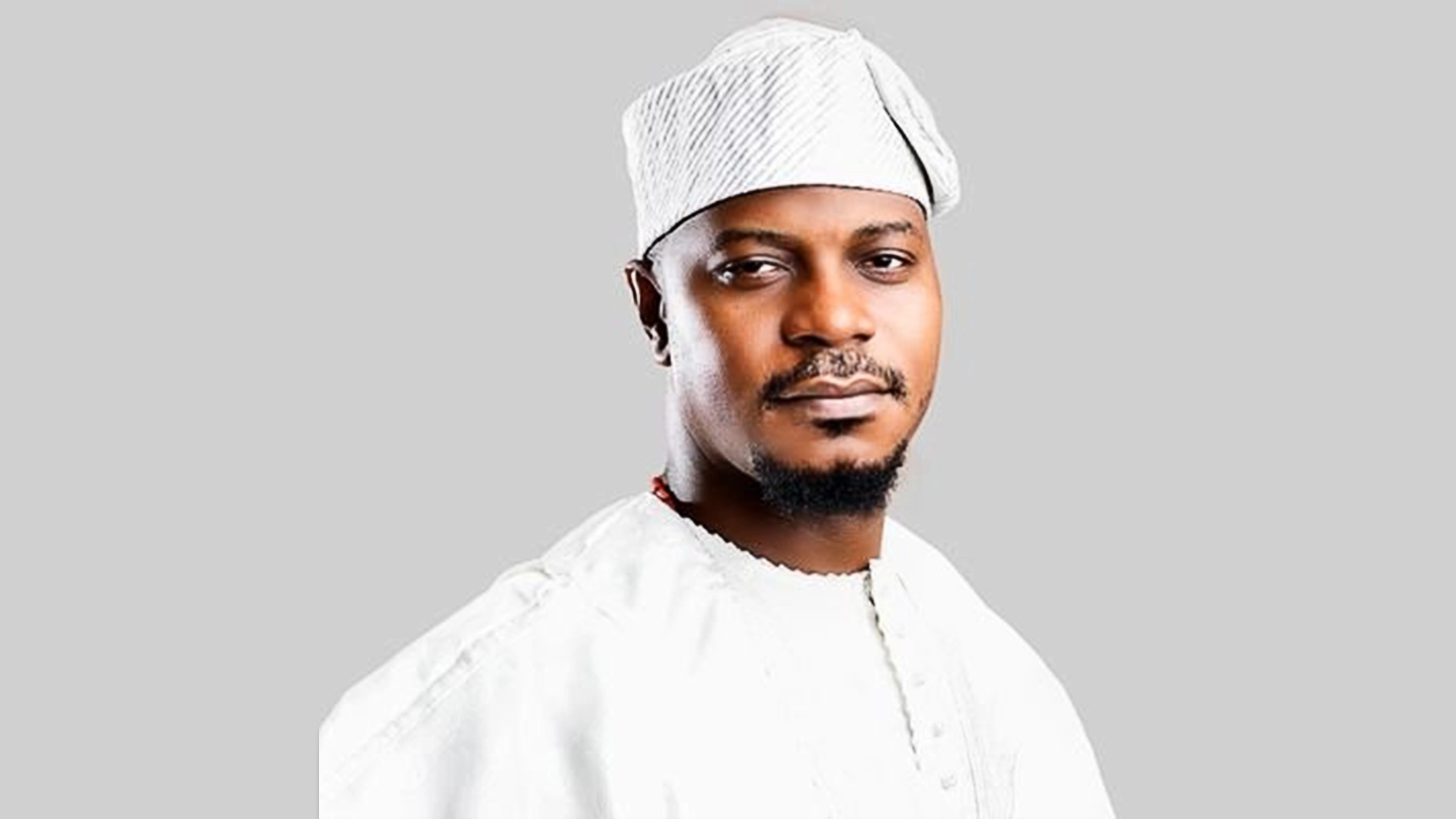
Dismissing the perception that the APC is politically invincible in Lagos, the African Democratic Congress (ADC) governorship candidate, Rhodes-Vivour, said his political profile and grassroots network had grown considerably since the 2023 election.
“Gbadebo Rhodes-Vivour of 2023 is not Gbadebo Rhodes-Vivour of 2026. We have been doing the work; we have been building structures in communities; we have entrenched ourselves. We are standing for the people,” he said.
He added that his engagement with residents affected by demolitions across Lagos had strengthened his relationship with communities and reinforced his vision for the state.
Stay ahead with the latest updates!
Join The Podium Media on WhatsApp for real-time news alerts, breaking stories, and exclusive content delivered straight to your phone. Don’t miss a headline — subscribe now!
Chat with Us on WhatsApp