


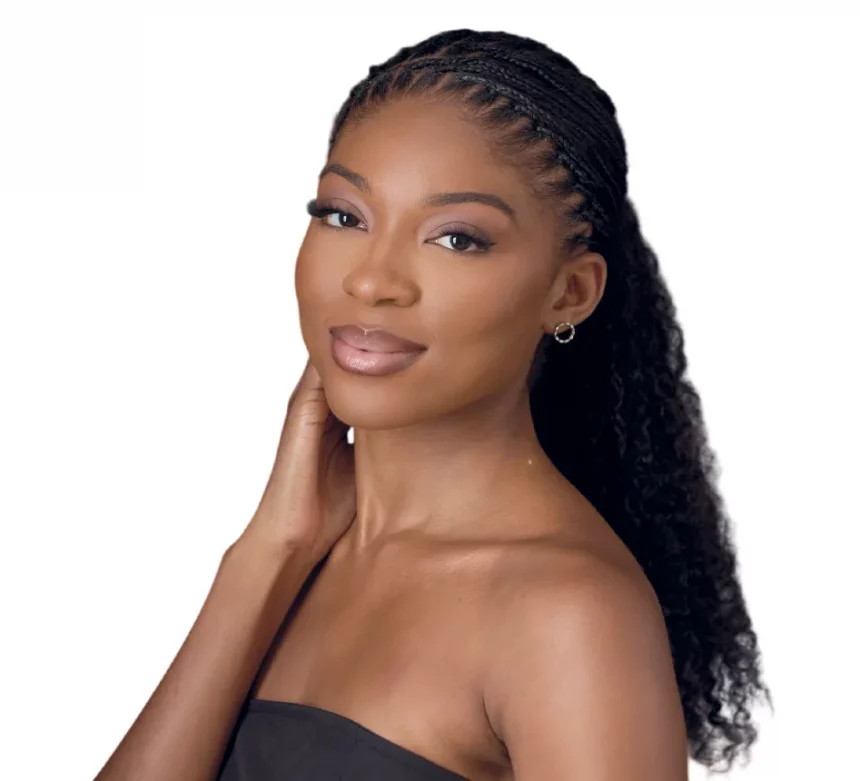
Medical doctor, model, public speaker and Miss Universe Nigeria contestant, Dr Danielle Adewusi, tells TOFARATI IGE about her career, beauty pageant legacy and other issues
Thirty-five years ago, your mother won Miss Universe Nigeria, and now you hope to reclaim the title. Was this a childhood dream?
I grew up with an appreciation and respect for pageantry because of my mother, but it was never my main focus. My priority was excelling in school, studying Medicine and becoming a doctor.

It was during medical school that I had a moment of reflection. I was often told that Medicine required complete sacrifice and couldn’t coexist with my other passions. But I didn’t want a life where I had to choose between the things I loved. I didn’t believe I truly had to.
One day, I wrote down everything I felt called to do: medicine, women’s health advocacy, helping young people, influencing policy, modelling, public speaking, travel and more.
When I looked at the list, I realised I wasn’t describing several different careers. I was describing one, and it already existed: Miss Universe.
That was the moment I decided I would compete. Not because I wanted a crown, but because I saw the platform for what it truly is: an opportunity to represent my country while championing women’s health and creating meaningful change for women and girls in Nigeria and beyond.
The fact that this journey comes 35 years after my mother represented Nigeria was never planned, but it has made the experience even more meaningful.
You mentioned that this is about continuing a legacy far beyond yourself. How do you deal with the pressure that comes with that?
Honestly, I don’t feel pressured. I have complete confidence in God’s plan for my life because I have seen His faithfulness at every stage of my journey.
That doesn’t mean I sit back and do nothing. Faith without works is dead, so I work hard, stay committed and give my best.
I also believe that what God has ordained doesn’t have to be forced. That gives me a real sense of peace. Rather than worrying about living up to a legacy, I trust that God has prepared me, placed me exactly where I am meant to be, and will use me exactly as He intends.
Can you share some of the important lessons your mother has taught you about beauty and pageantry?
My mum hasn’t actually given me specific tips about pageantry. Instead, she raised my sisters and I to be queens in our own right.
She taught us to be unapologetic about taking up space, to be confident in our opinions, to stand up in the face of injustice, and to embrace the qualities that make us unique. That upbringing was the greatest preparation of all.
When it came to beauty, my mum always encouraged me to be confident in my appearance. As someone who was much taller than my peers growing up, she never allowed me to see my height as something to hide but as an advantage. She taught me to stand tall, and people often complimented me on my posture. I still remember her telling me at the age of nine, “You were made to stand out. Don’t ever try to fit in.”
Being raised by a queen who embodies elegance, intelligence, confidence and poise meant I was surrounded by those qualities from the beginning. My mum didn’t teach me how to compete in pageants; she taught me how to carry myself with confidence, integrity and grace, both on and off the stage.
What made you decide to enter Miss Universe Nigeria 2026, and how does pageantry align with your mission in medicine and advocacy?
I always knew I wanted to enter Miss Universe Nigeria, but I wanted to ensure I had achieved important milestones in both my medical career and my foundation: Scrub The Stigma, before committing fully to the competition. I prayed about the decision, and I knew the timing was right.
Pageantry provides a platform to amplify the work I’m already doing. My mission has always been to improve women’s health outcomes through education, advocacy and outreach, and Miss Universe Nigeria gives me the opportunity to take that work across the country, reaching women and girls who need it the most.
For me, medicine and pageantry aren’t separate worlds. They are simply different platforms that allow me to pursue the same purpose: creating meaningful change in the lives of women and girls.
How do you intend to use the Miss Universe Nigeria platform to amplify women’s health issues?
I believe women’s health is at the centre of many of the social issues and injustices women face. As such, I want to use the platform to make women’s health impossible to ignore.
The primary causes I will champion are women’s health education and improved access to healthcare. Education is the foundation because women cannot advocate for their health if they don’t know what is normal, what isn’t, or when to seek medical attention. However, education must go hand in hand with addressing the barriers that prevent women from accessing quality healthcare.
I want to use the platform to expand our Educate Programmes, reach more states, partner with individuals and organisations already doing incredible work, and inspire greater action on women’s health.
What advice do you have for young women about combining beauty with impact?

It is my firm belief that we are all blessed with unique gifts, talents and abilities that should be used in service of others.
I want young women watching me to understand that they don’t have to choose between intelligence and beauty, between having a successful career and pursuing pageantry, or between ambition and compassion. They can be all of these things.
If my journey encourages even one young girl to pursue her dreams unapologetically, without feeling she has to fit into a single box, while using her gifts to make a positive difference in the lives of others, I will consider that a success.
Combining pageantry, medicine, charity and public speaking is demanding. How are you preparing mentally and physically for Miss Universe Nigeria while staying true to your work?
It is certainly a lot, but balancing multiple responsibilities isn’t new to me. Over the years, I have learnt that you can’t pour from an empty cup, so looking after myself is a priority rather than an afterthought.
Physically, that means making time for sleep, exercise, proper nutrition and listening to my body when it needs rest. Mentally, I journal, pray and place complete confidence in God’s plan for my life. That gives me peace and reminds me that I serve a purpose greater than myself.
You once served as a United Nations Women United Kingdom delegate to the Commission on the Status of Women. What was the most powerful lesson you took away from that experience?
I realised that the challenges facing women don’t stop at national borders. Whether you are speaking with delegates from Asia, Africa, Europe or America, many of the same issues emerge: barriers to healthcare, education, safety and opportunity.
What differs is the context, not the need. While solutions must always be tailored to the communities they serve, there is so much we can learn from one another by sharing research, innovation and lived experiences.
The experience reinforced that improving the lives of women and girls isn’t simply a local or national issue; it is a global responsibility.
You graduated from King’s College London with an MBBS and a First-Class BSc in Psychology. What was the defining moment during medical school that made you realise you wanted to do more than treat patients one-on-one?
It was during my Obstetrics and Gynaecology rotation that I truly grasped the scale and complexity of the barriers women face in accessing healthcare.
Women’s health has historically been underfunded and under-researched, while culture, stigma and socioeconomic factors often determine whether a woman seeks care or receives the treatment she needs.
It made me determined to become the best doctor I could be; to listen to my patients and advocate for them. But I also realised that I could only help the women sitting in front of me. That left me thinking about all the women who never get to see a doctor who understands those barriers.
I realised that if I wanted to create lasting change, I couldn’t just treat patients one-on-one. I also had to work to improve women’s health beyond the hospital walls.
From your work in the UK and Nigeria, what’s the single biggest barrier to women’s healthcare today that people don’t talk about enough?
A lack of education.
Whether in the UK or Nigeria, too many women and girls grow up without being taught about their bodies or their health. As a result, symptoms are often dismissed or accepted as “normal”, leading to delayed diagnosis, delayed treatment and poorer health outcomes.
Education is also needed within healthcare itself. Women’s health is far more nuanced than any textbook can capture. Providing truly equitable care requires more than clinical knowledge; it demands an understanding of the cultural, social and economic factors that shape a woman’s health and her ability to access care.
Ultimately, education is what changes systems and improves outcomes for women.
What inspired the Scrub The Stigma foundation?
I didn’t set out to start a charity. Scrub The Stigma began as a fundraising event while I was at medical school, raising money for organisations supporting women affected by domestic abuse, female genital mutilation, and acid attacks.
I have always loved organising events, and because women’s health is so heavily stigmatised and often considered an uncomfortable topic, I wanted to create a space where people could learn and have open conversations in a fun, interactive way. The scrubs theme came to me instantly, and my best friend came up with the name. It was perfect.
The event was a huge success, but more importantly, it showed me just how eager people were to have those conversations, especially when they were presented in an engaging, community-focused way. What started as a one-off fundraiser has since grown into the charity it is today.
Can you walk us through one educational programme or healthcare initiative by Scrub The Stigma that you’re most proud of?
Our recent Educate Lagos programme was truly unforgettable.
It began in the UK, where we hosted our Christmas Brunch to raise funds for educational materials, including our special-edition cycle diaries. Alongside this, our Period of Giving donation drive collected hundreds of menstrual health products, including sanitary pads, wipes, new bras and underwear. We also included small gifts simply because we wanted the girls to feel cared for and, most importantly, to enjoy being children.
We then shipped the resources to Nigeria and delivered the programme in partnership with FeRMHA at a secondary school in Mushin, Lagos. Through interactive workshops, we educated more than 150 girls about menstrual health, including what is normal, what may require medical attention and when to seek help.
You’re a classically trained pianist and cellist from the Guildhall School of Music. How has music shaped your discipline and creativity in medicine and advocacy?
Being classically trained teaches you that there are no shortcuts. You can’t cram for a performance or rush years of practice. It requires discipline, consistency, patience and humility; qualities that have shaped every aspect of my life.
Music also taught me that there isn’t always one “right” way to make an impact. Two musicians can perform the same piece beautifully yet interpret it differently. Your individuality is one of your greatest strengths.
I believe the same is true in medicine and advocacy. We all have different gifts and perspectives, and when we embrace them, we connect with people and create change in ways that no one else can.
Beyond Miss Universe and your current projects, what is the long-term vision for you?
My long-term vision is to become a global champion for women’s health, using medicine, advocacy and public platforms to improve the lives of women and girls on a much larger scale.
I also hope to be in the rooms where key decisions are made, working alongside governments and global organisations to help shape policies and conversations that improve women’s health outcomes. Lasting change requires both grassroots action and systems-level leadership, and I hope to contribute meaningfully to both
Stay ahead with the latest updates!
Join The Podium Media on WhatsApp for real-time news alerts, breaking stories, and exclusive content delivered straight to your phone. Don’t miss a headline — subscribe now!
Chat with Us on WhatsApp