




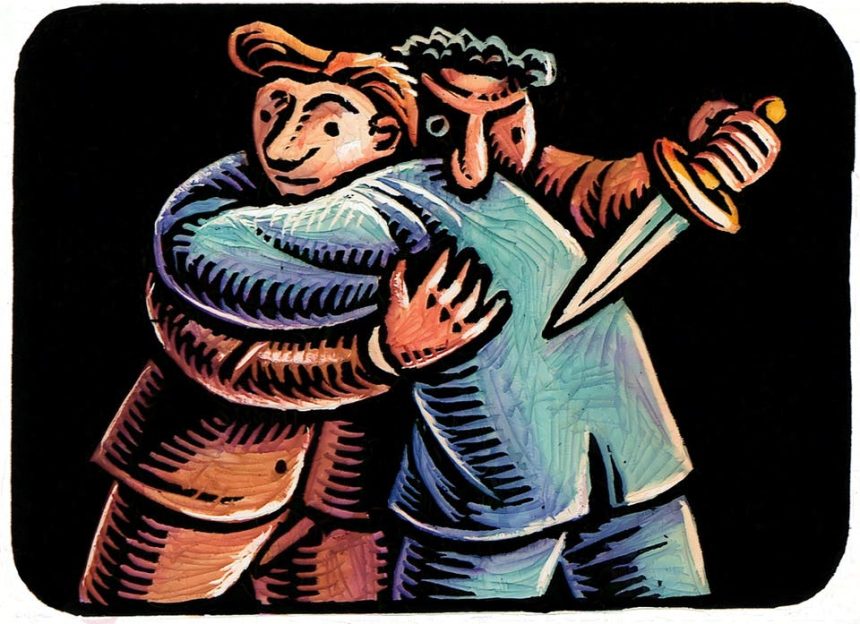
Personality traits often blur between desirable and undesirable, with positive qualities becoming negative in extreme. Judging others’ character is challenging, as individuals frequently “fake good” through strategic impression management, complicating the notion of authenticity. The article notes the overlap between emotional intelligence and psychopathy; while EQ is lauded, psychopathic traits can surprisingly predict career success due to charm and appearing calm under pressure. Discerning genuine niceness from manipulation lacks a foolproof method. Key clues include observing how people treat those who offer no personal gain, their reactions when interests diverge, and if they escalate tactics when initial charm fails. Ultimately, consistent kind actions, regardless of underlying motives, are paramount.
One of the most fascinating features of personality is the thin line between desirable and undesirable traits. Systematic research shows that even socially valued character traits, such as confidence, can become rather less appealing when taken to the extreme (overconfidence, hubris and delusional arrogance). The most data-driven interpretation of any “dark trait” or maladaptive tendencies is as quantitative (rather than categorical) deviations of otherwise adaptive traits: conscientiousness can turn into obsessive detail orientation and micromanagement, ambition into megalomania and interpersonal ruthlessness, and honesty into brutal transparency or lack of self-editing.
It is also noteworthy that people are generally unreliable judges of others’ character traits, not least because even people with below-average social skills find it relatively straightforward to “fake good” and engage in strategic impression management, displaying rogue signals of desirable traits and concealing traits, values, and beliefs that may hinder their ability to elicit trust and establish and maintain positive ties with others, especially in professional settings. As I have noted, this is the major flaw with the popular notion of “authenticity”: if you have no filter, let everybody know how you feel about everything, and display your genuine and spontaneous feelings and thoughts to your coworkers and boss, you may be admired for your authenticity, but you will probably be regarded as rude, careless, and socially inept.

Conversely, some of the most socially adjusted and politically skilled people may not be as nice as they seem, which highlights another murky line between the bright and dark sides of personality. Most notably, consider the overlap between emotional intelligence (EQ) and psychopathy. Whereas EQ has been the “darling” of corporate competencies since Daniel Goleman’s (unscientific) claim that it mattered more than IQ, there are very few redeeming features about psychopathy, a trait associated with antisocial, callous, and unemotional tendencies that pose a threat to others. However, like EQ, psychopathy has been found to predict career success in organizations, with senior leaders over-indexing on psychopathic traits compared to the overall population, especially in corporate settings. Most notably, corporate psychopaths are often seen as charming, strong communicators, and interpersonally skilled. Likewise, Machiavellianism (which is strongly correlated with psychopathy), combines sophisticated political skills with a selfish propensity to manipulate others, so could easily be mistaken by EQ.
Furthermore, at its core, EQ is mostly about intrapersonal “skills” (low neuroticism, or high emotional stability), best seen in individuals who are calm under pressure, emotionally unreactive, cool-headed, and phlegmatic. Behaviorally, some of these markers could also mask psychopathic tendencies. Indeed, psychopathic individuals are fearless, which makes them not just appear, but actually be calm under pressure, and their thrill-seeking appetite could easily be mistaken for resilience and courage when faced with adversity. If you want the best person for a poker game or fooling a lie detector (an unreliable tool), your best pick is someone with high EQ or psychopathic tendencies. That said, under normal conditions psychopathic individuals will struggle with impulse control, not to mention empathy, which explains why most studies examining the correlation between quantitative measures of psychopathy and EQ report small but negative associations.
So, how can we tell if someone is being nice or just acting nice for their own personal gain? Furthermore, is there any reliable way for working out whether someone likes us or is trying to take advantage of us, or trying to manipulate us?
The short answer is that there is no foolproof method, because successful manipulation depends precisely on making self-serving behavior seem prosocial. Furthermore, deception is often just rooted in self-deception, which explains why thinking positively about yourself (even when you shouldn’t) may translate into adaptive and desirable interpersonal behaviors, such that “faking good” is a far more prosocial choice than “honest hostility”. Needless to say, as of today, there is no objective way of knowing either what someone really thinks “deep down” or who someone “really is”; fortunately, AI-brain interfaces such as Neuralink are still a work in progress, and there’s no real sense that it will reveal who someone “truly” is, though George Orwell may have anticipated some of the creepy social implications of technology capable of invading the last bastion of human privacy: our thoughts.
Still, there are some useful clues.
The first is to pay less attention to how people behave when being nice is easy, visible, or advantageous, and more attention to what they do when kindness is costly, inconvenient, or unlikely to be rewarded. For instance, your colleagues may be very agreeable and kind to their boss but rude to their more junior colleagues, or the cafeteria waiter. As Goethe allegedly noted, “You can easily judge the character of a man by how he treats those who can do nothing for him.” Anybody can be charming to a powerful boss, an attractive stranger, or a potentially useful client; character is more diagnostic when there is little reputational or instrumental benefit to behaving well. This is why observing how people treat those who have less status, power, or usefulness to them can be so revealing. Likewise, genuine niceness should have some degree of consistency across situations and audiences. If someone’s warmth, generosity, and empathy mysteriously switch on in the presence of important people, only to disappear when the audience does, you may be observing social skill rather than kindness.
A second clue is to focus less on isolated behaviors and more on patterns over time, especially what happens when your interests stop aligning with theirs. Manipulative people can be extraordinarily generous, attentive, and supportive when there is something to gain, which is precisely why judging character from early impressions is so difficult. The more diagnostic moments tend to occur when you disagree with them, reject their advice, say no to a request, outperform them, stop being useful, or simply fail to provide the admiration and validation they expect. Nice people may of course become irritated, disappointed, jealous, or defensive, since niceness does not require sainthood. The critical difference is whether they can tolerate these frustrations without punishing you, withdrawing affection, weaponizing private information, recruiting others against you, or turning yesterday’s generosity into tomorrow’s invoice. In that sense, perhaps the best test of whether someone is genuinely nice is not how well they treat you when they want something from you, but how they behave when they realize they may get nothing at all.
A third clue is how they react when niceness isn’t effective. In other words, what happens when their agreeable or polite approach to attaining something doesn’t work? This is particularly revealing because manipulation is ultimately less about any specific behavior than about using whatever behavior is most effective for producing the desired response in others. One useful sign is behavioral escalation: when charm, praise, generosity, or flattery fail, manipulative people may progressively increase the pressure, switching to more assertive, guilt-inducing, passive-aggressive, intimidating, or even hostile tactics. The contrast can be striking: the colleague who enthusiastically praises your idea when trying to win your support may suddenly question your competence when you oppose theirs; the boss who presents a request as an exciting opportunity may quickly reframe it as an obligation when you decline; and the friend whose warmth fails to secure a favor may resort to reminding you of everything they have previously done for you. Genuine niceness, by contrast, tends to survive failure. Nice people may change their arguments, negotiate harder, or express frustration, but they are less likely to escalate their behavior simply because the original strategy stopped working. In that sense, behavioral escalation provides a useful window into motive: when niceness is merely a means to an end, its failure tends to reveal the other means someone was prepared to use all along.
A final clue is to examine their broader character. In particular, when niceness is coupled with heightened ambition, it is safe to assume that the person is trying to “get along” in order to “get ahead”, and perhaps even masking their power-drive with superficial niceness. To be sure, successful leaders manage to master this self-presentational skill with the talent of great method-actors. So, they are consistent, convincing, and seem genuine and trustworthy to others because they manage to stay in character all the time – in essence, they have mastered the difficult art of strategic authenticity, making their professional self indistinguishable from their personal self.
In the end, it is always helpful to accept that what matters most is not how people feel or think “deep down,” but how they show up. We are what we repeatedly do, and our reputation is based not on how we think about ourselves, but on how we actually behave toward others. In the brilliant words of Kurt Vonnegut, “we are what we pretend to be, so we must be careful about what we pretend to be.” Perhaps, then, the distinction between genuinely nice people and those who merely act nice matters less than we think. If someone consistently behaves with kindness, generosity, and consideration, even when these behaviors require effort or self-restraint, their motives may be less important than their actions. After all, someone who repeatedly “fakes” being nice may eventually become indistinguishable from someone who really is nice, while someone who takes pride in being authentically unpleasant is, at the very least, making everybody else pay for their authenticity.
Source: Forbes
Stay ahead with the latest updates!
Join The Podium Media on WhatsApp for real-time news alerts, breaking stories, and exclusive content delivered straight to your phone. Don’t miss a headline — subscribe now!
Chat with Us on WhatsApp