

Nigeria didn’t just “become poor” overnight.
Our economic destiny was gradually bent out of shape by decades of leadership choices — some careless, some corrupt, some simply afraid to do what was necessary.
Let’s walk through history — not emotions.

Under Shehu Shagari, Nigeria rode on oil boom complacency.
Instead of building a productive economy, we expanded government spending without structure.
When oil prices crashed in the early 1980s, the economy collapsed like a house built on sand.
Then came Ibrahim Babangida (IBB).
He introduced the Structural Adjustment Program (SAP) in 1986.
On paper, it was meant to fix things — deregulation, currency devaluation, reducing waste.
But in practice?
Poor implementation + corruption = deeper poverty.
The naira fell from $1 -N1 where it was initially and continued to fall, industries struggled, and trust in government eroded.
No investments in critical infrastructure and industrialization.
Under Sani Abacha, Nigeria earned billions from oil — yet became a global symbol of corruption.
Billions of dollars were looted and stashed abroad.
Till today, “Abacha loot” is still being recovered.

Imagine what that money could have built.
No investments in power sector or any area to push industrialization.
Abdulsalami Abubakar came briefly, stabilised the transition, but there was no deep economic restructuring.
Then came democracy and Olusegun Obasanjo.

To his credit, Nigeria got debt relief of about $18 billion in 2005.
But here’s the uncomfortable truth: after debt relief, oil was over $100 per barrel…
Yet we didn’t save enough or diversify enough.
Instead, spending expanded again.
He and Atiku took $16 billion which they said will fix electricity and till today that money can’t be accounted for .
Umaru Musa Yar’Adua focused on stability and rule of law, but his short tenure limited structural reforms.

Under Goodluck Jonathan, Nigeria experienced high oil revenues — at one point producing over 2 million barrels per day.
Yet, fuel subsidy became a massive drain, costing trillions of naira, with corruption embedded in the system. Infrastructure growth did not match earnings.
We earned $300 billion from oil but that money can’t be accounted for till this day.
No investments in major infrastructure.
Not even electricity
Not roads .
Then came Muhammadu Buhari. He tried to control corruption and maintain subsidies, but avoided painful reforms.
Result?
Multiple exchange rates distorted the economy.
Subsidy spending exploded.
Borrowing increased without matching productivity.
Investors lost confidence.
By 2023, Nigeria was spending almost all its revenue on debt servicing.
That is not opinion — that is fiscal reality.
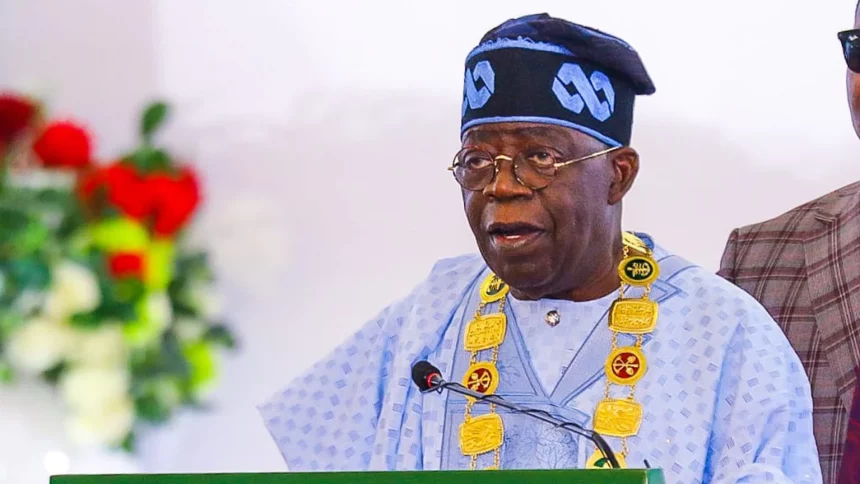
Now enter President Bola Ahmed Tinubu.
Let’s be honest: what he met was not a healthy economy.
It was an economy on life support.
So what is he doing differently?
Fuel subsidy removal — saving trillions annually that were previously enriching a few.
Meanwhile that money has always been borrowed. The difference is that when we borrow now, it’s for infrastructure not for subsidy.
FX unification — ending the artificial dollar system that encouraged arbitrage and corruption.
Tax and revenue reforms — pushing for a broader, more efficient system.
Increased FAAC allocations to states — giving governors more resources than ever before.
Infrastructure and investment push — despite limited fiscal space.
Now the controversial part:
Those shouting the loudest about “borrowing” today…
Where were they when:
Billions were stolen under military regimes?
Oil windfalls were wasted in the 2000s?
Subsidy fraud drained trillions for years?
Multiple exchange rates created billionaires overnight?
You cannot refuse reforms for 40 years and expect comfort when correction finally comes.
Borrowing itself is not the enemy.
Even the United States borrows.
The real question is:
Are you borrowing to consume… or to build?
Nigeria’s past borrowed to survive.
Tinubu is attempting to borrow to reset the system.
This is not a defense of any politician.
It is a defense of facts and context.
Because if Nigerians don’t understand how we got here,
we will keep blaming the firefighter…
While ignoring those who lit the fire.
History is not just for reading.
It is for learning — and finally doing better.
Ugoji Maximillian Teacher of systems. Translator of power. Builder of Elite mindset. Speaker, Author and Entrepreneur.
Stay ahead with the latest updates!
Join The Podium Media on WhatsApp for real-time news alerts, breaking stories, and exclusive content delivered straight to your phone. Don’t miss a headline — subscribe now!
Chat with Us on WhatsApp