




Dr Rotimi Adelola is an organisational psychologist, leadership development consultant, educator, public administrator, author, filmmaker, and transformational thinker whose professional journey spans academia, banking, oil and gas, public service, organisational development, and human capacity building. His career reflects a lifelong commitment to understanding a fundamental question: Why do some individuals, organisations, and societies flourish while others struggle? The search for answers has shaped his work as a scholar, practitioner, executive, teacher, and author. Dr Adelola began his professional career in academia before moving into the corporate sector, where he played a key role in one of the most significant organisational transformation initiatives in Nigerian banking history—the turnaround of Owena Bank and its emergence as Omegabank.
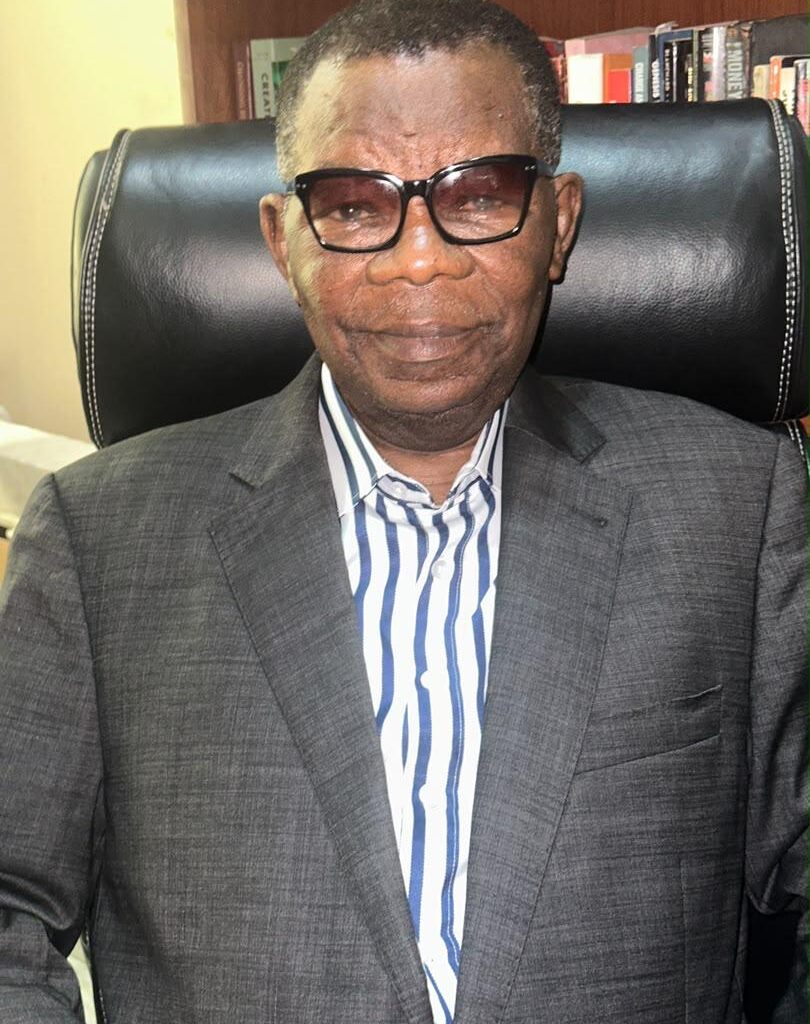
His experiences during that transformation provided practical insights into leadership, organisational culture, customer service excellence, strategic change management, and human capital development. Following his banking career, he joined the Oil and Gas sector, becoming the pioneer General Manager and later Regional Chief Executive Officer of Global Fleet Oil & Gas Limited, where he helped establish and strengthen operations within a rapidly evolving industry. His professional journey subsequently expanded into public service, where he served as Secretary to the Government of Ondo State, becoming one of the longest-serving occupants of that office. In that role, he participated in policy formulation, governance reforms, public-sector leadership, strategic coordination, and the implementation of developmental initiatives designed to create value for citizens.
Dr Adelola has undertaken extensive executive and professional development training in leadership, governance, management, psychology, organisational effectiveness, and human performance. His educational and professional development experiences include programmes at Harvard Kennedy School of Government; Lagos Business School; International Development Institute, Dublin; London Management School; Design Human Engineering; and the Institute of Neuro-Linguistic Programming (NLP), Orlando, Florida. His multidisciplinary background enables him to integrate insights from psychology, leadership studies, organisational development, philosophy, governance, spirituality, and human performance into practical frameworks for personal and organisational transformation.

In this interview, he extensively discusses what people need to do to flourish and blossom in challenging and uncertain times, as we all do around the world. Using his new book, Psychology of Success: A Practical Guide to Flourishing in Uncertain Times, Dr Adelola offers valuable insights for career professionals and entrepreneurs, young graduates, government officials, and students. Here are excerpts from the interview.
Congratulations on your new book. Who or what inspired you to write Psychology of Success?
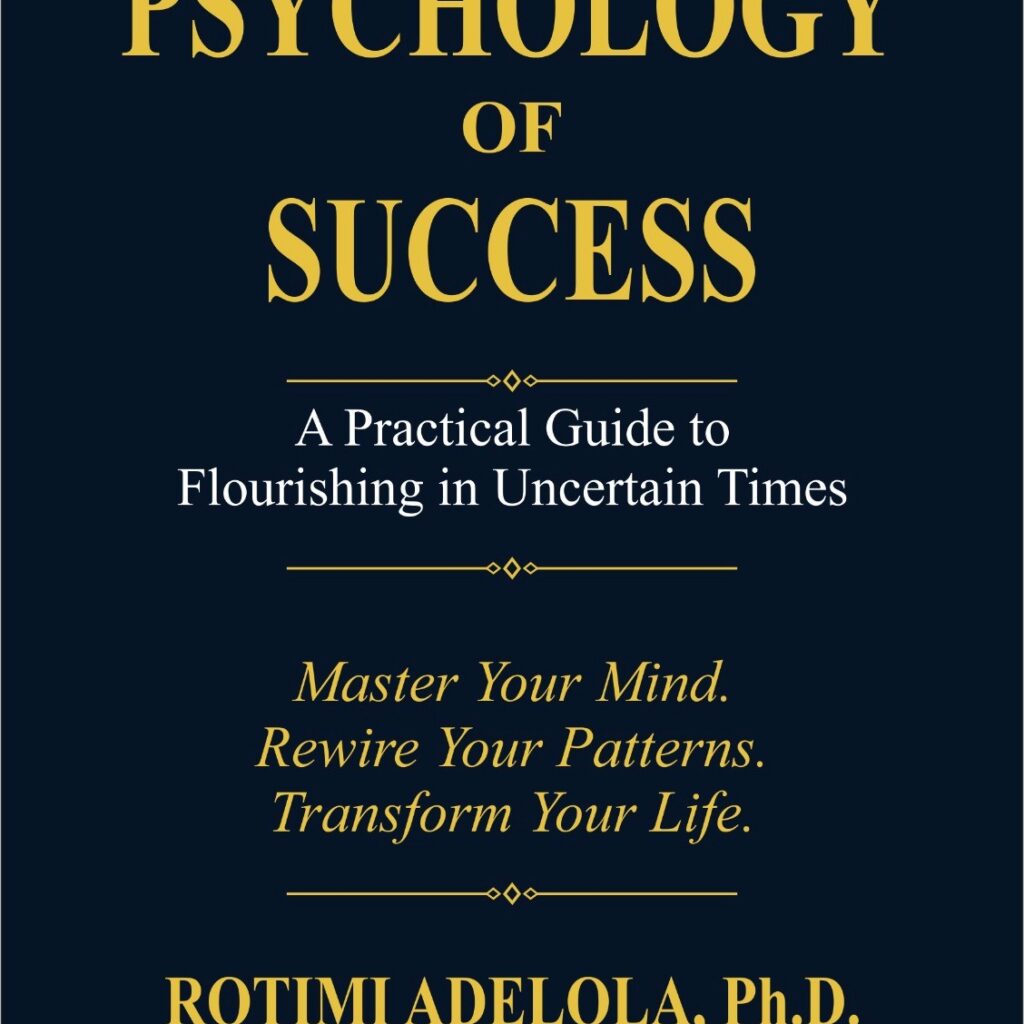
Thank you very much. The book grew out of two concerns: the uncertainty around us and the human possibilities within us. In Nigeria, economic difficulties, unemployment and insecurity have left many people anxious about their future. Similar anxieties are evident elsewhere in
the world. People are asking: How do I plan when circumstances keep changing? How do I remain hopeful without deceiving myself? How do I build a worthwhile life under pressure? The second source was a question I encountered repeatedly in my work as an organisational psychologist: Why do people with apparently comparable talents respond so differently to difficulty? Some learn, adapt, and keep making progress; others become disillusioned or feel unable to act. Of course, their circumstances are never completely identical. Access to resources, support and opportunities matters. Nevertheless, how people interpret events, regulate their emotions, and organise their actions can also influence what happens next.
I wrote this book to make relevant psychological knowledge accessible and useful. I wanted readers to understand that even when they cannot determine every circumstance, they can develop greater capacity to respond to it. Uncertainty makes preparation more necessary. That conviction drives the book.
Awesome. What did you set out to achieve with the book?
My primary objective is to help people move from merely wishing for success to understanding and practising the behaviours that make meaningful achievement more likely. I also wanted to broaden the conversation about success. Money matters. Financial security can protect dignity and expand opportunity. But wealth, power, and public recognition do not, by themselves, tell us whether a person is living well. In this book, authentic success includes psychological well-being, meaningful relationships, personal growth, ethical conduct, and positive contributions to society. These dimensions give achievement its direction and its human value. Practically, I want readers to become better at understanding themselves, setting worthwhile goals, taking disciplined actions, and learning from experience. Someone who finishes reading the book should be able to identify a behaviour to change and explain how to begin changing it.
Is this another motivational book full of theoretical concepts?
That is a fair question. Inspiration has value, but people also need a practical explanation of how change happens and what it requires. My approach combines psychological knowledge, professional experience, illustrative case stories and exercises. The intention is to connect an idea with something the readers can actually do. Take self-efficacy, associated with Albert Bandura. It concerns people’s beliefs about their ability to carry out particular actions. For a graduate facing job interviews, useful confidence can grow through preparation, practice, feedback, and the experience of improvement. Simply telling that graduate to believe more strongly is insufficient. Similarly, goal-setting research by Edwin Locke and Gary Latham helps explain why clear, challenging goals can improve performance when people have the necessary commitment, capability, and feedback. A student who wants better results needs a study plan, an appropriate level of challenge and a way to check understanding.
The book also discusses Nigerians and international figures. These stories invite readers to examine choices, persistence, learning, and adaptation. They should be read thoughtfully: a successful person’s experience can offer lessons, but it cannot establish a universal formula or tell us everything about the conditions behind that success. Each Chapter ends with a workbook. That allows the reader to examine an idea, apply it and review the result. The book’s practical test is what readers do with it after the initial excitement of reading has passed.
Why did you incorporate a workbook into every chapter?
Because understanding a principle and practising it are different achievements. A reader may agree that discipline matters and still postpone the same important task tomorrow morning. The workbooks bridge reading and daily behaviour. They encourage readers to pause, examine their own experience and make a practical commitment. Several psychological ideas inform this approach. Active learning requires the reader to work an idea rather than merely recognise it. Self-awareness helps people notice habits, assumptions and emotional reactions they might otherwise overlook. Self-regulation involves planning an action, monitoring progress and adjusting the approach. Small, completed tasks can also provide experiences of mastery that strengthen confidence in a particular activity.
Consider someone who says, I never get opportunities. An exercise might prompt more precise questions: Which opportunities have I pursued? What feedback have I received? What skills would improve my chances? Where do I need help or a different route? Those questions prompt readers to identify an actionable response. To get the most out of the workbooks, I suggest a simple routine for readers: reflect honestly, choose one action, schedule it, and review the result. For example: ‘ When it is 7 pm on Tuesday, I will spend thirty minutes revising my CV and then send it to a trusted colleague for feedback. A scheduled behaviour is easier to act on than a vague intention. Return to the exercise after a week or a month. Look for evidence of changed behaviour. Completing a workbook is a beginning; repeated practice is what gives it value.
Who did you have in mind while writing this book? Who will benefit most?
I wrote it for people who want to take a more deliberate role in shaping their future, whatever their starting point. That includes graduates entering the labour market, professionals seeking advancement, entrepreneurs facing difficult business conditions, leaders managing uncertainty and people rebuilding after a setback. I am particularly concerned about young Nigerians. Many are intelligent, ambitious and resourceful, but opportunities are unevenly distributed. They need relevant skills, supportive institutions, and psychological tools to manage frustration, sustain effort, and make sound decisions.

The book is also relevant later in life. A person approaching retirement may need to redefine purpose. An experienced executive may need to improve relationships. An entrepreneur may need to reconsider a business model that once worked well. Teachers, parents, counsellors, and human resource professionals can use the exercises to support constructive conversations and development activities. The readers most likely to benefit are those willing to examine their assumptions and practise what they learn. Personal Development remains possible at different ages, but it requires participation.
What is the central theme of the book? The central theme is that meaningful success develops through the intersection of who we become, what we do and the value we contribute. I explored this through three connected dimensions. The first is mastery of self: understanding our beliefs, emotions, strengths, limitations, and behaviour patterns. The second is purposeful actions: translating aspirations into goals, plans and sustained effort. The third is meaningful contribution: building relationships, exercising judgement and creating values beyond ourselves. By mastery, I mean growing competence in managing these areas, not perfect control over life. Someone may achieve professional distinction while damaging important relationships or neglecting personal health. That achievement may be real, but it leaves important questions unanswered about the quality and sustainability of the person’s life. Success is not merely about what you acquire. It is about who you become and the value you create.
Can you share some of the key concepts and sub-themes in the book?
I would highlight seven. First is mindset. How we interpret events influences how we respond. A setback may be interpreted as proof of permanent inadequacy or a prompt to investigate what needs to change. Each interpretation determines the outcome the individual experiences. Second is personal responsibility. We may not control every event, but we can examine our choices, identify areas where our actions can make a difference, and find the courage to act accordingly. However, responsibility should not become a way to blame people for circumstances that did not favour us.

Third, goal-setting and self-regulation: translate aspirations into specific actions, monitor them, and revise them when necessary. Fourth, habits: repeated patterns of behaviour that shape much of everyday performance. Sustainable change often requires redesigning those patterns rather than relying on occasional enthusiasm. Success is rarely the result of one extraordinary decision. More often, it emerges from ordinary decisions repeated with extraordinary consistency. Fifth, emotional intelligence the ability to recognise and regulate our emotions, understand others, and manage relationships influences performance and well-being. Sixth, resilience and psychological flexibility: in an uncertain world, we must learn to adapt, recover and review our strategies without abandoning our fundamental values. Seventh, meaning and contribution: achievement is more fulfilling when connected to purpose and positive impact.
Psychology of Success also discusses creative imagination, limiting beliefs, subconscious programming, gratitude, communication, and wisdom. These processes form an integrated approach to personal development.
What qualifies you to write Psychology of Success? What practical knowledge and experience do you bring?
I bring academic preparation in psychology and experience working with people and institutions in different settings. I earned my first degree in Psychology from the University of Ife (now Obafemi Awolowo University), my Master’s in Psychology from the University of Lagos, and my doctorate from the University of Ibadan. I have taught Psychology at undergraduate and postgraduate levels and taught in an MBA programme. My further development has included executive programmes at Harvard Kennedy School, Lagos Business School, the Institute of Neuro-Linguistic Programming, and other institutions. My professional career has included psychological assessment for employment and promotion at AG Leventis, consulting work with PricewaterhouseCoopers, and organisational transformation at Owena Bank, later Omegabank.
My experience in organisational transformation reinforced an important lesson: strategy can look excellent on paper and still fail if everyday employee behaviour and organisational culture work against it. Service quality depends on what people actually do, including when nobody is watching. As the Secretary to the Government of Ondo State from 2009 to 2017, I encountered
the human demands of public policy, institutional leadership, and decision-making under pressure. My work as a filmmaker has also sustained my interest in motivation, character and difficult choices. These experiences do not make me a final authority on Success Psychology. They gave me a useful perspective for interpreting research and translating it into practical guidance. Across these settings, one lesson has remained constant: policies and strategies require people with the competence, motivation, and support to implement them.


What does the concept of Psychology of Success refer to?
I use the expression to describe the study and practical application of psychological processes that influence purposeful achievement, effective functioning and human flourishing. It asks how people identify worthwhile goals, develop the capacity to pursue them, respond to setbacks and sustain their well-being along the way. I am not presenting Success Psychology as a newly established, independent scientific discipline. It is an integrative framework drawing from established areas of psychology, including motivation, personality, cognitive psychology, social psychology, organisational psychology, and positive psychology. It focuses on developing and directing human potential while recognising that achievement also depends on social and material conditions.
What does it take to succeed in a challenging environment like Nigeria?
It takes useful competence, adaptability, credible relationships, and sustained action. It also takes a realistic understanding of the environment. We should be clear that personal development cannot substitute for security, reliable infrastructure, fair institutions or access to opportunity. Citizens are entitled to demand those things. At the same time, people need to identify what they can do while waiting for better conditions. I would identify five key requirements for success in Nigeria.
The first is adaptive thinking. In a rapidly changing Nigeria, individuals must be willing to learn, unlearn, and constantly review their strategies. Individuals must adopt a mindset of reframing uncertainty as opportunity. Individuals must stop the blame game and stop perceiving the difficulties in Nigeria as purely destructive. Nigerians must begin to see Nigeria as a land of opportunities and limitless possibilities. The second is competence development. Ambition without relevant knowledge and skills has limited practical use in an uncertain environment. The third is resourcefulness. Nigerians. especially ambitious youth, must learn to identify opportunities, mobilise available resources, and solve problems creatively. The fourth is social capital. Individuals must learn to create and sustain relationships built on trust, credibility, cooperation, and mutual value. Such relationships can open opportunities for advancement. The fifth is ethical resilience: maintaining standards when shortcuts are attractive. Success achieved through dishonest, exploitative, or destructive shortcuts may generate immediate rewards but undermine long-term credibility.
Why are our young professionals not getting it right?
I would question the generalisation. Many young Nigerian professionals are doing impressive work under demanding conditions. We should recognise that before discussing areas for development. One challenge is the tendency to confuse visibility with value. Social media can support professional growth, but constant comparison can encourage people to judge progress by attention rather than competence. A strong public profile is more useful when it’s backed by dependable work. Another challenge is the transition from technical ability to professional effectiveness. Knowing your subject matters, but so do listening, collaboration, judgement and the ability to receive feedback without becoming defensive. There is also a need for purposeful patience: pursuing a long-term objective while taking meaningful action today. Developing expertise usually requires sustained practice.
Employers and senior professionals have responsibilities too. Clear expectations, fair opportunities, mentoring and constructive feedback help younger colleagues develop. My advice is that young professionals should invest consistently in becoming useful, trustworthy, and willing to learn. Ask yourself: Can people rely on the quality of my work? Do I improve when corrected? What evidence shows that my ability is growing? These questions provide a firmer foundation than popularity.
What does psychological science tell us about why some individuals flourish despite adversity while others struggle even when they possess comparable talents and opportunities?
One of the most fascinating findings in psychology is that human beings do not respond identically to similar circumstances. Two individuals may have comparable educational qualifications, intellectual abilities and economic opportunities, yet their developmental trajectories can be remarkably different.
Why is this so?
Part of the explanation lies in differences in individuals’ psychological processes. Consider the concept of self-efficacy, associated with Albert Bandura. People who believe they can organise and execute the actions required to meet a challenge are often more willing to attempt difficult tasks and persist when they encounter obstacles. Such individuals are likely to be more successful and flourish than those who lack self-efficacy, even with comparable talents in the same circumstances. Another psychological concept is explanatory style. How do people interpret failure? Do they see it as evidence that they are permanently incapable, or do they examine the specific causes and identify what can change?
Carol Dweck’s work on mindsets also helps explain how beliefs about the capacity to develop abilities can shape learning and responses to setbacks. However, the practical effects of mindset interventions may vary across contexts. In my professional experience, I have encountered highly intelligent individuals who struggled because they could not adapt to changing conditions. I have also encountered people with relatively modest formal qualifications who achieved remarkable results because they were psychologically flexible. These observations reinforce an important principle: talent creates possibilities, but developing and applying talent requires additional psychological resources.

What psychological attitudes and behavioural changes do Nigerians need to cultivate to succeed amid economic difficulty, unemployment, insecurity and uncertainty?
I would begin with realistic optimism: recognising the seriousness of a problem while looking for a workable solution. It does not require us to pretend that every difficulty will be brief or that every effort will succeed. Realistic optimism is predicated on four psychological orientations. First, an adaptive mindset: the ability to respond flexibly, positively, and proactively to change, uncertainty, and unexpected challenges rather than resisting them or blaming the government or other entities for the ambiguity. Second, a sense of self-empowerment: a strong belief that one can make intentional choices to influence behaviour and the environment. Third, tolerance for uncertainty. We cannot always wait for complete certainty before deciding. We can gather information, consider risks, prepare alternatives and choose a reasonable next step. Fourth, supportive relationships and disciplined routines. Under pressure, people benefit from reliable social support, appropriate rest and workable habits. Constant exposure to alarming information can consume attention without improving preparedness.
These attitudes should go hand in hand with civic responsibility. Nigerians can seek better governance and hold institutions accountable while developing their own capacity to act. The two efforts reinforce each other.
You devoted considerable attention to the subconscious mind, limiting beliefs and imagination. How do these psychological processes influence human performance?
They influence what we notice, what we expect, and which action we are willing to attempt. But we need to explain them carefully. A limiting belief is a negative assumption an individual has about himself that unnecessarily narrows what he believes he can do or achieve. It is an invisible chain in the mind that turns off a person’s aspiration and readiness to initiate and execute ideas that could lead to personal or professional success.
Imagination is the mind’s workshop where all creations start. An individual’s ability to achieve success and well-being depends largely on how they use their imagination. As one author wrote, “imagination creates reality.” The subconscious mind refers to mental processing and activity that occurs below active, conscious awareness. It serves as the storage system for learned skills, thoughts, emotions, and empowering and disempowering beliefs a person has internalised. Such internalised patterns drive daily behaviour, habits, and automatic decisions, making it a primary force behind personal and professional success. To achieve success and flourish, an individual must guide the thoughts and feelings that dominate their mind. Such thoughts and feelings impress on the subconscious mind.
If they are negative, they may become disempowering and a stumbling block to the person’s performance. If such thoughts and feelings are positive, they may enhance the person’s performance.
Having worked in academia, corporate organisations and government, what psychological characteristics distinguish transformational leaders from ordinary managers?
Leadership has always fascinated me because it shows how individual psychology can influence the behaviour and performance of an entire organisation. A manager may be effective at managing procedures, allocating resources and ensuring compliance. A transformational leader must do more. Such a leader motivates people to work together collaboratively to achieve great things. That is, a transformational leader elicits extraordinary performance from ordinary people.
In my experience, six psychological qualities matter most. The first is self-awareness. Leaders must understand their own motivations, emotions, strengths and limitations. The second is emotional regulation. A leader who reacts impulsively to criticism or uncertainty can create anxiety throughout an organisation. The third is empathy. People are not simply instruments to achieve corporate objectives. They have aspirations, concerns, personal circumstances and a need for dignity. The fourth is cognitive flexibility. A leader must be willing to question assumptions and adjust strategies when evidence changes. The fifth is integrity. Trust is a psychological and institutional resource. Once it is seriously damaged, cooperation becomes more difficult.
The sixth is the leader’s ability to groom leaders among his followers, making him a leader of leaders. My experience taught me that leadership is more effective when performance objectives connect with employee motivation, competence, service standards, and a shared understanding of quality in the organisation.
Your book goes beyond conventional achievement to emphasise flourishing. What distinguishes a successful person from a flourishing individual?

The distinction concerns the breadth of what we assess. Conventional measures of success often focus on visible accomplishments: income, titles, influence and possessions. Flourishing asks about the wider quality of a person’s life. A person may be financially prosperous but emotionally distressed, socially isolated or deeply dissatisfied with life. Another individual may possess relatively modest financial resources while enjoying meaningful work, supportive relationships, well-being and a strong sense of purpose. This is why I find the concept of flourishing particularly valuable. In Positive Psychology, flourishing generally involves multiple dimensions of well-being, including Positive functioning, engagement, meaningful relationships, purpose and personal growth. A flourishing life can include difficulty and sacrifice.
Success should be understood in a more integrated manner: we should ask not only, “What have you achieved? But also, ” What kind of person have you become? What relationships have you nurtured? What contribution have you made to society? What meaning does your life hold? I believe these questions are particularly important in Nigeria, where public display of wealth can sometimes overshadow the importance of character and contribution. Achievement measures what you have accomplished. Flourishing asks whether the life you are building supports your well-being, purpose and relationships.
What does psychology teach us about transforming setbacks into opportunities for growth?
It helps us understand that a setback has both practical consequences and psychological meaning. People may experience disappointment, shame, anger or fear. Those reactions deserve attention: recovery should not require pretending that the experience does not hurt. I encourage people to approach recovery. from setbacks through the following processes: First, establish what happened as accurately as possible. Separate the facts from the harsh conclusions you may be drawing about yourself.
Second, allow appropriate emotional processing. You don’t need to pretend painful experiences are insignificant. Seek support where needed. Third, distinguish between factors that are within and outside your control. Take responsibility for a decision where appropriate without assuming responsibility for everything that happened. Fourth, examine the lessons that you can learn to prevent a recurrence. Fifth, act on the lessons and review the result. Reflection becomes useful when it changes a decision or behaviour. If distress is persistent or seriously disrupts daily functioning, you may need professional support.
Your book introduces the MSMARTER +R Goal-Setting Framework. How does this Framework differ from conventional approaches, and what makes it particularly relevant to personal and professional success?
SMART is a useful way of structuring objectives. Common versions emphasise goals that are Specific, Measurable, Achievable, Relevant and Time-bound. My MSMARTER +R Framework builds on that practical tradition by giving additional attention to meaning, manageable stages, evaluation, recognition of progress, and reflective responsibility. It is my proposed integrative framework, informed by established psychological ideas and professional experience. It should not be described as an independently validated model unless research has established that claim.
The components are: M: Meaningful & Modular: connect the goal with a worthwhile purpose and divide it into manageable parts; S: Specific: state clearly what you intend to achieve or do; M. Measurable: identify evidence of progress; A: Achievable: judge feasibility against current resources and capabilities, while allowing an appropriate level of challenge; R: Relevant: connect the goal with your priorities and circumstances; T: Time-bound: establish timeline and milestones; E: Evaluative: review progress and the effectiveness of your method; R: Rewarding: recognise worthwhile effort and progress in a way that supports continued commitment; R+ Reflective Responsibility: examine your choices, accept appropriate accountability and use learning to guide your next action.
Take a graduate who wants to enter digital marketing. This is a hypothetical illustration. The goal is meaningful because it supports a considered career direction. It becomes modular through stages: learning the basics, completing practice projects, and developing a portfolio. It becomes specific and measurable through a target such as completing three portfolio projects within twelve weeks. The graduate checks whether the schedule, equipment and training costs make that achievable and whether the skill is relevant to the work being pursued.
Weekly reviews provide evaluation. A modest celebration after completing the project recognises progress. Reflective Responsibility prompts questions such as: Did I produce the work entirely on my own? What did the feedback reveal? Where did my plan fail, and what should I change next week? The Framework does not promise employment after twelve weeks. It helps turn a broad aspiration into purposeful action and a learning cycle. The important question is not only, ‘Did I reach the target? It is also: what did I learn, how did I pursue it, and what responsibility will I take for the next step?
How do you envision the application of Success Psychology in Nigerian schools, universities, workplaces, leadership development programmes and public institutions?
I want the book to support practical programmes that develop people’s ability to use their knowledge effectively. Such programmes should have clear objectives and be evaluated rather than adopted solely because their ideas sound appealing. In secondary schools, age-appropriate activities could help students practise goal-setting, emotional regulation, and study
habits, mindset, self-confidence, personal responsibility, decision-making, scientific concentration, communication, and resilience.
In universities, students should receive more structured preparation for the psychological demands of professional life, including adaptability, teamwork, time and self-management, initiative, action orientation, ethical judgement, and lifelong learning. In workplaces, organisations should recognise that sustainable performance depends largely on leadership behaviour and corporate culture. These two factors significantly affect employee motivation, psychological safety, and organisational performance.
Public institutions could benefit from behavioural science inputs, especially applied psychology, in service design and implementation, public communication, and leadership development. Understanding why people do or do not use a service can reveal obstacles to institutional effectiveness. I would welcome collaboration with schools, universities, professional associations and other institutions to adapt and evaluate relevant programmes. MSMARTER +R could, for example, be piloted as a planning and reflection Framework. Any claim about its effectiveness should follow evidence from its use.
What is the central promise of your book to readers?
Psychology of Success empowers readers to understand that external circumstances, while influential, do not have absolute power over their lives and ability to succeed. Rather, their internal resources – mindset, subconscious reprogramming, imagination, emotional intelligence, spiritual intelligence, capacity for gratitude – can create pathways to success and well-being where none appear to exist. I’ll enumerate seven benefits to readers of the book. :
■. They will understand practical ways to remain psychologically grounded when circumstances are unstable.
■. They will learn a clearer, richer definition of success- one that integrates achievement, purpose, growth and contribution
■ They will know the psychological tools for replacing passivity and blame with responsibility, personal readiness to decide and take deliberate action.
■ They will know the frameworks for strengthening habits, resilience, emotional intelligence, spiritual intelligence, communication and relationships.
■. They will be exposed to a structured approach to goal-setting through the original MSMARTER +R Framework.
■ . They will learn valuable lessons from Nigerian, African and global personalities whose lives illuminate discipline, imagination, resilience, leadership and impact.
■ They will have the opportunity to participate in reflective exercises that move the reader from inspiration to implementation. My professional experience has convinced me that institutional change requires attention to human behaviour as well as systems and resources. A nation’s investment in its people should include their intellectual, psychological, and ethical development.
Stay ahead with the latest updates!
Join The Podium Media on WhatsApp for real-time news alerts, breaking stories, and exclusive content delivered straight to your phone. Don’t miss a headline — subscribe now!
Chat with Us on WhatsApp