



Every society eventually produces towering personalities whose reputations are viewed differently by those who know them intimately and those who encounter them from afar. Admirers often judge them by public achievements. Contemporaries remember the private encounters, political disagreements and personal relationships that seldom find their way into official biographies. History, if it is to be fair, must accommodate both perspectives.
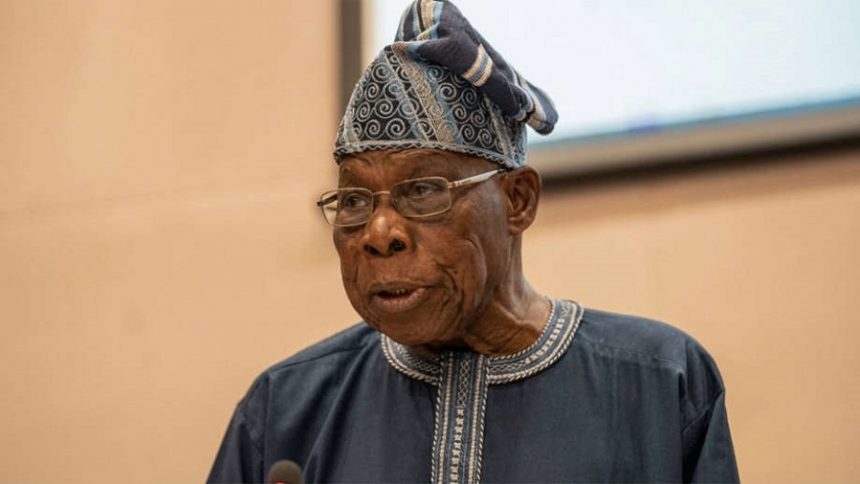
Olusegun Aremu Obasanjo occupies that uncommon space in Nigeria’s national life. Judged solely by the offices he has held and the influence he has wielded, few Nigerians stand shoulder to shoulder with him. Soldier. Civil War commander. Military Head of State. Political prisoner. Democratically elected president. International mediator. Author. Elder statesman. For more than six decades, he has remained one of the principal actors in Nigeria’s political evolution.
His achievements are substantial and secure in the nation’s historical ledger. He supervised Nigeria’s transition to civilian rule in 1979 and voluntarily handed over power to an elected government, an uncommon act in Africa at the time. Two decades later, he returned to office under perhaps the most difficult circumstances in Nigeria’s democratic journey, helping to restore international confidence after years of military isolation. His administration secured debt relief, pursued economic reforms and repositioned Nigeria within regional and global diplomacy. Those accomplishments deserve their rightful place in history.

Yet public office alone does not complete the portrait of a leader. There is another dimension that deserves equal attention. It concerns the relationships he built, the disagreements he provoked and the political and intellectual contests that accompanied his remarkably long public life.
History is rarely interested in isolated incidents. One controversy may be dismissed as misunderstanding. Two may be explained as coincidence. But when controversies recur across six decades, involving soldiers, politicians, intellectuals, diplomats, traditional rulers and former confidants, history acquires a duty to ask whether a discernible pattern exists. That inquiry is not a verdict. It is simply the beginning of historical responsibility.
The names themselves tell a remarkable story. They cut across generations, professions and political persuasions. Chief Obafemi Awolowo, M. K. O. Abiola, Professor Wole Soyinka, Fela Anikulapo Kuti, General Benjamin Adekunle, Brigadier General Godwin Alabi-Isama, Chief Audu Ogbeh, Aremo Olusegun Osoba, Asiwaju Bola Ahmed Tinubu, Rashidi Ladoja, Chief Bode George and others did not disagree with Obasanjo over the same issue, nor even in the same era. Yet each encounter has entered Nigeria’s documentary record through memoirs, official correspondence, judicial proceedings, interviews or public debate. When so many unrelated episodes converge around one public figure over six decades, history has a duty to ask whether they disclose a recurring pattern or merely a succession of coincidences.
The Nigerian civil war provides an early illustration. Competing accounts by Benjamin Adekunle, Alabi-Isama and other senior officers have ensured that the closing chapters of the war remain subjects of historical debate. Memoirs have confronted memoirs. Official narratives have met competing recollections. The issue is no longer merely who was right or wrong, but how history should reconcile conflicting testimonies from those who witnessed the same events.
The June 12 crisis presents another enduring chapter. Abiola’s annulled mandate remains one of the defining moments in Nigeria’s democratic evolution. Obasanjo neither initiated that tragedy nor escaped its consequences. His emergence as civilian president in 1999 inevitably placed him within the larger historical narrative. To some, his presidency represented national reconciliation. To others, it left unresolved questions about justice and democratic restitution. History continues to interrogate both positions.
Soyinka’s engagements with Obasanjo were equally significant. They were never ordinary exchanges between politician and critic. They reflected deeper contests over power, public morality and democratic accountability. When intellectual giants repeatedly challenge political authority, history pays attention not merely to the personalities involved but to the larger issues they represent.
Within the People’s Democratic Party, the pattern persisted. Audu Ogbeh’s resignation as national chairman, the executive’s uneasy relationship with senate presidents Evan Enwerem and Chuba Okadigbo, and Atiku Abubakar’s transformation from trusted deputy to principal political rival became defining episodes in the evolution of the Fourth Republic. These were not simply personal disagreements. They raised enduring questions about executive authority, party democracy and institutional independence.
Beyond personalities came policy controversies. The Sagem identity card project, the Mambilla power project, debates surrounding the Olusegun Obasanjo Presidential Library and the famous “do-or-die” declaration during the 2007 elections have all entered Nigeria’s political archive. Whether each criticism ultimately withstands scrutiny is less important than the fact that each continues to demand documentary examination. Public decisions invite public accountability, and accountability is sustained by evidence rather than emotion.
Perhaps what makes Obasanjo unique is that he has occupied almost every position history can assign to a public figure. He has been participant, narrator, critic and, increasingly, the subject of history itself. He fought events, wrote about them, interpreted them, criticised others over them and now finds his own interpretations subjected to similar scrutiny. Few Nigerian leaders have occupied all four positions.
Ironically, Obasanjo himself has furnished historians with invaluable material. Through My Command, Not My Will, This Animal Called Man and My Watch, he has presented his philosophy of leadership, public duty, faith and national service. These books are indispensable contributions to Nigeria’s political literature. Yet memoirs, however illuminating, remain personal narratives. They explain; they do not conclude. They must therefore be read alongside official documents, judicial findings, parliamentary records, memoirs of contemporaries and independent scholarship. That is how history separates memory from evidence.
None of this should be mistaken for an attempt to diminish Obasanjo’s stature. Mature democracies do not honour great leaders by placing them beyond examination. They honour them by examining them honestly. Greatness deserves recognition, but it also invites scrutiny. Indeed, the greater the influence of a public figure, the greater society’s obligation to assess his legacy with fairness, rigour and documentary discipline.
The purpose of historical inquiry is neither to canonise nor to condemn. It is to understand. Where the evidence supports praise, let praise be given. Where it justifies criticism, let criticism be expressed. Where the record remains incomplete, let honest questions remain open until stronger evidence emerges.
Obasanjo has earned his place among the architects of modern Nigeria. Whether his recurring disputes reflect the inevitable burdens of exceptional leadership or reveal a consistent pattern in the exercise of power is not for admirers or critics alone to determine. It is a question that belongs to history, and history can answer it only through documentary evidence, intellectual honesty and the courage to follow facts wherever they lead.

For history, unlike politics, is never impressed by reputation alone. History asks only one question: What does the evidence reveal?
•Ogundipe, public affairs analyst, former president, Nigeria Union of Journalists and Africa Union of Journalists, writes from Abuja.
Stay ahead with the latest updates!
Join The Podium Media on WhatsApp for real-time news alerts, breaking stories, and exclusive content delivered straight to your phone. Don’t miss a headline — subscribe now!
Chat with Us on WhatsApp