



…says Nigeria needs 100 more industrial giants to drive growth …calls for affordable long-term capital, policy stability to expand manufacturing
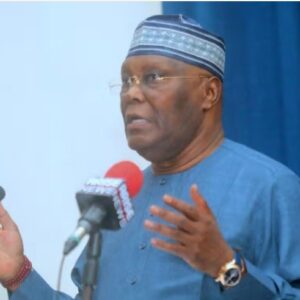
Nigerian businesses no longer need to lobby the Central Bank of Nigeria governor to access foreign exchange after market reforms, Abdul Samad Rabiu, chairman of BUA Group, has said.
FX scarcity was for years the biggest barrier to industry, with companies forced to approach the CBN every two weeks for allocations, Rabiu said at the 32nd Nigerian Economic Summit in Abuja on Monday. “You could have all the naira required and still be unable to get FX for machinery,” he said.

That system has ended, he said. Legitimate businesses now buy dollars through the market at prevailing rates instead of depending on direct CBN allocations.
“In the past we had to make a pilgrimage every two weeks to the CBN. Today I hardly need to go,” Rabiu said. “Since Yemi Cardoso assumed office as CBN governor, I think I’ve seen him three or four times because I don’t need him for FX allocation. That is the truth.”
Reforms including FX liberalisation, removal of petrol subsidy and tax changes have imposed costs on households and firms, Rabiu said. The priority now is to translate stabilisation into production, jobs and shared prosperity, he said.
“We must now move from reform to results, from stabilisation to expansion and from economic adjustment to shared prosperity,” Rabiu said.
According to him, Nigeria’s next phase of economic development must focus on building productive capacity, expanding manufacturing and creating businesses capable of competing in domestic and international markets.
He cited the cement industry as an example of how sustained investment and local value addition could transform an import-dependent sector. Nigeria, he said, previously imported nearly 80 percent of its cement requirements but had since achieved self-sufficiency and become a net exporter.
Rabiu said the country needed to replicate that experience across agriculture, mining, manufacturing and other productive sectors by processing more of its raw materials locally instead of exporting them and importing finished goods.
He stressed that investments in roads, railways, electricity and logistics infrastructure would be critical to reducing production costs and enabling Nigerian businesses to compete globally.
The BUA chairman also highlighted the need to expand industrial investment, asking how Nigeria could create another 100 major companies capable of making significant contributions to output, exports and employment.
“The question we must ask ourselves is not simply how Boas can continue to grow. It is how Nigeria can create another 100 Boas. I’m not saying that every company must become Boa. But imagine a Nigeria with 100 more major industrial companies investing across manufacturing, agriculture, mining, technology and other productive sectors.
“Imagine the jobs they would create, the Nigerian supplies they would support, the exports they would generate. And the opportunities they would open for our young people,” he added
According to him, the country needed many more large, competitive businesses investing across manufacturing, agriculture, mining and technology.
He said BUA was expanding its operations across sectors, including flour milling, pasta, noodles, edible oils, rice milling and animal feed, with projects expected to be completed next year that would double production capacity in the relevant businesses.

Rabiu also pointed to BUA’s integrated sugar project, which combines sugarcane cultivation with processing, refining, ethanol production and power generation, as an example of how industrial investments could create value across an entire supply chain.
High cost of capital threatens industrial growth
Despite the opportunities available to Nigerian businesses, Rabiu identified access to affordable, long-term financing as one of the major constraints to industrial expansion.
He said industrial projects required patient capital with repayment periods extending over 10 to 20 years, warning that short-term and expensive financing was unsuitable for investments that took years to build and generate returns.
He called on pension funds, insurance companies, banks, development finance institutions and capital markets to play a greater role in directing long-term funds towards productive investments.

According to him, Nigeria would struggle to develop a strong manufacturing base if businesses could not obtain financing on terms that matched the lifespan of their investments.
Rabiu also emphasised the importance of policy consistency, saying investors needed confidence that government policies would remain predictable over the long periods required to establish and expand factories.
He said businesses could not commit substantial capital to projects with a 20-year investment horizon if they remained uncertain about future government policies and the reliability of critical infrastructure.
To address these challenges, he called for a new economic accord among the government, businesses and citizens, anchored on policy stability, productive investment, human capital development, long-term capital and shared prosperity.
He said the government must provide a predictable policy environment and reliable infrastructure, while businesses should invest in productive activities, create jobs and build competitive enterprises.
“And these investments often require 10, 15 or 20 years to realise their full potential. You cannot build a strong industrial economy primarily with expensive, short-term finance. So we must deepen our financial markets, increase long-term capital and channel more Nigerian savings into productive Nigerian investment.

“Our pension funds, insurance companies, banks, development finance institutions and capital markets all have important roles to play. But capital alone is not enough. Businesses also need reliable infrastructure and confidence that government policies will remain consistent.
“We cannot expect businesses to make 20-year investments if they cannot plan with confidence beyond the next few years. Our ambition must therefore create an environment in which the next generation of Nigerian champions can emerge. Because Nigeria’s future should not depend on a handful of successful companies,” Rabiu said
Rabiu added that investment in human capital was necessary to ensure Nigerians had the skills required to participate in an expanding industrial economy.
He also urged Nigeria to take advantage of the African Continental Free Trade Area (AfCFTA) by improving transport links, port efficiency, payment systems and the movement of business people across African countries.
According to him, stronger regional connections would help Nigerian manufacturers reach larger markets, increase exports and achieve economies of scale.
He said Nigeria’s economic future depended on its ability to build businesses that could produce competitively, create employment and sell beyond the domestic market.
Rabiu also stated that building a stronger Nigerian economy required collective responsibility from the government, the private sector and citizens, rather than reliance on any single group to deliver growth.
Stay ahead with the latest updates!
Join The Podium Media on WhatsApp for real-time news alerts, breaking stories, and exclusive content delivered straight to your phone. Don’t miss a headline — subscribe now!
Chat with Us on WhatsApp