



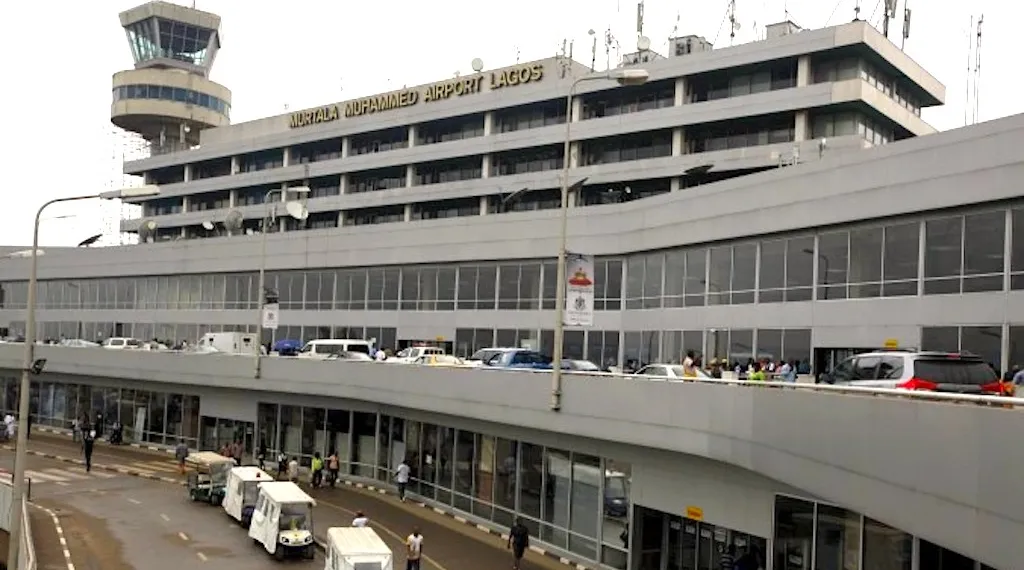
Recently, the parking rate at the Multi-storey Car Park at the Murtala Muhammed Airport Terminal 2 (MMA2), operated by Bi-Courtney Aviation Services Limited (BASL) and managed by Balosh, was arbitrarily increased.
Overnight parking, which used to be six thousand naira (N6,000) only, was increased to fifty thousand naira (N50,000) only.
What is the mathematical rationale for this type of increase?

In 2021, Balosh, the company managing the toll system within the airport, was engaged by the Lagos State Government and Lagos State University Teaching Hospital (LASUTH), and it almost resorted into a crisis within the hospital premises because one would not be able to explain the rationale for having a patient in the hospital, and one would be charged for car park.Nigerians are unable to commute by road, train, or even the waterways.
Despite the rising cost of all modes of commuting, one is now confronted with an unjustified increase in airport parking rates.
With the rising cost of house rent cum accommodation in Lagos, people have moved to various suburbs of Lagos.
When they have a reason to travel, the most cost-effective option is to get their vehicle to the airport, park it, travel to their destination, and return to their vehicle to get home within 3-4 days.
When it was N6,000, everyone assumed that it was affordable and safe to keep their cars at the airport, similar to what happens at the jetties and train station.
The rising cost of JetA1 has been attributed to the rising cost of air ticket which is almost beyond the reach of an average Nigerian; the rising cost of PMS (Petrol) at this time when Iran and US war is ongoing has made people abandoned their cars while app hailing taxi services are ‘cutting’ people’s heads off while the regular airport taxi call unfriendly rates to the already overtaxed Nigerian that has not gotten an increase in salary despite the galloping inflation.Further rationalising this increase, it seems that the airport authority is now competing with the airlines- if one can afford a N300,000 return ticket, then one can also afford a N150,000 for a three-day parking at the airport.
This is not a fair deal for Nigerian travellers who are working hard to travel by air, given the imminent fear of what could go wrong on the road.
Can one liken the increase to a collaboration between the taxi unions and the airport to rip people off of their hard-earned money?
What this means is that for anyone who cannot afford parking at the airport, you will be forced to use a taxi that is ‘seemingly’ above the law, which is in connivance with the private operators of the airport.
The enforcement team at MM2 would never clamp taxis, but they aim at private vehicles that are forced to use the car park, regardless of how many minutes one wants to use at the airport.
Beyond the exorbitant rate introduced by the airport operators for the car park, they are also on the case of on-demand, multi-category delivery platform riders who pick up food items from restaurants within the airport.
This wanton drive for revenue will kill more businesses than build a thriving economy.
Beyond the few excuses given by the operators of the car park and the airport, Nigerians need organisations that are empathetic and can feel the pulse of the people.

With the current rate, it means anyone without a driver cannot live a simple life of fueling his car at over a thousand naira per litre, drive to the airport, keep his car and return joyfully to Lagos with the intent of driving home.
This is another way of destroying the middle class in Nigeria. If you engage a friend, sibling or acquaintance without a license to drive your car away from the airport, and such a person runs into the VIO or FRSC, the problem becomes complicated.
It is expedient for the airport operators to devise a strategy to identify actual travellers, which should be based solely on their boarding passes and means of identification.
For those whose boarding passes and tally slips given at the car park entrance can be matched, they should be given a concession.

They can deal decisively with other vehicles parked without justification. But making the car park rate unaffordable to the common man should not be allowed to stay.
There is no moral justification for overnight parking, let alone moving from 6,000 to 50,000!
I will want to implore the Honourable Minister of Aviation and Aerospace Development of Nigeria, Mr. Festus Keyamo, SAN; Managing Director of the Federal Airports Authority of Nigeria(FAAN), Mrs Olubunmi Kuku and other government agencies to please look into the matter and reduce the hardship being experienced by Nigerian travellers who need to park at MM2.
Olutayo Irantiola is a PR Consultant and Public Affairs analyst based in Lagos, Nigeria
FAAN stated it’s own side of the story thus
Why we increase the tariff?
FAAN has increased tariffs after careful consideration of current economic realities.
Our tariffs have remained static since 2008. Over the past 18 years, Nigeria has experienced significant inflation (approximately 287%) and a drastic depreciation of the Naira.
This adjustment is essential to sustain and upgrade critical airport infrastructure, which has become financially unsustainable under the old rates.
The tariff is increasing from ₦7 to ₦20. Isn’t this a huge jump?
While the percentage increase appears large, it is important to view it in the context of time and inflation.
Based on data from the National Bureau of Statistics (NBS), a service that cost ₦7 in 2008 should cost about ₦27.09 today just to have the same value.
The new tariff of ₦20 is actually below this inflation-adjusted benchmark. This demonstrates FAAN’s commitment to sharing the burden and not passing the full cost onto operators.
How does the foreign exchange (FX) rate affect airport charges?
A significant portion of the equipment and materials needed for airport infrastructure—such as runway asphalt, aerodrome lighting, and fire truck parts—are imported.
In 2008, the exchange rate was about ₦118/$1. Today, it is about ₦1,500/$1.
This means the cost of these essential items has increased by over 1,000%. The tariff review is crucial to generate the necessary revenue in Naira to meet these dollar-denominated costs.
How does Nigeria’s new cargo tariff compare to other countries in West Africa?
Our analysis shows that even with this adjustment, Nigeria’s cargo charges will remain competitive. Prior to this review, our charges were lower than those at major regional hubs like Kotoka International Airport (Ghana) and Cotonou Airport (Benin).
This move aligns us closer to regional standards while ensuring we remain an attractive destination for air cargo operators and investors.
Is this not a form of double taxation on top of what the concessionaires charge?
No, this is not double taxation. There is a clear distinction between the two charges:”FAAN Port Charge: This covers the use of shared airport infrastructure that everyone benefits from, such as runways, taxiways, perimeter fencing, security, access roads, and airfield lighting.
It is like a toll for using the airport’s common facilities.
Concessionaire’s Handling Fee: This fee is charged by the private warehouse operators for specific services they provide within their terminals, such as cargo handling, storage, and documentation.
Will this tariff increase lead to higher prices for goods and services for the average consumer?
FAAN expects the impact on consumer prices to be minimal. The Port Charge is a very small component of the total cost of air freight.
The significant benefits of improved infrastructure—such as faster turnaround times and reduced delays—will ultimately lead to greater efficiency and could help stabilize or even lower logistics costs in the long run.
What specific projects will the revenue from this tariff increase be used for?
The additional revenue will be reinvested directly into critical cargo infrastructure projects, including:”Rehabilitation of aprons and access roads to cargo terminals.
Enhanced perimeter security and access control systems.
Implementation of a Cargo Community System (CCS) for digital documentation.
Installation of a Truck Call-Up System to reduce congestion at the Premier Cargo Terminal (PCT).
Upgrades to airfield lighting and other essential facilities.
Development of domestic cargo infrastructure.
Was there any consultation with stakeholders before this decision was made?
“Yes. FAAN is committed to transparent stakeholder engagement. Formal communication has been sent to all cargo operators and industry players.
Furthermore, stakeholder consultations are ongoing and will continue as a permanent exercise.
This ensures that all relevant parties are informed about cargo initiatives and can provide feedback.
What is the long-term goal of this tariff adjustment?
This is not merely a revenue-generation measure. It is a strategic investment in the future of Nigeria’s air cargo sector.
The goal is to build a resilient, efficient, and future-ready cargo ecosystem that is globally competitive, enhances security, and supports economic growth”
Stay ahead with the latest updates!
Join The Podium Media on WhatsApp for real-time news alerts, breaking stories, and exclusive content delivered straight to your phone. Don’t miss a headline — subscribe now!
Chat with Us on WhatsApp