




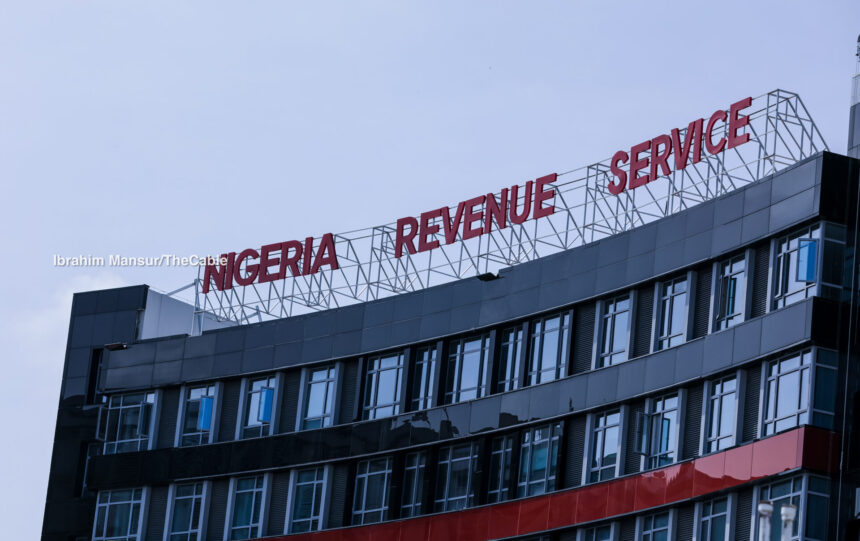
Idris Abdullahi, head of anti-graft and law enforcement liaison at the Nigeria Revenue Service (NRS), says the federal government plans to establish a National Transfer Pricing Intelligence Centre to monitor multinational companies and tackle artificial profit shifting.
Abdullahi spoke on Tuesday at a training workshop for journalists on evidence-based reporting of illicit financial flows in Nigeria.
Artificial profit shifting is a strategy by multinational companies to avoid tax by moving accounting profits to countries — where little or no economic activities take place — with low or zero tax from jurisdictions that have high tax.

The NRS official also said the tax agency is working with the federal government to develop artificial intelligence (AI) and automated trade monitoring systems to detect suspicious import and export transactions and curb illicit financial flows (IFFs).
Abdullahi said preliminary analysis of customs transaction-level import data from 2020 to 2024 identified about N53.9 trillion in potential trade-related illicit financial flow risks in 2024 alone.
He said the analysis used the United Nations Conference on Trade and Development’s Price Filter Method to identify unusual trade values.
“In 2024 alone, the estimated trade-related IFF value at risk stood at approximately N53.9 trillion,” Abdullahi said.
He, however, cautioned that the figure does not represent confirmed fraud, criminal proceeds or actual revenue losses.
“They are statistical estimates of potential value at risk, not confirmed cases of fraud, established criminal proceeds or verified government revenue losses,” he said.
According to Abdullahi, differences in product quality, contractual arrangements and measurement errors could also account for some unusual transaction values.
He said the government’s response would increasingly rely on data integration, artificial intelligence, entity resolution, transaction linkage, predictive analytics and early-warning systems.
“Nigeria’s future response must increasingly rely on data integration, artificial intelligence, entity resolution, transaction linkage, predictive analytics and early-warning capabilities,” he said.
Abdullahi said the proposed National IFF Estimation Software and Early Warning System would move the country from predominantly manual analysis to a more integrated technology-based framework.
He said the government was also pursuing improved customs valuation, global reference pricing, automated trade anomaly detection and stronger integration of customs risk management systems.
Abdullahi said a joint NRS-Nigeria Customs Service-Nigeria Financial Intelligence Unit Trade Analytics Task Force had also been proposed to strengthen information sharing and identify suspicious trading patterns.
He said the government plans to use social network analytics to strengthen beneficial ownership monitoring and identify individuals behind corporate structures.

Thr NRS official said other measures in tackling illicit financial flows include cryptocurrency taxation, enhanced monitoring of oil and mineral exports, electronic procurement and a Centralised National Public Asset Register.
Abdullahi identified inadequate access to reliable data as one of the major challenges in combating illicit financial flows.
“First and foremost, the fight against illicit financial flows is data-driven. Therefore, the availability of data from the relevant agencies responsible for generating it has been one of the major challenges,” he said.
‘COMMERCIAL ACTIVITIES BIGGEST CHANNEL FOR ILLICIT FINANCIAL FLOWS’

Speaking at the workshop, Adedayo Kayode, financial crime investigator and forensic expert, said commercial activities were the biggest channel for illicit financial flows.
Kayode, managing consultant at Aideasbanc Consulting Limited, estimated that commercial activities account for about 65 percent of illicit financial flows, while criminal activities and corruption account for less than 20 percent and about 15 percent respectively.
He identified trade misinvoicing, tax evasion, illegal mining and oil-related transactions as significant sources of illicit financial movements.
“Before now, we had been focusing largely on the corruption sector, illicit financial crime, which just accounts for 15 percent,” Kayode said.
The forensic expert called for stronger inter-agency cooperation, improved financial intelligence, effective prosecution and transparent management of recovered assets.
Stay ahead with the latest updates!
Join The Podium Media on WhatsApp for real-time news alerts, breaking stories, and exclusive content delivered straight to your phone. Don’t miss a headline — subscribe now!
Chat with Us on WhatsApp