




Less human control of AI weaponry increases the appetite for wars, without their ending in sight, the Pontiff cautioned.
From being experimental tools of technology companies in the West, Artificial Intelligence (AI) has become an advanced mechanism redefining human existence from the way it has been for centuries. The corporate world’s massive restructuring, leading to the reduction of jobs, cutting of costs, and stratospheric efficiency levels are part of its now pervasive imprints.
AI’s transformative effects on the health and education frontiers, alongside transportation, such as in powering autonomous vehicles are, no doubt, seismic. More profoundly, it’s clearly enroute to transform how other aspects of technology operate and indeed the nature of work. AI reincarnates the “brave new world” of Miranda, in WilliamShakespeare’s The Tempest. Yet, despite all this, it is not simply a new tech revolution promising a boundless Eldorado for humanity.
AI could also be a gateway to disaster, a threat to the survival of the human race or civilisation as we know it. Ironically, this dark side of the technology is rarely emphasised. This concern was the subject of the 25 May Encyclical of the Supreme Pontiff of the Catholic Church, Pope Leo XIV entitled: “Magnifica Humanitas: On Safeguarding the Human Person in the Age of Artificial Intelligence.”

The right to work, to feel secure, and a life of honesty and respect to other people’s rights are among the critical ethical dimensions the Papal letter has emphasised. This is a debate that cannot be ignored. And, in the final analysis, the Pope advised that AI should be “disarmed.”
By the Pope’s side when this Social Doctrine was launched were AI experts. Among them was Christopher Olah, co-founder of US AI giant, Anthropic. Mr Olah noted that “the questions raised by AI are bigger than the AI research community, not just in their implications, but also in their nature.” This is true.
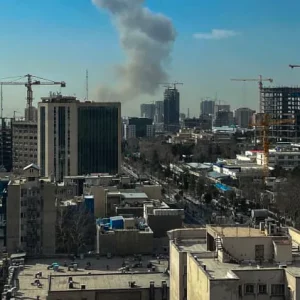
Less human control of AI weaponry increases the appetite for wars, without their ending in sight, the Pontiff cautioned. The Russian war with Ukraine, now in its fifth year, validates this fact. In October 2025, Russia launched more than 4,000 drones, according to a BBC report; while Ukrainian authorities claim that from June last year, an average of 256 Russian projectiles had been fired at their territory every 24 hours. The consequences of these are catastrophic.
On a monthly basis, jobs once thought to be secure at Amazon, Meta, Oracle, Google, Microsoft and other tech behemoths have been wiped off as AI adoption takes the centre stage. Amazon told its workers in January that 16,000 of them would be laid off, while Cloud Fare, a US security group, announced in May that 96,000 job cuts were underway. This represents 20 per cent of its workforce. It is an unfolding socio-economic crisis of immense proportion that would inevitably erode the dignity of those affected.
Not only corporate workers are being bruised by this new technology. Those in the creative sector – musical artists and film stars – have decried AI’s role in copyright issues and violations, the creation and reproduction of fake images, audio and videos of their work, thus denying them the profit of their intellectual labour. As a result, floodgates of litigation have been opened in US courts.
In universities and colleges around the world, students are learning with trepidation and the sense of a future not assured, due to the increasing dominance of AI. Each time they are told by commencement speakers to brace for this tech challenge, innovate and adapt, in order to be relevant, they boo or jeer.
Former CEO of Google, Eric Schmidt, recently faced this anti-AI angst at Arizona University. The reality that millions of young people now face is that their degrees can no longer guarantee them jobs across sectors, whether private or public, that are leaning more towards AI in these times. The loss of self-confidence and dependence on others for survival after toiling through universities, have frightening social impacts.
Besides the Pope, a number of AI experts and innovators had before now warned of the need to proceed with caution on this path. In 2023, AI researchers such as the Canadian, Yoshua Bengio, and British, Staurt Russell, alongside American tech leaders like Steve Wozniak and Elon Musk, united to call for a temporary halt in this tech hemisphere, until a shared safety protocol is adopted. This makes a lot of sense; and this sort of altruism really needs to be rekindled now.
Even the British-Canadian computer scientist, Geoffrey Hinton, referred to as “the Godfather of AI”, for his pioneering role in the development of neural works, has warned that super-intelligent machines could harm the future of the human race. More so, Joep Meindertsma, founder of the Netherlands-based advocacy movement, Pause AI, believes that the present knowledge of AI safety is a lot less than that of its capabilities, which reinforces notions of the potential dangers of the technology.
Therefore, he urges that, “We need a global treaty that pauses this race until we know how to retain control; (and) even when this happens, we need to think about the kind of society we want.”
About 70 non-governmental organisations, known as STOP KILLER ROBOTS, teamed up with the International Committee of Red Cross and the UN Secretary-General, to condemn the use of weapons systems that lack human oversight and accountability.
Yet, extremists argue that a temporary AI pause can only be cosmetic, as it is “smart enough to spread itself across the internet, steer countries towards its own goals, invent new weapons and manipulate people on a massive scale.”
Nevertheless, complete calls for neutralising AI could imply throwing the baby away with the birth water. The World Economic Forum (WEF) labour report envisions that AI would create 170 million jobs by 2030, as against the 92 million it would displace. In fact, its scraping would be a senseless advocacy for that surgeon with the Chinese Academy of Science (CAS), who recently used endoscopic images, displayed on a large screen, 220 kilometres away from Jingzhou where he was, to manipulate robotic arms and perform a prostate cancer surgery on a patient. AI adoption certainly refigures the tropes of the beauty and the beast, hence the need for safety nets, while proceeding.

Ultimately, the case for caution, regulation and control boils down to the kind of society we want our humanity to anchor. Is it one unmindful of the descent into the dark side, in which automated tools undermine our cognitive development; create impersonal PhD theses; eliminate jobs; misinform, distort images, and initiate cybercrimes; while also violating copyrights recklessly, and persuading nations to wars without end?
The challenge for the moment therefore is to ensure a strong rally of the global community towards ensuring that AI development is strongly undergirded by strong ethical considerations in support of an empowered humanity. It is really heartwarming that Pope Leo has taken this major charge by a huge vote for humanity.
Stay ahead with the latest updates!
Join The Podium Media on WhatsApp for real-time news alerts, breaking stories, and exclusive content delivered straight to your phone. Don’t miss a headline — subscribe now!
Chat with Us on WhatsApp