



Ultimately, the Nigerian state failed them and nudged them towards their untimely graves, with the failure of governance at all levels.
Tragically, 37 illegal miners in the cell of the Nigeria Security and Civil Defence Corps (NSCDC) died overnight, within 48 hours of their arrest in Niger State. This is bizarre and most horrific. Nevertheless, it tells a perfect but inconvenient truth about the Nigerian state, where the lives of ordinary citizens are worthless.
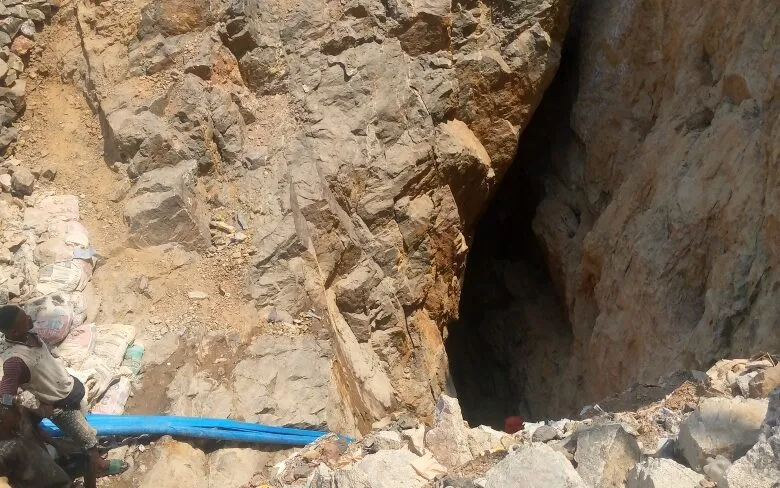
The miners, 65 in all, were apprehended on the 15th and 16th of September in a raid of two illegal mining sites and detained in a tiny room without ventilation. Unashamedly, NSCDC officials told deeply concerned Nigerians that they died from an unknown disease, while no medical report was offered to validate this claim. Public pushback and street protests by youths in the area forced the NSCDC to eat its words.
Since then, frenetic responses from the Presidency, Governor Bago of Niger State and the NSCDC itself – from its headquarters, have been cascading on top of each other: Suberu Aniviye, the NSCDC Commander in the state, was immediately suspended, just as 24 officials of the agency were arrested and detained in Abuja.

President Bola Tinubu’s directive has resulted in the empanelling of a 10-member investigative body to unravel all the circumstances that led to this embarrassing, yet again, tragic tale.
“Preliminary suspension of officials,” the president said, “is merely an administrative step and cannot substitute for a full, crucial investigation where evidence warrants it.” And there is an abundance of this.
According to the president, the panel should focus on the cell conditions, medical care provided, and events leading up to the fatalities. Given what is already in the public domain, it is most likely that some NSCDC personnel with clear cases of abuse and negligence of duty will be prosecuted.
Still, we are calling for more action in unveiling the owners of the two mining sites from where the 37 deceased miners were arrested. Equally important is how the NSCDC official reached the illogical conclusion that a strange disease killed the 37 miners in one fell swoop.
Where the highly probable details above cannot be established, then the federal government would have just acted for mere optics. The dead were likely to have been foot soldiers, while the real illegal miners are the masterminds of the activities involving the murdered teenagers.
The testimony of Dauda Shehu, one of the survivors, that something like a toxic substance was spread into the cell, is quite instructive. He said that suddenly, they realised that they could no longer breathe, and they started yelling and hitting the door, while those who became victims slumped, one after the other, and died. All their efforts to alert the NSCDC officials to the asphyxiating condition in the cell were to no avail. Media reports indicate that the victims died foaming at the mouth and bleeding from their nostrils.
All suspects have the right to life and dignity, as expressly stated in Section 33 of the 1999 Constitution, as amended. This states that, “No one shall be intentionally deprived of their lives, except by the execution of a court sentence for a criminal offence they were found guilty of in Nigeria.” This was apparently not the case with the deceased miners.
The government needs to compensate their families appropriately, while the owners of the mining sites should not only be named but also made to face the full wrath of the law, to act as a deterrent to similar future disasters. The government should, for once, demonstrate that its response is not another act of shadow-boxing.
The impunity of ex-judicial killings runs deep in the country’s security setup, leading to hundreds of lives being wasted regularly. This was the gravamen of the violent #ENDSARS protests that convulsed the country in August 2020. The Muhammadu Buhari regime responded to this with the dissolution of the Special Anti-Robbery Squad (SARS) of the police, which was notorious for its lack of respect for the sanctity of human life.
That action, President Buhari had said, was “the first step in a set of reform policies that will deliver a police system accountable to the Nigerian people.” Unfortunately, this was only notional, with the continued reign of impunity in the police, and now in the NSCDC.
With the yet unclear circumstances surrounding the miners’ death, both the state and federal governments should pause for self-introspection on their roles in this avoidable tragedy. The 37 miners, according to Governor Bago, were teenagers aged between 14 and 18. So, why were they not in school? Nigeria has about 20 million out-of-school children, the worst in the world. More so, the miners chose to eke a living through illegal mining, amid crushing poverty and hunger in the land.
Ultimately, the Nigerian state failed them and nudged them towards their untimely graves, with the failure of governance at all levels. If Nigeria had made the most out of its mining economy, rogue operators would not have taken control of that sub-sector.
Regrettable, the focus is on crude oil, which could easily be exploited and its proceeds looted. Australia, one of the leading global mining economies, recorded about $385 billion in revenue in the 2024 – 2025 financial year, according to its Department of Industry, Science and Resources. An economic sub-sector with such huge annual revenue is capable of creating thousands of jobs and contributing significantly to GDP growth.

But Nigeria simply refuses to make the best of this sub-sector still, despite its huge potential and declared intentions, in a logic that only the government seems to understand. Therefore, the Minister of Solid Minerals, Dele Alake, would need to work harder to reposition and formalise the sector as a revenue earner and job creator for the economy. Otherwise, what appears as burgeoning illegal mining cartels engaging in the extraction of gold, lithium and other minerals will wax stronger, and continue to cause more tragedies, like what recently happened in Niger State.
Just in June, 15 suitcases packed with gold worth ₦4.4 billion were reportedly seized at Aminu Kano International Airport, purportedly linked to a former governor from the North-West. Until the main rogue elements involved in these activities are unmasked and reined in, all efforts to bring sanity to the rich mining sector in the North will be in vain.
Stay ahead with the latest updates!
Join The Podium Media on WhatsApp for real-time news alerts, breaking stories, and exclusive content delivered straight to your phone. Don’t miss a headline — subscribe now!
Chat with Us on WhatsApp