




This column must pause the button of relentless forensic dissection of the nation it has undertaken in the past few weeks for a literary detour and demarche. There are times when literature anticipates life. There are times when life is a poor copy of literature, and there are times when the two collaborate to give a damning verdict on human existence. Sigismund Freud often fingered Fyodor Dostoevsky, the great Russian master novelist, as his mentor and occasional tormentor. Before the political scientist, the sociologist, the historian and the clinical psychologist could settle down to their ponderous ware and laborious utensils, the literary artist has already plumbed the depths of human political psychosis with its outlandish characters and larger than life aberrations. No clinical psychiatrist of his time could have contended with William Shakespeare when it comes to insight into human character. This is why deep literature often feels like a sustained exercise in creative analysis and anticipation of historical developments.
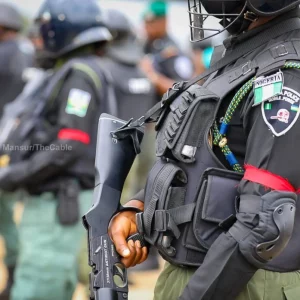
Readers of this writer in whatever genre would have come across an abiding refrain when and where it concerns Nigeria’s political predicament. There is no point in writing elaborate fiction in Nigeria. Reality has trumped the writer. Actual political development is a superior copy of fiction. Reality is more tantalizing than the most outlandish of fiction. Why write fanciful stuff when actual development is more colourful and more throbbing in its lived intensity than imaginary plotting and mere defamiliarization of the familiar? Take the abduction and death in captivity of General Rabe Abubakar this week and the deliverance of his wife by gallant men of the armed forces after the husband had succumbed. Can there be anything more harrowing and tragic at the same time? Losing a well-trained and impressively credentialed army general to a band of ruffians and armed miscreants is galling and sorrowful enough for a nation, but losing four generals within a spate of twelve months is the height of improbable and nightmarish absurdity. Even in a normal war, that kind of toll would have been so prohibitive that the entire country would be draped in a sack cloth of national mourning. But we live in abnormal or even paranormal times.
In a period of analogous social and political ferment in France, Honore de Balzac, a social and political gadfly and writer of great distinction, simply appointed himself as Secretary to the Society. Convinced that all he had to do was simply to record events without any embellishment or fanciful tropes but with great clarity and fidelity to actual occurrences, Balzac went ahead to paint memorable and unforgettable cameos of Parisian high society as they unfolded in real time. What a bewitching panorama of aristocratic villains and high society scoundrels; what enthralling and entrancing panoply of human peccadilloes and the good, the bad and the ugly! But Balzac did not get away with it unscratched. He himself lost the battle to fictional delusions. On his deathbed, the great author was known to have called out a certain Banchioc as being the only physician alive who could cure him of his ailments. Unfortunately, Banchioc was not a living doctor. He was one of Balzac’s great fictional creations. This is what happens when a society finds itself trapped in a phantasmagoric world of its own self-delusion and make-belief.

Exactly twenty eight years ago while in exile, this writer had a horrific visitation about the state of the nation. One was woken up sweating from a terrible nightmare. It was a scene of carnage never before visited on a people: a vast interminable line of women carrying dead and dying children, with sick old men stranded by the roadside moaning and heaving in terminal distress. It was at the height of Abacha’s despotic misrule. One had surmised that since this regressive vision of degraded humanity was already the subsisting reality under the goggled tyrant, it was a revelation about the immediate future.
One then set about transmitting this vision to Nigerians in the form of an open letter to one of Nigeria’s most consequential generals. The epistolary, titled The Road to Kigali, was published to instant fame and popular adulation. The letter alerted the world and the nation to the grave danger that General Abacha’s continued stay in office portended for the largest conglomeration of Black souls the world had seen. Having caused the nation so much emotional harm and political distress, a way must be found to ease the Kano-born Kanuri general out of office without any further ado. Depending on how the general departed from office, the military authorities, since they were obviously afraid of their own shadow after a decade of misrule and gross infractions of the right of the people, could put forward one of their own capable of protecting them against the severe backlash and reprisals from an aggrieved and affronted populace. This managed and carefully choreographed transition from the trauma of military autocracy to civil rule may well be the way out of the cul de sac that Nigeria had found itself. Rather than being an ode to pure democracy, it was a model of a nation solving its peculiar problem in a peculiar and original manner.
Exactly six days after the publication of the letter, General Abacha was recalled by his maker in a dramatic and providential manner. It is beyond the scope of this piece to begin to speculate on the lurid tales about the manner and circumstances of the general’s last moments. Suffice it to say that ruling an unwilling people has its peculiar health hazards. The world’s worst dictators in whatever garb or ideological disguise have been known to be prone to severe mental disequilibrium which leads to dangerous hallucinations and distortions of reality. This makes them very vulnerable to adversarial forces on a permanent siege. It is to Nigeria’s good fortune that in its darkest hour and gravest moment of crisis, events and structural contingency always combine to throw up its best hands in the circumstances. You cannot conjure something out of nothing. You cannot will a revolutionary situation out of an overwhelming convergence and primacy of conservative forces. In this regard, the advent of General Abdulsalami Abubakar could be compared to the emergence of the youthful and earnest Yakubu Gowon. Please note that we are talking about the convergence of professional self-preservation and the preservation of the nation in a particular form and for a precise purpose.
Having put its best foot forward in Abubakar, the military began implementing the recommendations of managed transition to the letter as if by divine consent. A week into the new regime, Obasanjo was released from jail ahead of other incarcerated subordinates. Thereafter, a high volume of traffic consisting of retired military supremos began flocking to his Otta farm. Nigeria’s next civilian ruler was being prepared and pep-talked for higher office. It is interesting that in his released memoirs, Abubakar divulged his initial opposition to Obasanjo’s political ennoblement. This seems to have confirmed the thrust of his midnight maiden broadcast to the nation in early June, 1998 during which he promised to see General Abacha’s transition programme to fruitful conclusion. With his gait unsteady and his voice unassuring, and with his pacemaker getting in the way as it bobbed up in the wrong place, Abubakar did not paint the picture of a hands-on military leader. It was hardly surprising that he quickly caved in after he was swiftly countermanded by those who had put him there. Had Abubakar been a stubborn, self-conceited and ego-driven officer, there would have been a bloody confrontation that could not have been resolved in his favour, given the balance of forces at that point in time. In fact throughout his short tenure, the impression given was that Abubakar was being tolerated rather than accepted by the real powerbrokers.
Given the odds ranged against him, it is to General Abubakar’s credit that he performed creditably well and was able to deliver on the real target of transition which was to bring back General Obasanjo at all costs. In the event, Obasanjo’s incarceration by Abacha turned out to be providential since it shored up his dwindling and disappearing reputation and political fortunes in the eyes of his compatriots. It must also be said that Obasanjo and his inner caucus of retired military kingpins did a great job in the project of demilitarizing the polity by showing the exit door to politically exposed soldiers. Given the tense and volatile situation, it was a brave and bold thing to do.
It was when it came to the equally herculean task of providing a solid and enduring blueprint for the economic and political transformation of the nation that Obasanjo came a sad cropper. Given his own natural inclination and the extant balance of power it would have been impossible for Obasanjo to prosecute anybody for contributing to the economic and political adversity of the nation. But worse still, Obasanjo contributed to the spiritual adversity of the nation by turning a blind eye to the nation-hobbling antics of his northern feudal patrons, particularly the Sharia gambit of Ahmed Sani Yerimah which has now metastasized into a nation-consuming cancer.
Last week as he sat rested and resplendent among a crowd of admirers who had come to honour him at the launch of his three-volume memoirs, General Abdulsalami Abubakar cut the contented image of a man who had done his duty to his nation to the best of his ability and in the most trying of circumstances. In the past year or so, three of Nigeria’s former military rulers have published high-profile memoirs to tell their own side of the story. The witches are singing and it is not a particularly melodious or sonorous song. Abubakar, the Minna-born military patriarch with the mien of a natural placator and placid peace-maker, could be permitted the famous flicker of a half-smile that always plays around his lips.
But outside the hall and even on the road back to his Minna fortress, it is a different story of a nation virtually consumed by political, economic and spiritual adversities. From the nearby Cemetery of Patriots, the unquiet ghosts of high-ranking and highly decorated soldiers done to death by armed ruffians and religious zealots shriek and howl throughout the night. In the past year, four generals have been brutally dispatched by savage heathens posing as religious insurrectionists. In a lawless society saturated and surfeit with arms, the lawful bearer of arms is often the most endangered.
Where did it all go wrong this time around, Abubakar might have been forced to contemplate as he sat among his fellow military Brahmins last week? Perhaps it was the mistake of 1966 when violent soldiers erupted on the scene thinking that they could hold the nation hostage and in armed coercion for as long as possible? Now, arms and their bearers have been completely demystified. Perhaps it was due to his own inability to stand his ground against those who want him to drop his initial opposition to Obasanjo’s emergence as a candidate in the 1999 presidential election? Perhaps Obasanjo should have been made to agree to do only one term in office, or invited to head a military backed Transition Council which would conduct elections after a fixed tenure of one year? Or perhaps….?
Twenty eight years after, the nation remains in apocalyptic quandary with the military veto removed and all routes leading back to Kigali and its cataclysmic consequences. Forty three years after the coup that terminated the Second Republic, the Cemetery of Patriots is filled to the hilt with the bones of indispensable soldiers. The Bulletin from the Land of Living Ghosts, a 424 page psycho-thriller written by yours sincerely and published in 2004, opens to a scene of great carnage and destruction with mortars booming in the distance and artillery fire echoing from The Cemetery of Patriots. It was part of a perennial and protracted battle of wits and will between the heroine, a woman of granite will and indomitable courage and widow of a military icon purportedly killed in a military uprising several decades earlier, and the authorities. The mother of all generals insists on paying respects to her husband at his graveside but the authorities would have none of this, fearing that she might stumble on the hoax behind her husband’s purported assassination. The lesson is that no nation can continue to live a lie and be at peace with itself. This is where we are.
Stay ahead with the latest updates!
Join The Podium Media on WhatsApp for real-time news alerts, breaking stories, and exclusive content delivered straight to your phone. Don’t miss a headline — subscribe now!
Chat with Us on WhatsApp