

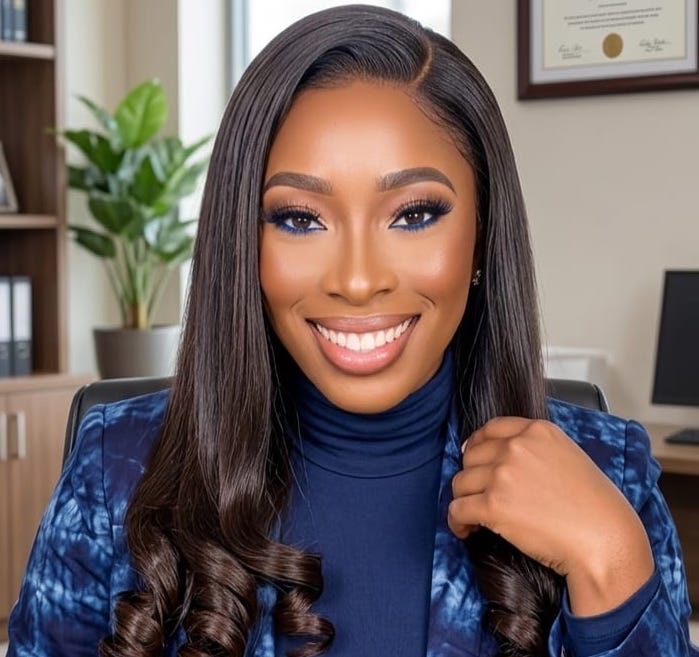
She remembers the girl who couldn’t study after dark, not for lack of will, but for lack of light. That image shaped Dr. Omopeju Afanu’s response when Adebusuyi Olumadewa, founder of DoTheDream Youth Development Initiative and lead strategist of the Girls in Energy Project (GIE Funds, GIE Village), asked her to co-chair the Global Working Group and CSW70 Planning Committee. For her, it was never about titles, but about girls left in the dark.
With a career spanning business transformation, technology, and multi-stakeholder engagement across Nigeria and North America, she saw CSW70 as a space to turn advocacy into measurable impact. She describes Girls in Energy as a platform for women’s empowerment, energy access, and community transformation. In this interview with MARY NNAH, she discussed energy and gender equality, the role of sport in CSW70, what a 10MW mini-grid means for a 13-year-old girl, and why the $20M fund is critical
What made you say yes to chairing the CSW70 Planning Committee?

When Adebusuyi Olumadewa, the Founder of DoTheDream Youth Development Initiative and Lead Strategist of Girls in Energy Project, GIE Funds, GIE Village approached me to Co-Chair the Global Working Group I was pretty excited and I further agreed to chair the CSW70 Planning Committee because I understood how important the Girls in Energy Project was, not only as an advocacy platform, but as a practical vehicle for women’s economic empowerment, energy access, and community transformation.
As someone deeply passionate about women’s economic empowerment, I knew there was no better global stage than CSW to amplify the message, build strategic partnerships, and move the project from conversation to measurable impact. For me, it was an opportunity to bring together the right voices, the right institutions, and the right level of urgency around a project that has the potential to transform communities through girls, women, energy, and sustainable development.
When did you first realise energy and gender equality had to be solved together?
I realised it through the everyday realities of women and girls in underserved communities. When a girl cannot study at night because there is no electricity, when a health centre cannot safely deliver care because power is unreliable, and when women’s businesses cannot scale because there is no affordable energy, it becomes clear that energy is not just an infrastructure issue. It is a gender equality issue.
I also saw how energy poverty directly affects the lives of women and children at critical moments. Reliable 24-hour power in healthcare facilities can save lives. It allows vaccines to be stored safely, enables emergency clinical care, supports women in difficult labour, makes surgical intervention possible when required, and strengthens neonatal care for babies who need urgent support.
Energy affects education, health, safety, income, digital access, productivity, and leadership. You cannot speak seriously about women’s empowerment without addressing the systems that limit women’s and girls’ access to opportunity. Energy is one of those systems. That was when it became clear to me that gender equality and energy access must be solved together.
Why was sport part of the CSW70 side event theme?
Sport was part of the CSW70 side event theme because sport also depends on energy. Stadiums need power. Training facilities need power. Broadcasting needs power. The millions of fans across the world who watch their favourite athletes and teams cannot experience those moments without electricity.
More importantly, when young girls have access to electricity, they can watch global sporting events, see women athletes excel, and begin to imagine possibilities beyond their immediate environment. They can see how sport can transform lives, open doors, build confidence, and create global opportunities, regardless of where a girl comes from.
In essence, energy powers sport, and sport can power dreams. That connection was important to the message we wanted to share.
What was the biggest thing you wanted people to remember from CSW70?
The biggest thing I wanted people to remember was that Girls in Energy was not just an event or a conversation. It was, and remains, an implementation movement.
CSW70 gave us a platform to elevate the message, but the real goal was to drive partnerships, funding, policy support, and community-level implementation. I wanted people to leave understanding that energy access is central to dignity, education, healthcare, economic empowerment, and leadership – and that girls and women must be intentionally included in the future of energy.

What does the Girls in Energy Project mean to you personally?
Personally, Girls in Energy means possibility, responsibility, and transformation.
It represents the possibility that a girl from an underserved community can see herself differently – not as limited by her environment, but as a future engineer, technician, innovator, entrepreneur, policymaker, athlete, or community leader.
It also represents responsibility because it challenges us to move beyond speeches and create real pathways. Girls need access to education, mentorship, digital tools, skills, infrastructure, and opportunity. Girls in Energy gives us a platform to connect those pieces in a structured and meaningful way.

How do you explain a 10MW mini-grid to a 13-year-old girl?
I would say to her: Imagine being able to read at any time of day without relying on candles or struggling with the darkness. Imagine having access to information beyond what is available in your immediate community. Imagine not having to walk to a community water point because water can be pumped directly into homes, schools, and health centres.
Imagine having cold water at home. Imagine your school having lights, fans, computers, and internet access so you can research, learn, and discover innovations happening around the world. Imagine being able to watch television, charge your mobile phone, access the internet, and communicate with people beyond your community.
Now imagine the streets in your community lit up at night, businesses staying open for longer, hospitals providing 24-hour service, vaccines stored safely, and young people having more opportunities to learn, work, and create.
That is what a 10MW mini-grid can do. It is not just electricity. It can transform a community, making it safer, more productive, more economically viable, more prosperous, and more connected to the world.
What’s the hardest part about getting girls into the energy sector?

The hardest part is not that girls lack ability. Girls are intelligent, curious, and capable. The real challenge is removing the barriers around them.
Many girls grow up without exposure to energy careers, STEM role models, mentorship, practical training, or the confidence to believe that technical fields are for them. There are also cultural stereotypes that make girls feel that engineering, energy, and technology are male spaces.
So, the work is not only about telling girls to join the energy sector. It is about building an ecosystem that introduces them early, supports them consistently, gives them practical experience, and connects them to visible pathways into careers, entrepreneurship, and leadership.
Why do you think the $20M fund is important right now?
The $20M fund is important because it is time to move from talk to action. With 2030 around the corner and the SDGs still significantly off track, we cannot continue to rely on fragmented interventions, small-scale pilots, or conversations that do not translate into measurable community transformation.
Girls in Energy can serve as an implementation engine, demonstrating what is possible when energy access, gender equality, education, healthcare, skills development, enterprise, sport, and community development are brought together under a single structured model.
The $20M fund would provide the catalytic capital needed to activate the GiE Village model, support practical interventions, and prove that a well-designed implementation approach can deliver real outcomes. More importantly, it can help unlock additional capital, especially from the private sector, by showing that investing in girls, women, and energy access is not only a social good but also a pathway to economic growth, productivity, innovation, and sustainable community prosperity.
For me, the fund is not just about financing activities. It is about building a scalable proof of impact that can attract stronger partnerships, mobilize more resources, and accelerate implementation where change is needed most.
What does “energy is dignity” look like in real life for women?
Energy is dignity when a woman can give birth safely in a healthcare facility that has reliable power. It is dignity when vaccines are stored properly, neonatal care is available, and emergency medical procedures can be performed when needed.
It is dignity when a girl can study at night without inhaling smoke from unsafe lighting. It is dignity when a woman can run a business, preserve food, access digital banking, charge her phone, and use technology to improve her income.
Energy is dignity when women are no longer forced to organize their lives around darkness, scarcity, unsafe cooking methods, or unreliable systems. Reliable energy gives women safety, productivity, time, income, and choice.
What’s one myth about girls in STEM you wish would disappear?
The myth that girls are not naturally suited for STEM should disappear completely.
Girls lack neither intelligence, creativity, discipline, nor technical ability. What they often lack is access, encouragement, exposure, mentorship, and opportunity. When girls are given the right environment, they innovate, solve problems, lead teams, and build solutions that can transform communities.
The question should no longer be whether girls belong in STEM. The question should be whether we are building the systems that allow them to thrive.
What keeps you up at night about this work?
What keeps me up at night is the urgency of implementation. Some communities cannot wait. There are girls whose potential is being delayed because the right systems, infrastructure, and opportunities are not yet in place.
I also think about the risk of having powerful conversations at global platforms without translating them into measurable change at the community level. That is why I am very focused on partnerships, funding, execution, accountability, and impact measurement. Visibility is important, but implementation is what changes lives.
What’s the first thing a community needs to become a GiE Village?
The first thing a community needs is a proper baseline needs assessment. We cannot assume we know what a community needs before listening, collecting data, and understanding the realities on the ground.
A GiE Village must begin with evidence. We need to understand the energy gaps, education needs, healthcare challenges, economic activities, women’s participation, youth opportunities, agricultural potential, infrastructure gaps, and existing local resources.
From there, we can design a localized intervention that is practical and measurable. The goal is not to impose a solution, but to consolidate the right solutions around the community’s real needs.
How do you know GiE is actually working?
GiE is working when the impact can be seen and measured beyond participation numbers.
It is working when girls gain confidence, skills, mentorship, and exposure to energy and STEM pathways. It is working when girls begin to pursue education, careers, entrepreneurship, and leadership opportunities they may not have previously imagined.
At the community level, it is working when schools are better equipped, health facilities are powered, women-led businesses become more productive, households have improved access to energy, and communities begin to experience economic prosperity.
That is why a MEAL framework is important. We are not just counting activities; we are measuring transformation.
What advice do you give a young girl who thinks energy is “for boys”?
I would tell her that energy is not for boys; energy is for problem-solvers.
If she cares about her community, the environment, technology, healthcare, education, business, or innovation, then there is a place for her in energy. She does not need to know everything from the beginning. She only needs to stay curious, ask questions, learn, find mentors, and believe that her ideas matter.
The future of energy needs girls. It needs their intelligence, creativity, courage, and leadership.
What did you do before DoTheDream YDI?
Before my work with DoTheDream YDI and Girls in Energy, my background was rooted in business transformation, entrepreneurship, operations, technology-enabled solutions, mentorship, and multi-stakeholder engagement.
I have worked across different sectors, helping ideas move from concept to structure and from strategy to execution. That experience has shaped how I approach Girls in Energy. I see it not only as an advocacy initiative but as a transformation platform that requires planning, governance, partnerships, financing, execution, communication, and measurable outcomes.
How has living and working across Nigeria and North America shaped your view?
Living and working across Nigeria and North America has shaped my understanding of opportunity, systems, infrastructure, and inequality.
In North America, I have seen how infrastructure, institutional support, technology, financing, and structured systems can accelerate access to opportunity. In Nigeria and across parts of Africa, I have seen extraordinary talent, ambition, resilience, and creativity, but too often limited by infrastructure gaps and unequal access.
This has taught me that talent is universal, but opportunity is not. Girls in Energy is part of correcting that imbalance by helping girls and communities access the systems and resources they need to thrive.
What’s one decision you made for CSW70 that was really tough?
One tough decision was ensuring that the CSW70 side event remained focused and strategic. There were many important issues we could have included, but we had to be disciplined about the core message.
The focus had to remain on energy access, girls’ leadership, women’s economic empowerment, sport for development, partnerships, and implementation. I wanted every session and every conversation to connect back to action, not just visibility. That required making difficult choices about what to prioritize.
We have 5 years until 2030. What has to happen first?
The first thing that has to happen is alignment. We need to stop working in silos.
Governments, development partners, private-sector actors, investors, civil society, schools, communities, and young people must align on practical implementation models. We already know many of the challenges. What we need now is coordinated financing, community-level data, accountable partnerships, and scalable solutions.
For Girls in Energy, that means moving from awareness to implementation through the GiE Village model, supported by catalytic funding, strategic partnerships, and a strong MEAL framework.
What do you do when you feel burned out?
When I feel burned out, I pause and reconnect with purpose. I remind myself that leadership does not mean carrying everything alone. It means knowing when to rest, when to delegate, when to reflect, and when to return with clarity.
I also try to step back from activity and focus on what truly matters. Sometimes burnout comes from trying to do everything at once. So, I reset, prioritize, and return to the work with a clearer sense of direction.
What do you hope a GiE girl says about you 20 years from now?
I hope she says that Girls in Energy not only transformed her community but also challenged the way she saw herself and the world around her.
I hope she says it helped her see what was possible, even when she could not yet see it for herself. I hope she says the project taught her the power of collaboration, opened doors to opportunity, and gave her the confidence to become a leader in her own right.
Above all, I hope she says that GiE helped her community move from limitation to possibility and inspired her to do the same for others.
Stay ahead with the latest updates!
Join The Podium Media on WhatsApp for real-time news alerts, breaking stories, and exclusive content delivered straight to your phone. Don’t miss a headline — subscribe now!
Chat with Us on WhatsApp