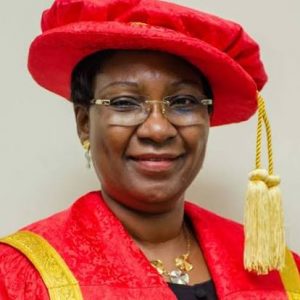



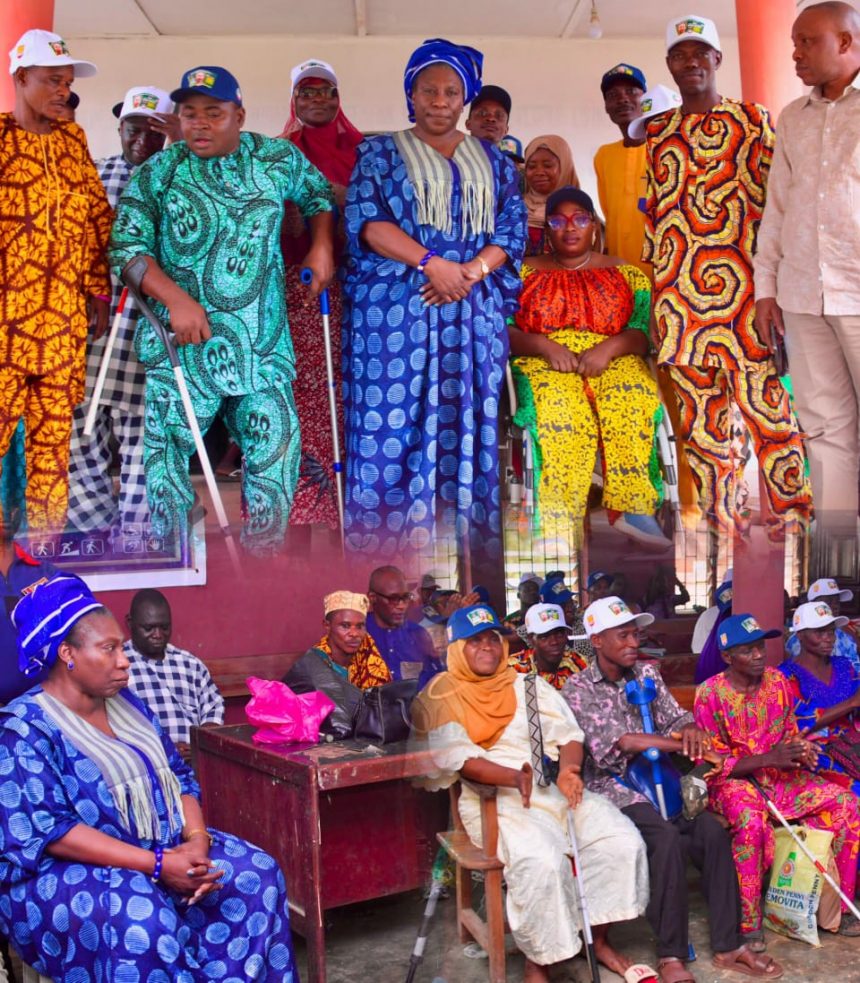
With political activities gathering momentum across the country following the commencement of campaign activities, former Senator and prominent Ogun Central political figure, Senator Prof. Iyabo Obasanjo, has taken her outreach to a constituency often pushed to the margins of political participation—Persons Living With Disabilities (PLWDs).
At an engagement with more than 250 members of the People Living With Disabilities Political Forum(PPF) drawn from the six local government areas of Ogun Central Senatorial District—Abeokuta South, Abeokuta North, Odeda, Ifo, Obafemi/Owode and Ewekoro – Senator Obasanjo pledged to deepen her relationship with the disability community and make their welfare, inclusion and economic empowerment a central concern of her political engagement.
The meeting, coming at a period when political actors across Nigeria are beginning to mobilise supporters and define their campaign messages, provided a symbolic platform for the politician to identify with a constituency whose demands have often revolved around inclusion, education, vocational training, employment and protection from discrimination.

Addressing the gathering, Prof Obasanjo said she did not belong to the class of political leaders who regarded persons living with disabilities as politically insignificant or useful only during election periods.
The former senator traced her compassion for persons with disabilities to her formative years as a student of Queen’s College, Lagos, where, according to her, students living with disabilities were admitted and allowed to compete alongside other students.
She said the experience helped to shape her understanding of humanity and gave her what she described as a compassionate worldview.
According to her, the interaction between students with and without disabilities demonstrated that disability should not be a basis for exclusion, discrimination or the denial of opportunities.
“I believe your category of people needs more attention than many other Nigerians,” she said, stressing that the responsibility of leadership should include deliberate efforts to create opportunities for vulnerable and disadvantaged members of society.
The professor of Epidemology particularly identified unemployment as one of the most serious threats confronting Nigerians, including persons living with disabilities.
She warned that the failure of government and political leaders to create productive opportunities for young people and other employable citizens could have grave consequences for the future.
According to her, persons living with disabilities should not merely be remembered through occasional donations or charity but should be empowered through access to education, skills acquisition and, most importantly, gainful employment.
She therefore promised to leverage her network and political contacts to facilitate employment opportunities for qualified members of the disability community.
“I will leverage upon my extensive network to facilitate jobs and in particular work assiduously with other lawmakers at the upper legislative house to fine-tune all relevant laws having to do with physically challenged persons,” she assured the gathering.
The pledge was significant in the context of the complaints by members of the forum that, despite possessing skills and educational qualifications, many persons living with disabilities continue to face barriers in accessing employment.
Senator Obasanjo urged members of the forum to become more discerning in their political choices, warning against what she described as charlatan political leaders who make promises to the masses without demonstrating genuine compassion or commitment to their welfare.
“There is an imperative for you all to separate charlatan political leaders from real leaders—leaders who are merciful and compassionate with the masses and the less privileged. This is exactly why I have thrown my hat into the ring,” she stressed.

She reminded the gathering that life itself was unpredictable and that no individual could determine what tomorrow might bring.
“Nobody knows tomorrow,” she said, urging them not to lose hope or surrender to feelings of rejection because of their physical conditions and encouraged them to remain hopeful, assuring them that their Creator had not forgotten them.
At the same time, she took a swipe at political leaders who, according to her, exploit vulnerable people for political advantage but fail to address their needs after elections.
She urged members of the disability community to exercise wisdom and discernment in determining those to whom they entrust political power.

Earlier, one of the leaders of the Association, Mrs Ileyemi Olayinka, painted a sobering picture of the condition of persons living with disabilities, particularly in Ogun Central.
Olayinka lamented what she described as years of exclusion and marginalisation in the social and economic life of the state.
According to her, persons living with disabilities have repeatedly been underrated and schemed out of opportunities despite being productive members of society.
“We disabled people, particularly in Ogun Central, are really cheated and disadvantaged in the scheme of things,” she said, adding, “they underrate us and scheme us out.”
She rejected the perception that persons living with disabilities should be regarded as objects of pity or as people without useful contributions to make to society.
“We are not just useless people,” Olayinka declared. Her remarks appeared to capture a deeper frustration within the community—that disability is too often viewed through the narrow prism of charity rather than rights, capability and social inclusion.

Olayinka stressed that many persons living with disabilities did not desire to depend on street begging but wanted access to the same opportunities available to other citizens.
“We don’t want to go and become street beggars. We are part of the society and government should recognise us as such,” she said.
The association leader also drew attention to the lack of adequate educational and vocational opportunities for persons living with disabilities.
According to her, many members of the community possess the desire and capacity to pursue education but are unable to do so because of financial difficulties and the absence of adequate institutional support.
“We love education, but many of us lack the opportunity,” she said. She also lamented the absence of specialised vocational centres where persons living with disabilities could acquire skills suited to their particular circumstances and become economically self-reliant.
Stay ahead with the latest updates!
Join The Podium Media on WhatsApp for real-time news alerts, breaking stories, and exclusive content delivered straight to your phone. Don’t miss a headline — subscribe now!
Chat with Us on WhatsApp