



Nigeria’s manufacturing sector delivered a strong earnings performance in 2025, with a handful of industry leaders driving record profitability despite persistent macroeconomic pressures, elevated production costs, and foreign exchange volatility.
An analysis of the profit-after-tax (PAT) performance of leading listed manufacturers, as reviewed by Nairametrics, shows that cement and consumer goods giants dominated the rankings, while several companies posted triple-digit profit growth driven by pricing power, operational efficiency, capacity expansion, and improved revenue generation.
At the centre of this performance are Chief Executives and Managing Directors who have spent decades building operational expertise across manufacturing, engineering, supply chain management, and industrial expansion.

From cement giants overseeing multi-million-ton production facilities to consumer goods leaders driving aggressive revenue growth, these executives played a critical role in shaping the fortunes of their companies in 2025.
What the data is saying
The 2025 financial year revealed a clear dominance by cement and consumer goods manufacturers, with the top 10 most profitable firms collectively generating more than N2.52 trillion in combined profit-after-tax, accounting for 98.88% of the total profit generated by the manufacturing companies.
- 28 tracked listed manufacturing companies posted profit-after-tax totaling at N2.55 trillion in 2025, up over 1,000% increase from N292.64 billion recorded in the prior year.
- The consumer goods sector dominated the number with six companies listed among the top 10 while Industrial goods took the remaining four spots.
- Notably, Nestle Nigeria, Nigeria Breweries, International Breweries, and Guinness Nigeria recorded losses for the period for year 2024, yet stood out among the top 10 most profitable manufacturing companies a year after.
The strong financial performance across the sector highlights how production scale, pricing power, operational efficiency, and market expansion continue to shape profitability within Nigeria’s manufacturing industry.
CEOs leading Nigeria’s most profitable manufacturing companies in 2025
10. Alexander Gendis — Beta Glass Plc (PAT: N33.25 billion)

Nigeria’s glass manufacturing company, Beta Glass Plc, rounded out the list after posting a profit-after-tax of N33.25 billion, representing a 144% increase from N13.63 billion in 2024.
Revenue rose 27% to N149.12 billion, reflecting stronger industrial demand and improved capacity utilization.
The company is headed by Alexander Gendis, an industrial manufacturing executive with more than 25 years of experience.
Under his leadership, having spent 1 year and 8 months in the company, Beta Glass has continued to deepen its presence in Nigeria’s packaging and industrial glass segment while supporting beverage and consumer goods manufacturers.
The company’s total assets rose 36.87% to N183.89 billion, while ROA stood at 18.08%.
Although Beta Glass recorded one of the lowest profit margins on the list at 0.02%, the company still delivered significant earnings growth driven by higher revenues and operational improvements.
9. Aderemi Saka — NASCON Allied Industries Plc (PAT: N33.53 billion)
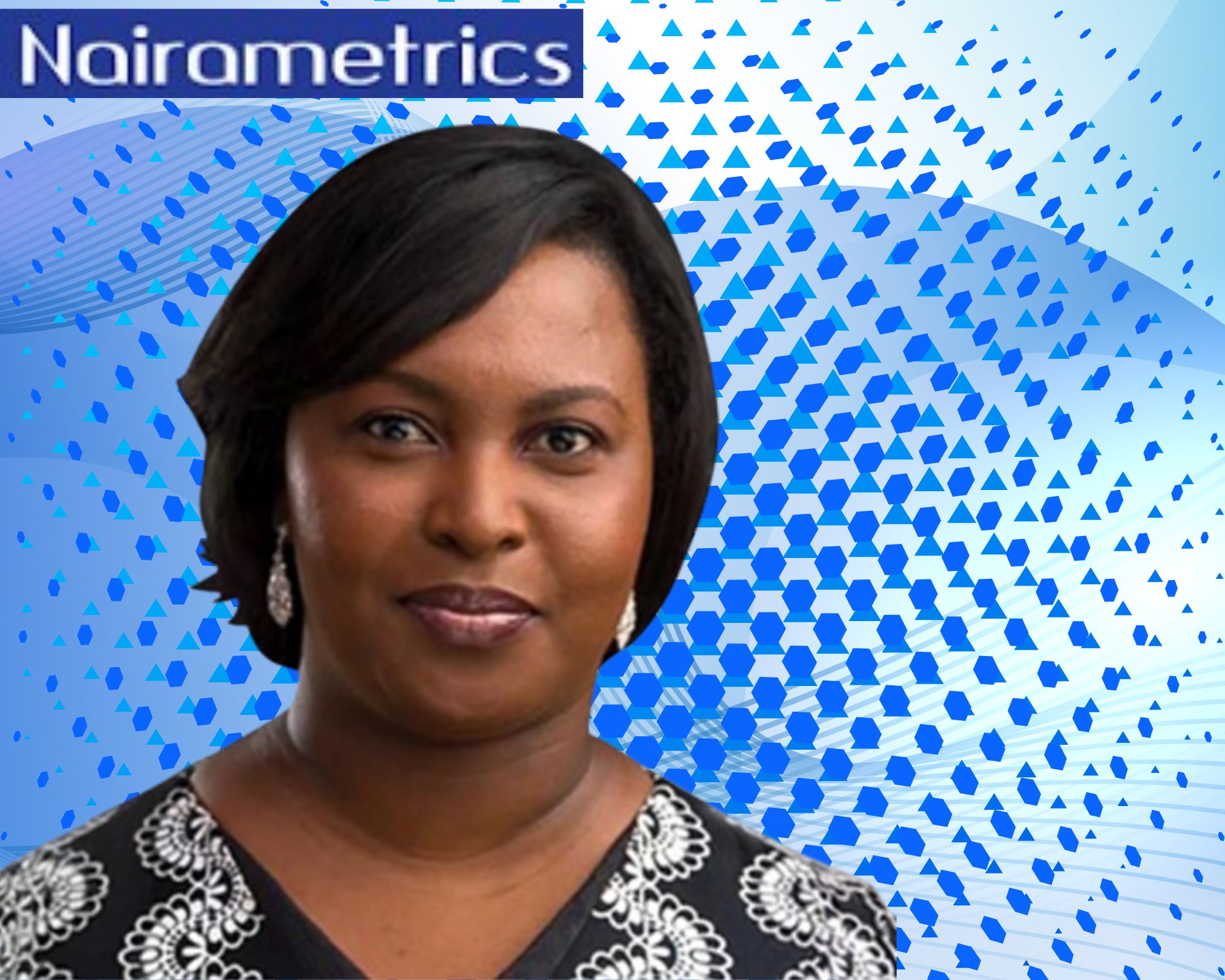
Nigeria salt and seasoning manufacturer, NASCON Allied Industries Plc, posted a profit-after-tax of N33.53 billion in 2025, representing a 115% increase from N15.58 billion in 2024.
Revenue rose 27% to N152.69 billion, while the company maintained a strong 21.96% profit margin.
The company is led by Mrs. Aderemi Saka, a seasoned corporate executive, appointed as the Managing Director of NASCON Allied Industries PLC, effective December 1, 2025, and took over from Mr. Thabo Mabe after his 10 years and 5 months of service.
Aderemi Saka is a seasoned executive with over 26 years of experience in finance and corporate strategy, having previously served as the company’s Deputy Managing Director
Under her leadership, NASCON continued to strengthen its position in Nigeria’s salt and seasoning market while improving operational efficiency and expanding distribution reach.
The company’s total assets climbed 72.31% to N135.27 billion, one of the fastest asset growth rates among the companies reviewed, while ROA stood at 24.79%.

8. Girish Sharma — Guinness Nigeria Plc (PAT: N41.16 billion)

Nigeria Brewery Company, Guinness Nigeria Plc, returned to profitability in 2025 after posting a profit-after-tax of N41.16 billion, compared to a loss of N54.77 billion in 2024.
The company also recorded one of the strongest revenue growth rates among major manufacturers, with revenue surging 144% to N730.81 billion.
Leading the brewer for the past 1 year and 8 months is Girish Sharma, an executive with more than 20 years of experience in the beverage and consumer goods industry.
Before joining Guinness Nigeria, Sharma was CEO of the Colgate-Palmolive Tolaram joint venture and COO of Tolaram’s manufacturing company, Dufil (makers of Indomie).
Sharma has held several leadership positions across Diageo’s international operations and has been involved in driving business transformation, commercial growth, and operational optimization.
Under his leadership, the company has focused on a turnaround strategy involving digital transformation, localizing decision-making, and expanding market reach.
Guinness Nigeria’s total assets increased 8.42% to N245.18 billion, while ROA improved to 16.79%.
The company’s sharp rebound in 2025 reflected stronger demand recovery, improved product mix, and disciplined cost management.
7. Carlos Coutino — International Breweries Plc (PAT: N50.91 billion)

International Breweries Plc reported a profit after tax of N50.91 billion in 2025, reversing the N113.61 billion loss recorded in 2024.
Revenue rose 27% to N619.04 billion, reflecting stronger demand recovery and pricing adjustments.

The company is headed by Carlos Coutino, a brewing industry executive with more than 22 years of experience across multiple markets.
Carlos Coutiño served as the Managing Director/CEO of International Breweries Plc (part of AB InBev) for the whole of 2025. He led the company through high-growth strategies before his resignation after 8 years and 3 months of service and transitioning to a new role, with Nicholas Kade announced to take over, effective March 1, 2026.
In February 2025, Carlos became the Chairman of the Beer Sectoral Group (BSG) in Nigeria.
His leadership has focused on operational restructuring, route-to-market efficiency, brand strengthening, and restoring profitability after a prolonged period of losses.
International Breweries recorded total assets of N739.74 billion in 2025, with ROA improving to 6.88%.
6. Thibaut F.B Boidin— Nigerian Breweries Plc (PAT: N99.1 billion)

Nigerian Breweries Plc also staged a recovery in 2025 after posting a profit-after-tax of N99.1 billion, compared to a loss of N145 billion in 2024.
Revenue climbed 35% to N1.47 trillion, supported by pricing adjustments, stronger premium product sales, and improved market execution.
The brewer has been led in the past 11 months by Thibaut F.B. Boidin, an international brewing executive with more than 17 years of experience across the Heineken Group.
Boidin has held leadership positions in Europe, Africa, and Asia, with experience spanning commercial operations, strategy, and business transformation.
Under his leadership, Nigerian Breweries intensified efforts around premiumization, operational efficiency, and portfolio optimization.
The company ended 2025 with total assets of N1.07 trillion and an ROA of 9.3%.
Its return to profitability marked a significant recovery for the brewer after macroeconomic disruptions and foreign exchange pressures weighed heavily on earnings in the previous year.
5. Wassim Elhusseini— Nestlé Nigeria Plc (PAT: N104.97 billion)

Nestlé Nigeria Plc returned to profitability in 2025 after recording a profit-after-tax of N104.97 billion, compared to a loss of N164.6 billion recorded in 2024.
Revenue rose 26% to N1.21 trillion, highlighting improved sales performance despite inflationary pressures and weaker consumer purchasing power.
The company is led by Wassim Elhusseini, an experienced FMCG executive with more than 23 years of experience within the Nestlé Group.
Elhusseini has held several international leadership positions across supply chain management, commercial operations, and executive management before taking over the Nigerian business.
His leadership in 2025 focused heavily on operational restructuring, cost efficiency, product availability, and restoring profitability after a difficult 2024 financial year marked by foreign exchange losses.
Nestlé Nigeria’s total assets stood at N846.16 billion, while ROA improved to 12.4%.
The company’s return to profitability was widely viewed as a major turnaround milestone within Nigeria’s consumer goods sector.
4. Lolu Alade-Akinyemi — Lafarge Africa Plc (PAT: N273.12 billion)

Lafarge Africa Plc, a cement manufacturer, delivered one of its strongest financial performances in recent years after reporting a profit-after-tax of N273.12 billion in 2025, representing a 173% increase from N100.15 billion in 2024.
Revenue also rose sharply by 53% to N1.07 trillion, while profit margin stood at 25.61%.
Leading the company is Lolu Alade-Akinyemi, an experienced manufacturing executive with more than 20 years of experience across the industrial and FMCG sectors, with 12 years and 8 months of service in Lafarge Africa.
Alade-Akinyemi’s career journey is often viewed as one of the most notable rise-through-the-ranks stories in Nigeria’s manufacturing industry. He began his career in factory operations and engineering roles before moving into senior management positions across supply chain, manufacturing, logistics, and commercial operations.
Before becoming Group Managing Director and CEO of Lafarge Africa, he held several leadership positions within the LafargeHolcim Group, helping drive operational transformation and efficiency improvements.
His tenure has been marked by a renewed focus on operational efficiency, sustainability, logistics optimization, alternative energy adoption, and market expansion.
In 2025, Lafarge Africa’s total assets rose 21.96% to N1.21 trillion, while ROA stood at 22.61%, reflecting improved asset utilization and stronger earnings efficiency.
The company also benefited from stronger cement demand, disciplined cost management, and improved production performance across its plants.
Lafarge Africa CEO, Lolu Alade-Akinyemi, reflected on a landmark year: “Full Year 2025 results are a testament of the effectiveness of our 4-point strategy, disciplined execution, and relentless focus on value creation. Reaching the N1 trillion Net Sales threshold, a 53% year-on-year increase, marks a historic turning point for our Company.
With a 103% surge in Operating Profit to N392 billion and margins widening to 37%, we have demonstrated exceptional operating excellence. This 173% growth in Profit After Tax is the direct result of our focus on plant reliability, operational efficiency, and commitment to shareholder value.”
3. Engr. Yusuf Binji— BUA Cement Plc (PTA: N356.04 billion)

BUA Cement Plc recorded one of the fastest earnings expansions among major manufacturers in 2025. The company posted a profit-after-tax of N356.04 billion, representing a massive 382% increase from N73.91 billion in 2024, nearly quadrupling profits year-on-year.
Revenue climbed to N1.18 trillion, up 35% year-on-year, while profit margin strengthened to 30.19%, making BUA Cement one of the most profitable cement businesses in Nigeria.
The company is led by Engr. Yusuf Binji, a chemical engineer with over 28 years of experience in the cement and industrial manufacturing sector.
Binji has played a major role in the development of BUA Cement’s production infrastructure over the years (6 years and 5 months specificallly). According to industry profiles, he successfully spearheaded the construction and expansion of multiple production lines that helped raise BUA Cement’s installed production capacity to about 17 million metric tonnes per annum.
Before becoming Managing Director and CEO of BUA Cement, Binji served in several technical and operational leadership roles across the cement industry, including at HeidelbergCement Africa, Cement Company of Northern Nigeria, and Obu Cement.
He holds a degree in Chemical Engineering from Ahmadu Bello University and a master’s degree in chemical Process Engineering from University College London.
Under his leadership, BUA Cement has continued to aggressively expand production capacity, optimize energy efficiency, and deepen market penetration across Nigeria.
The company’s total assets rose 18.2% to N1.86 trillion in 2025, while ROA stood at 19.18%.
The strong earnings growth recorded during the year reflected improved cement pricing, stronger sales volumes, and increasing economies of scale from newer production lines.
2. Engr. Dr. Ayodele Abioye — BUA Foods Plc (PAT: N518.39 billion)

BUA Foods Plc ranked as the second most profitable manufacturing company in Nigeria in 2025, while holding its position as Nigeria’s most profitable consumer goods company, with a near‑doubling of profits.
The company posted a profit-after-tax of N518.39 billion, representing a 95% increase from N266 billion recorded in 2024.
The company also reported revenue of N1.77 trillion, up 16% year-on-year, while maintaining one of the strongest profitability levels in the sector with a 29.21% profit margin, highlighting strong pricing power and cost efficiency.
Leading the business is Engr. Dr. Ayodele Abioye, a manufacturing and operations executive with over 30 years of industry experience.
Abioye joined the BUA Group in 2021 (about 5 years and 4 months ago) as Chief Operating Officer before becoming Managing Director of BUA Foods. His career spans several multinational manufacturing and consumer goods companies, including Seven-Up Bottling Company, Coca-Cola Nigeria, Nigerian Bottling Company, Frigoglass, Dansa Foods, and SecureID.
A mechanical engineering graduate from the University of Ilorin, Abioye also holds a master’s degree in engineering management and a PhD in manufacturing engineering from the University of Benin.
Since assuming leadership at BUA Foods, Abioye has overseen aggressive expansion across the company’s flour, sugar, and pasta businesses. The company has continued to deepen its market share in food manufacturing while expanding production efficiency and distribution capacity.
The 2025 financial year highlighted the strength of the company’s integrated food manufacturing strategy, with total assets rising 26.68% to N1.39 trillion and ROA climbing to an impressive 37.35%, one of the highest among Nigeria’s large manufacturing firms.
The company’s strong margins and earnings growth also reflect the resilience of food demand in Nigeria, especially in essential consumer categories such as flour, sugar, and pasta.
1. Arvind Pathak — Dangote Cement Plc(PAT: N1.01 trillion)

Arvind Pathak leads Nigeria’s most profitable manufacturing company, with Dangote Cement becoming the first cement company to cross the N1 trillion profit mark.
The company posted a profit-after-tax of N1.01 trillion, representing a remarkable 101.7% increase from N503.25 billion recorded in 2024.
The company also generated N4.31 trillion in revenue, up 20% year-on-year, while maintaining a strong 23.57% profit margin despite rising operating costs and a slight decline in total assets (-5.66%), indicating improved asset efficiency.
Under the leadership of Arvind Pathak within his 6 years and 8 months of service, profitability more than doubled, driven by strong export earnings, improved pricing dynamics, and sustained infrastructure demand across core and regional markets.
Pathak’s deep operational background in cement manufacturing has translated into scalable production systems and consistent earnings delivery, reinforcing Dangote Cement’s dominance across Nigeria and several Africa markets.
With more than 36 years of experience in the cement industry, Pathak is widely regarded as one of the most experienced cement executives operating in Africa today. Before returning to Dangote Cement as Group Managing Director in 2023, he previously served as Managing Director and CEO of India-based Birla Corporation and earlier held senior leadership roles within Dangote Cement, including Chief Operating Officer and Deputy Group Managing Director.
An electrical engineering graduate with a postgraduate qualification in industrial engineering and management, Pathak built much of his career around plant operations, large-scale industrial expansion, and greenfield cement projects.
His leadership has coincided with continued operational expansion and production optimization across Dangote Cement’s African footprint. The company currently maintains one of the largest cement production capacities in Sub-Saharan Africa at over 50 million metric tonnes per annum, reinforcing its position as the region’s largest cement producer.
As of 2025, according to public data, Dangote Group owns 11 cement production lines and 5 cement grinding plants.
“2025 was a landmark year for Dangote Cement as we delivered exceptional financial performance that underscores the strength of our business model and the effectiveness of our strategic initiatives.”, Arvind Pathak, Chief Executive Officer said.
What this means
The 2025 financial year reinforced the growing importance of leadership execution in Nigeria’s manufacturing sector.
Across cement, food processing, breweries, and industrial manufacturing, companies led by experienced executives with deep operational backgrounds delivered stronger earnings growth, improved margins, and better asset efficiency.
Notably, many of the CEOs on the list built their careers from technical, engineering, supply chain, or factory-floor roles before rising into executive leadership.
The results also underline the growing importance of production scale, operational efficiency, energy management, and strategic capacity expansion in navigating Nigeria’s challenging manufacturing environment.
Collectively, the top 10 companies generated more than N2.52 trillion in combined profit-after-tax in 2025, highlighting the resilience of Nigeria’s industrial sector despite inflationary pressures and macroeconomic volatility.
As industrial competition intensifies, the ability of these CEOs to sustain profitability and expand production capacity will remain critical to the next phase of growth in Nigeria’s manufacturing industry.
Source: Nairametrics
Stay ahead with the latest updates!
Join The Podium Media on WhatsApp for real-time news alerts, breaking stories, and exclusive content delivered straight to your phone. Don’t miss a headline — subscribe now!
Chat with Us on WhatsApp