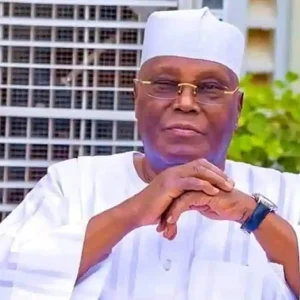




Thursday’s federal high court judgment nullifying Atiku Abubakar’s nomination as the African Democratic Congress (ADC) presidential candidate has introduced an unexpected twist into the race for the 2027 presidency. Although the former vice-president has not exhausted his legal options, the ruling has raised a politically intriguing question: could Atiku’s misfortune become Peter Obi’s good fortune?
Peter Lifu, the presiding judge, invalidated the leadership of the ADC headed by former Senate President David Mark and nullified the decisions taken under it, including the presidential primary that produced Atiku as the party’s flagbearer. The judgment also affected the party’s other candidates for the 2027 elections. The ADC has indicated its intention to appeal.
The immediate implication is that Atiku’s candidacy is in jeopardy, barely two months before the presidential election scheduled for January 16, 2027. However, beyond the legal arguments lies a potentially consequential political development for the opposition, which has struggled to present a united front against President Bola Tinubu of the All Progressives Congress (APC).

For months, opposition figures and political commentators have advocated an alliance between Atiku and Obi, arguing that their separate presidential ambitions could divide the anti-incumbent vote. The two politicians were initially part of the opposition coalition that adopted the ADC as its platform, but the arrangement collapsed, with Obi eventually nominated as the candidate of the Nigeria Democratic Congress (NDC) and Atiku securing the ADC ticket.
The former vice-president chose Rotimi Amaechi, a former Rivers state governor, as his running mate, while Obi settled for Rabiu Musa Kwankwaso, the former Kano state governor. Despite continuing calls for collaboration, the two camps have maintained separate campaigns.
The outcome has been a fragmented opposition challenging an incumbent who enjoys the advantages of incumbency and an established nationwide party structure. The Abuja judgment may, therefore, force a reconsideration of the political calculations that have kept Atiku and Obi apart.
A reunion after seven years?
If Atiku ultimately loses his legal battle and is unable to contest the election, one possibility would be for him to endorse Obi. Such an arrangement would not be entirely unprecedented in their political relationship.
Obi was Atiku’s running mate in the 2019 presidential election on the platform of the Peoples Democratic Party (PDP). Although they lost to President Muhammadu Buhari, the partnership raked in 11.3 million votes.
They went their separate ways in 2023, however, contesting the presidential election on different platforms. Atiku remained with the PDP while Obi ran on the Labour Party ticket. Tinubu won the election with 8,794,726 votes, against Atiku’s 6,984,520 and Obi’s 6,101,533. Kwankwaso, then the candidate of the New Nigeria Peoples Party (NNPP), secured 1,496,687 votes.
The combined votes of Atiku and Obi in 2023 exceeded 13 million, substantially more than Tinubu’s tally. Although this arithmetic cannot simply be transplanted into the 2027 election, it illustrates why advocates of opposition unity have consistently argued that cooperation could change the electoral dynamics.
The more important issue is the geographical distribution of those votes. Obi enjoyed overwhelming support in the south-east in 2023 and also won Lagos, the Federal Capital Territory (FCT) and several states outside his home zone. Atiku, meanwhile, demonstrated significant electoral strength across parts of the north, particularly the north-east and north-west, while retaining support in other regions.
Their political bases, therefore, offer a degree of geographical complementarity. An alliance could potentially bring together constituencies that have not consistently voted for the same presidential candidate.
Atiku’s support in the north is particularly relevant to the calculation. A formal endorsement of Obi, accompanied by active mobilisation of his political associates and supporters, could give the NDC candidate access to established networks in states where his campaign would otherwise have to work harder to make an impression.
There is, however, a critical distinction between inheriting an endorsement and inheriting votes. Atiku’s supporters are not a monolithic political bloc. Some may follow his recommendation, others may prefer Tinubu or another candidate, while some could abstain altogether. An endorsement without the corresponding mobilisation of party structures and grassroots networks might deliver less than its advocates anticipate.
The Kwankwaso factor and the 2031 calculation

One factor that makes the scenario particularly interesting is Obi’s existing partnership with Kwankwaso.
The former Kano governor brings his own northern political network to the NDC ticket. His NNPP secured nearly 1.5 million votes in 2023, with Kano accounting for the overwhelming majority. If Atiku were to endorse Obi, the arrangement would potentially connect the political networks of two prominent northern politicians with Obi’s existing support base.
But the same arrangement could create complications. Atiku and Kwankwaso have their own political ambitions, supporters and interests. Bringing their networks together would require more than a public declaration of support. Negotiations over political influence, party structures and the future direction of the opposition would be necessary.
Obi’s promise to serve only one four-year term if elected presents another consideration.

The former Anambra state governor has repeatedly pledged that he would not seek re-election in 2031. Kwankwaso has also disclosed that they signed agreements relating to the single-term arrangement, while the NDC has formally zoned its presidential ticket to the north for 2031.
The political significance is that northern politicians concerned about the rotation of presidential power would not necessarily have to contemplate an eight-year Obi presidency. Under the proposed arrangement, the presidency would return to the north in 2031, four years after Tinubu’s current term is scheduled to end.
This could provide a basis for negotiations with Atiku and other northern opposition leaders who might otherwise be reluctant to support another southern presidential candidate. It could also address arguments that the north should have an opportunity to produce the president after 2027.
Nevertheless, a political promise is not a constitutional guarantee. Obi would be legally entitled to seek a second term if elected, and the decision on who occupies the presidency in 2031 would ultimately rest with the electorate. The credibility of the pledge would depend on the confidence political actors place in the proposed agreement.
Could the ruling produce a backlash?
Another possible consequence of Atiku’s disqualification concerns public perceptions of the judicial process.

Among opposition supporters, the judgment may generate suspicions that the ruling APC stands to benefit from the removal of a major presidential challenger. There is, however, no established evidence that Tinubu or his party instigated the court action, which arose from an internal ADC leadership dispute.
Nevertheless, perceptions can influence political behaviour even when allegations remain unproven. If some undecided voters come to believe that the opposition is being unfairly obstructed, their dissatisfaction could translate into sympathy for the affected political camp or increased interest in another opposition candidate.
Obi could become a focus of such sentiment if he emerged as the principal beneficiary of an opposition understanding involving Atiku. Voters already dissatisfied with the government’s handling of the economy, insecurity and other national challenges might also view the development through the broader lens of political competition and democratic fairness.
The opposite reaction is equally possible. Some voters may regard the judgment strictly as the consequence of the ADC’s internal disputes, while others may be more concerned about the candidates’ programmes and records than the legal controversy. There is no reliable basis yet for concluding that the ruling has changed voting intentions.
Besides, Atiku is not the only opposition figure whose political future is affected. The judgment nullified the nominations of other ADC candidates, potentially unsettling the party’s legislative campaigns and grassroots organisation. This could complicate any attempt to redirect its supporters towards another presidential candidate.
The appeal remains decisive
There is also the important matter of the appeal.
Atiku has not been finally excluded from the presidential race merely because the federal high court has ruled against his candidacy. The ADC has promised to challenge the judgment, and the outcome of the appellate process could restore the position that existed before Thursday.
For this reason, any suggestion that Atiku is already preparing to abandon his ambition or endorse Obi would be premature. There has been no confirmed agreement to that effect.
Even if the judgment is upheld, an endorsement would require political negotiations. Obi already has a running mate and a party platform, while the electoral timetable and nomination rules impose significant restrictions on changes to presidential tickets. A political alliance would not necessarily amount to a formal merger of candidacies.
There is also the question of Atiku’s personal political calculations. Having contested the presidency repeatedly over the years, the former vice-president would have to decide whether to support another candidate, remain politically neutral or pursue other options available within the law.
Ultimately, Thursday’s judgment has introduced a new variable into the 2027 election, but it has not resolved the opposition’s longstanding divisions.
For Obi, the development presents both an opening and a test. An endorsement from Atiku could expand the political coalition around his candidacy, particularly in northern Nigeria. Yet transforming such an endorsement into votes would require trust, organisation and genuine cooperation among political forces that have so far struggled to agree on a common strategy.
For Tinubu, the situation cuts both ways. The exclusion of a major challenger could reduce the number of prominent opposition candidates on the ballot, but it could also encourage political forces previously divided between Atiku and Obi to reconsider their differences.
Much will depend on the courts, the decisions of the political actors and, ultimately, the voters.
The question, therefore, is not simply whether Atiku’s disqualification will help Obi. It is whether a court judgment that threatens to remove one of Nigeria’s most prominent opposition politicians from the presidential race could achieve what months of political negotiations have failed to accomplish: bring competing opposition forces together behind a common cause.
The answer remains uncertain. But with the election approaching, the political consequences of Thursday’s ruling could extend far beyond Atiku’s personal ambition.
Stay ahead with the latest updates!
Join The Podium Media on WhatsApp for real-time news alerts, breaking stories, and exclusive content delivered straight to your phone. Don’t miss a headline — subscribe now!
Chat with Us on WhatsApp