


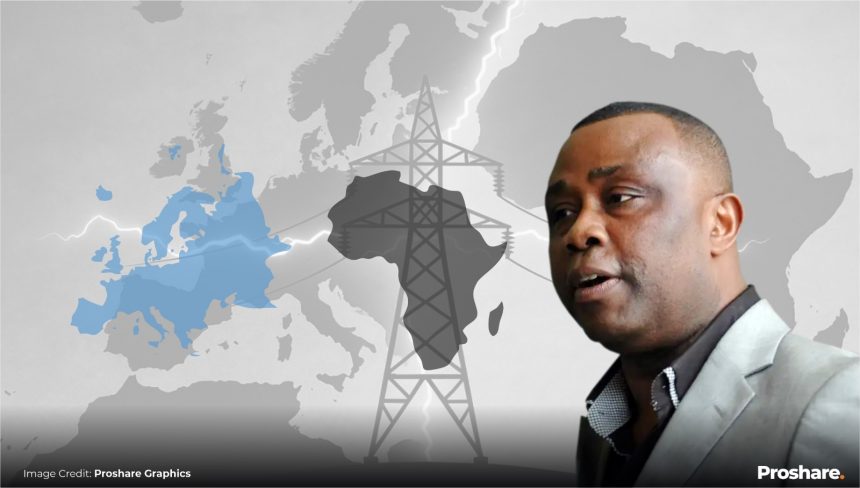
Africa’s development conversation has long rested on two familiar pillars, state-led intervention and foreign direct investment, while a third and arguably more dynamic force has remained underpriced in policy thinking.
In this guest contribution, international trade consultant and author Collins Nweke argues that the African Diaspora has been read too narrowly, valued chiefly for the remittances it sends rather than the institutional weight it carries.
Drawing on his recent book, Economic Diplomacy of the Diaspora, and decades spent at the intersection of public service in Belgium, international trade, and economic advisory, Nweke makes the case for a deliberate repositioning. The Diaspora, in his thought process, is not a passive financial backer of development but a strategic participant, holding knowledge networks, investment capacity, policy influence, and soft power that conventional development models tend to overlook.
The framing of this piece also speaks directly to a younger generation of Africans, urging agency over permission and intentional building over inherited circumstance. For readers tracking the capital flows, governance reforms, and partnership structures that shape the continent’s growth trajectory, the argument carries practical weight. It reframes a community often measured by transfer volumes as a source of institutional capacity that Africa has yet to fully mobilise.
In this review, we present Collins Nweke’s reflections in full.
As the echoes of Africa Day celebrations fade, the annual ritual of speeches, cultural showcases, and reflections on continental unity leaves us with a familiar question: What will it truly take to catalyse Africa’s structural transformation? Historically, conversations around continental development have leaned heavily on two pillars: state-led initiatives and foreign direct investment. However, as I recently noted in Paris when accepting the “Bridging the Gap through Diaspora Advocacy & Professional Excellence Award” at the Nzuko Africa Festival, we are overlooking our most dynamic catalyst. That catalyst is the African Diaspora, not merely as a sympathetic community sending money home, but as a strategic partner in economic diplomacy, national development, and international engagement.
For too long, the global and domestic gaze on the African Diaspora has been narrowly transactional, viewed almost exclusively through the lens of remittances. While these capital inflows remain a vital lifeline for millions of households across the continent, they represent only a fraction of our potential contribution. The modern Diaspora is a sophisticated reservoir of knowledge, institutional networks, investment, innovation, policy influence, and soft power.
This very conviction forms the bedrock of my recently published book, Economic Diplomacy of the Diaspora. The central argument is straightforward: if Africa is to achieve the profound transformation we seek, we must urgently transition from viewing the Diaspora as passive observers or mere financial backers of development. Instead, we must deliberately embrace them as active, institutional participants in shaping it.
Navigating the Gaps

As a first-generation African migrant who has spent decades navigating the intersections of public service in Belgium, international trade, and economic consultancy, I find that the barriers facing our continent are rarely just geographical. The greatest divides are the gaps in understanding, trust, opportunity, and representation.
This is precisely where the Diaspora occupies a uniquely potent vantage point. We understand the structural and cultural realities of our countries of origin while engaging daily with the regulatory, corporate, and political systems of our countries of residence. We are, by definition, built to bridge markets, cultures, ideas, and innovation.
However, maximising this potential requires a paradigm shift. Africa’s future cannot be built by governments alone, nor by business or civil society in isolation. It requires a deliberate ecosystem of partnerships that weave these distinct forces together. The word Nzuko, which anchored the Paris festival, means “coming together”. In this post-Africa Day climate, there is no greater task before us than coming together across borders, generations, and sectors to intentionally architect a common African future.
A Message to the Next Generation
As we look forward, we must confront the reality that Africa’s rebirth will not be driven solely by the natural resources resting beneath our soil. It will be driven entirely by the human resources within our people, chief among them, our youth.
To the young Africans navigating an increasingly complex global landscape, the message is urgent: do not wait for perfect conditions, do not wait for permission, and do not allow external narratives to define your possibilities. The Africa we desire will not arrive as a gift from history. It must be built intentionally through professional excellence, unyielding integrity, entrepreneurship, and public service. You are not merely the leaders of tomorrow; you possess the capacity to shape outcomes today.
When I dedicated my recent book to my grandson, Noah, I wrote: “That the world we shape today may take root in your hands and bloom in the tomorrows of your generation.” While written for him, that aspirational mandate belongs to every young African on the continent and across the Diaspora.
The Road Ahead
Awards and milestones are not final destinations. They are encouragements to continue the journey. There remain significant gaps to bridge, critical partnerships to build, and immense economic opportunities to unlock.
As we reflect on the continent’s trajectory, let us renew our commitment to moving past outdated economic models. Let us build a stronger Diaspora, a more prosperous Africa, and a highly connected world. Together, by leveraging the full weight of our global diaspora through institutional economic diplomacy, we can finally advance the African renaissance.
READ LINK TO
1. Speech: Youth, Future, and the African Rebirth
2. Award Acceptance Speech: Bridging the Gap Through Diaspora Advocacy & Professional Excellence

About the AUTHOR
Collins NWEKE is an International Trade Consultant & Economic Diplomacy researcher. He was a former Green Councillor at Ostend City Council, Belgium, where he served three consecutive terms until December 2024. A first-generation migrant who transitioned from civil society activism into elected office, he writes frequently on democracy, governance, and Africa–Europe relations. He is the author of the book ‘Economic Diplomacy of the Diaspora’. He is also a Distinguished Fellow of the International Association of Research Scholars and Administrators, serving on its Governing Council. A columnist for The Brussels Times, Proshare, and Global Affairs Analyst with a host of media houses, Collins writes from Brussels, Belgium. X: @collinsnweke E: admin@collinsnweke.eu W: www.collinsnweke.eu
Stay ahead with the latest updates!
Join The Podium Media on WhatsApp for real-time news alerts, breaking stories, and exclusive content delivered straight to your phone. Don’t miss a headline — subscribe now!
Chat with Us on WhatsApp