



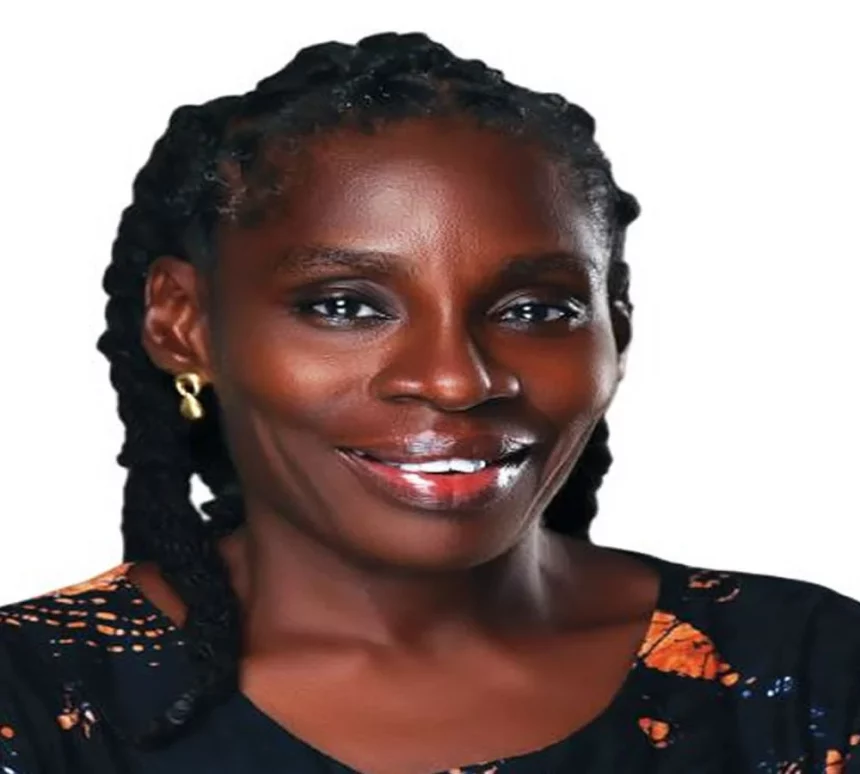
Nigerian marathon runner, sports tourism promoter and founder of FogAdventures, Mrs Dayo Akinbode, shares with BIODUN BUSARI, the highlights of her corporate job, marathon experiences and other life lessons
How was your childhood?
I’m the first child and only daughter. I know how first daughters are always very energetic and ambitious. So, I grew up in a family of four children with three brothers, where scoring 80, 85 or even 90 in school was never good enough.

So, I would get home and my parents would say, ‘How about the person that got 100? How about the person that got first?’ That made me become ambitious. As a child and student, all I did was bury my head in my books, because I always wanted to be at the top of my class.
Based on that, I didn’t do any sports. I didn’t do any extracurricular activities apart from debates and anything that was academic. In all my primary, secondary and tertiary education, I saw sports as a waste of time. I thought that was the time that I could use to study and get 100.
Did that experience pay off for you as a person?
Well, people used to think I was very intelligent, but I don’t think so. I had eight A1s. I got into the university at 15. I studied Materials and Metallurgical Engineering at the University of Ife, not OAU.
I graduated at 20. I didn’t finish my National Youth Service Corps at 21 before I got a job immediately with the Nigerian Air Force, then moved to Cadbury Nigeria Plc. I later joined Shell, where I retired.
Why did you say you weren’t intelligent?
There are more intelligent people in the world. As a university student, I met people doing extraordinary things. So, in the country of the blind, the one-eyed man is king. Getting to university at 15, everybody was clapping for me, but these days, I see people with PhDs at that age range.
While I appreciate your humility about your success, can you share your journey into the corporate world?
I studied Materials and Metallurgical Engineering from 1982 to 1987. I was the only girl in my class. I served with the Nigerian Air Force. I got employed before my service was over because my commandant said he couldn’t let me go, even while I was serving. I started earning two salaries.
What was one big lesson you learnt in the corporate years?
One big lesson that I learnt from corporate work was that brilliance and intelligence alone don’t get you to the top. The interesting thing is that you do not learn that in any school. That is not written in any textbook. You get it from experience.
It’s your attitude that determines your altitude. I found out in the corporate world that people who are less intelligent but diplomatic get to the top faster and more easily. I had been told before that, ‘Don’t just sit at your desk; move around and let others see you.’
Those are the words of my boss. If you just sit at your desk and do the work, people see the results, but they don’t see you, the owner of the results.

So, if I could turn back the hands of the clock, I would do things differently. I would combine intelligence with showmanship. It is what people call eye service.
As someone who didn’t participate in sports in school, what inspired you to become a marathon runner?
It began in 2011. I didn’t know what a marathon was for many years. I stumbled into marathon running when I was working at Shell and had gone for my annual medical check-up.
My doctor came to discuss my report with me. It showed that I had high cholesterol levels and needed to change my lifestyle; otherwise, I could die prematurely.
That report made me sad, and it told me what I needed to do. It said I needed to be more active and change my diet. All the things it told me not to eat were the things that I actually liked.
So, I didn’t do anything about that report. I just kept it somewhere. Not that I wanted to die, but I didn’t have what it took to make a change in my life. But in 2012, at Shell, the company introduced a programme called Global Corporate Challenge.
The challenge was a global one across all Shell companies. They gave us pedometers and wanted us to record our daily steps, saying that human beings should take an average or a minimum of 10,000 steps daily.
Did you achieve 10,000 steps daily?
After we were given pedometers to record our steps, I was recording 800 or 1,000 steps, maybe at the highest 2,000 steps daily. I was one of the people recording the lowest steps in Shell.
I’ve always been a competitive person. I don’t like second or third place. I met people from Canada and Germany who were recording 30,000 and 20,000 steps daily. Because of my curiosity and willingness to learn, I started asking them how they did it.

So, I got the secret: they didn’t use elevators; they walked and ran. These people told me that 30,000 steps were recorded in just one day. From that time, I stopped using the elevator. Also, I told my driver to drop me at the car park so I could walk to my office.
Then, I was sitting on the 14th floor and the canteen was on the 20th floor. I started using the staircase to go to the canteen. All of that was increasing my steps. I also stopped using the phone. I would get up from my desk and walk over to whoever I wanted to speak with in the office.
One day, I realised I had already recorded 8,000 steps by the time I got home. That was very close to 10,000. So, I started walking up and down the streets until I reached 10,000.
Did it come easy achieving all these?
People thought something was wrong with me. Also, weekends were my problem because there was no work. I decided to start walking on the streets during weekends.
Then one day, it started raining while I was walking. It wasn’t raining when I left the house. The rain met me on the way, but I continued because I wanted to achieve my 10,000 steps. I noticed people were murmuring and looking at me as if I had gone mad.
Even the gateman in my estate asked if I was okay. It became obvious that I walked everywhere, including to the salon. One day, I was doing my walk in the estate and saw another woman on the other side of the street. She crossed over and said, ‘Thank God, I’m not the only mad person.’
I said exactly what I was thinking. She said she was doing GCC. I said I was also doing GCC. We exchanged pleasantries and became friends. Then we started doing these things together. Her name is Tayo. One day, she said, ‘Do you know that we can train for a marathon?’
I asked, ‘What’s a marathon?’ That was the beginning of my marathon adventure. She asked me to check it out on YouTube and said we would discuss it some other time. I searched for the Boston Marathon and New York Marathon. We trained and later went for a half marathon in Accra.
That was in November 2012. That was how I got into this. I loved what I experienced in Accra so much that immediately after the half marathon, I got back to the hotel and started searching for where the next marathon would take place.
What were your experiences thereafter?
After my half marathon in 2012, I began running full marathons in 2014. Along the line, I joined the Marathon Globetrotters Club, which is a global club that combines travel with marathon running.
I am the African ambassador of that club. In terms of challenges, travelling with a group of people as a Nigerian is challenging. There were times we got to immigration and everybody passed except me. They held me back and asked me questions.
I would tell them that I was with a group, but I would still be drilled because I held a Nigerian passport before they eventually allowed me through. I travelled to an African country with non-Africans and they didn’t need visas, whereas I, as an African with a Nigerian passport, was not allowed in without one.
Recently, I wanted to go to Mauritania. There were people from Poland, Thailand, the United States, Germany and the United Kingdom on the trip. I was the only African on that particular trip.
Mauritania is in West Africa. So, I did not think I would have any challenge. I knew Mauritania had already pulled out of ECOWAS. So, that meant I had to apply for an e-visa. Everybody applied for an e-visa and received theirs within one day or 12 hours.
When it was my turn, my visa was denied. Others said maybe I didn’t meet the requirements and all that. So, I got the services of a visa expert who handles Mauritania visa applications.
She told me that even if they denied a visa application, they would usually state the reason. But in my case, they didn’t give any reason. She asked for my documents and I sent them.
After all that, she applied and came back saying my visa had been denied. She said it was strange because no reason was given. So, those are some of the major challenges I face.
What do you think caused all these?
Maybe it’s because I’m a Nigerian. I found out that some of these countries have policies they cannot openly state for political reasons. So, there may be a policy somewhere that applications from Nigerians should be denied.
That’s why they cannot provide a reason for rejecting my visa. It’s even better when they do that; some countries will not even respond. They won’t tell you whether you were accepted or rejected.
That happened to me in the Solomon Islands. My team and I applied. Up till today, my visa is still being processed. It hasn’t been denied. So, I kept asking them about the outcome, but there was no response.
They have been processing it for over a year. There must be a policy in that country that Nigerians should not be allowed in. Mauritius is supposed to be a visa-free country for Nigerians. I travelled there some years ago without any problem. But some Nigerians who travelled recently were sent back despite having all their documents.
Initially, I used to be upset about how the world treats Nigerians. I went to Pakistan, for instance. I was invited by the Chief of Air Staff to run a marathon. When I arrived, they saw my Nigerian passport and immediately separated me from the others.
Later, they came back and asked where I would be staying. I said I didn’t know because, truly, I didn’t. Then I remembered that I had my invitation letter and showed it to them. Immediately they saw it, they began apologising.
That was how they carried my luggage and treated me properly. Initially, I was treated poorly because I was a Nigerian, not knowing that I was an invited guest. This happens to many Nigerians. I’m used to it now, and I don’t blame the countries entirely for treating us that way.
What should Nigerians do instead?
What I say to people now is that Nigerians should stop complaining that they are being treated badly. Instead, Nigerians should look inward and ask why some countries do not want us. What are we doing wrong that we need to correct?
Cambodia has a policy online that says citizens of all countries can obtain visas on arrival. But if Nigerians arrive there, they may be sent back. Someone explained to me that some Nigerians had abused the system by relocating entire families to certain areas in Cambodia.
That is why it has become a punishment for all Nigerians. They will allow Nigerians to spend money travelling to their country and still send them back.
Away from these challenges, what are your achievements?
One of my achievements is that I have been able to bring marathon tourism to Africa because Africa is the home of marathon runners.
Through my organisation, FogAdventures, I have been able to organise marathon-related activities in the Republic of Congo, Gabon, Equatorial Guinea, Guinea-Bissau and Guinea. We want the world to come and spend their money in Africa.
Why did you omit Nigeria?
Our first marathon was in Nigeria, but it no longer exists. I started the Ile-Ife Heritage Marathon. We organised that marathon for seven years. In the seventh year, MTN and Aquafina became part sponsors. Ironically, that year turned out to be our biggest headache.
Before then, everything came from my personal funds because I wanted to give back to my university and the community, and create opportunities for young people. I realised that some Nigerians simply like making things difficult for others.
We had prepared for the marathon, which was scheduled to take place on a Sunday. Then on Friday, I received a WhatsApp message from the new acting Sports Council Director of OAU saying I needed to pay N800,000.
I asked what the money was meant for. She said it was for running on the streets and using their facilities.
Then I told her that if I was going to make such a payment, it had to come through an official letter from the Vice-Chancellor. She agreed and later wrote a letter on the Sports Council’s letterhead demanding N2m.
I was shocked when I saw it. She said the event would not hold if I didn’t pay the money. Meanwhile, participants had already started arriving from different places. This was an event the Vice-Chancellor had approved long before then.
I told her I couldn’t transfer N2m because my transfer limit was N500,000. If I wanted to move N2m, I would have had to go to the bank. But banks would not open until Monday. The event was scheduled for Sunday, and this demand came on a Friday night.
She insisted that I must pay N2m. I called the Vice-Chancellor, but there was no response. Some people intervened and I eventually paid N500,000 so the event could hold. I didn’t say anything at the time. I felt I was an alumna of the university and we shouldn’t wash our dirty linen in public.
But I told myself that would be the end of organising marathons in Nigeria. Around that same period, I met the Minister of Health in Equatorial Guinea. He saw what we were doing and invited us to his country.
It was easy to organise events there without spending my own money. He would simply ask me to submit my requests and everything would be approved without stress.
How many marathons have you won?
Life is a marathon; it is not a sprint. You see some elite runners finishing in times close to the world record of one hour and 59 minutes. That is a marathon for them, but to me, that is a sprint.
For them, that is their marathon pace. When I was younger, I used to run like that. The fastest marathon time I have recorded is four hours and 30 minutes. But when I run that way, I don’t have time to relate with people on the course.
Now, I run to talk to people and take pictures. I stopped running for time. Along the line, as I told you, my goals kept evolving. My goal shifted from speed to enjoying the race. So, if the cut-off time is seven hours, I want to get to the finish line about 10 minutes before the deadline.
If the cut-off time is six hours, I want to cross the finish line 10 minutes before six hours. That way, I can enjoy the course by relating with people, connecting with them, observing them and encouraging them.
What are your most memorable marathons?
I’ve run marathons in 105 countries. I’ve run more than once in some countries. Every marathon has its uniqueness.
When you go to Tanzania, you’re running through the savannah. When you go to Antarctica, you’re running alongside penguins. So, I don’t really have a favourite. However, I have marathons that I would never repeat. One of them was the marathon held in Douala, Cameroon.
It was a disgrace because people got lost. There were many complaints, and I was the African ambassador who took participants there. It was like Balogun Market in Lagos. The saving grace was that we later went to Malabo in Equatorial Guinea.
However, I have two Guinness World Records related to marathon running. The first was in Pakistan for participating in the highest-altitude road marathon on September 21, 2022. The second was for completing a Guinness World Records-recognised remote road marathon challenge in September 2021.
Stay ahead with the latest updates!
Join The Podium Media on WhatsApp for real-time news alerts, breaking stories, and exclusive content delivered straight to your phone. Don’t miss a headline — subscribe now!
Chat with Us on WhatsApp