




ALTON says there are no plans for a fresh telecoms tariff increase in Nigeria, clarifying that the NCC’s MTR review concerns wholesale pricing.
The reassurance by the Association of Licensed Telecommunications Operators of Nigeria (ALTON) that there are no plans for another increase in telecoms tariffs is likely to come as a relief to millions of Nigerians still adjusting to the impact of the sector’s first major retail price adjustment in more than a decade.
The clarification follows growing public concern over the Nigerian Communications Commission’s (NCC) ongoing review of Mobile Termination Rates (MTRs), a regulatory exercise that some industry watchers and consumers feared could trigger fresh increases in the cost of voice, SMS and data services.
However, according to ALTON, the industry group of the major mobile network operators (MNOs) operating in Nigeria, the ongoing review is not about what consumers pay. Instead, it is focused on wholesale charges between telecommunications operators, a less visible but strategically important aspect of the economics underpinning Nigeria’s telecoms industry.

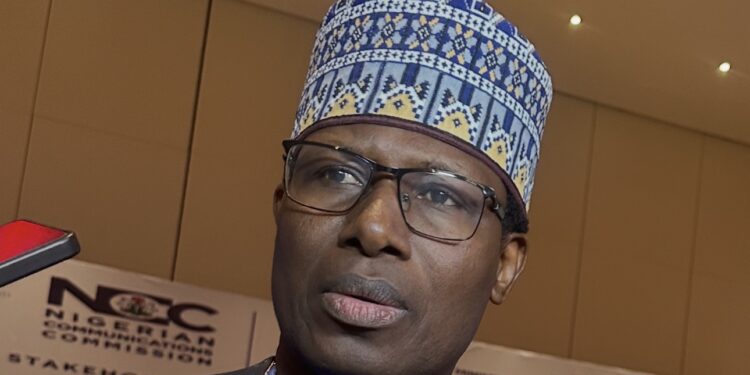
“There are no conversations around tariff review at this time. There are no discussions around upward review of tariff for our consumers,” Gbenga Adebayo, Chairman of ALTON, says while speaking in an interview with AriseTV.
The assurance highlights an important distinction in telecommunications regulation: not every pricing review conducted by the regulator directly translates into higher consumer tariffs.

However, according to ALTON, the industry group of the major mobile network operators (MNOs) operating in Nigeria, the ongoing review is not about what consumers pay. Instead, it is focused on wholesale charges between telecommunications operators, a less visible but strategically important aspect of the economics underpinning Nigeria’s telecoms industry.
ALTON: Understanding Mobile Termination Rates
At the centre of the current regulatory exercise are Mobile Termination Rates, commonly referred to as MTRs.
MTRs are wholesale fees paid by one telecommunications operator to another whenever a call originates on one network and terminates on a different network.
For example, when an MTN subscriber calls an Airtel subscriber, MTN pays Airtel an interconnection fee for completing that call on its network. Similar arrangements exist across all mobile networks.
Subscribers do not directly pay these charges. Rather, they form part of the underlying cost structure that operators consider when pricing retail services.
“What our regulator, the Nigerian Communications Commission, has done is to commence what we call a cost study that determines the wholesale rates between operators, meaning that if I originate a call from my network and I terminate on the other network, there is that internal charge rate between us,” Adebayo explains.
The current wholesale rates were established in 2018 and have remained unchanged for eight years. Under the existing framework, established operators pay ₦3.90 per minute, while new entrants are charged ₦4.70 per minute.
Given the profound changes that have occurred within the telecoms sector over the past eight years, industry analysts argue that a review has become inevitable.

“What our regulator, the Nigerian Communications Commission, has done is to commence what we call a cost study that determines the wholesale rates between operators, meaning that if I originate a call from my network and I terminate on the other network, there is that internal charge rate between us,” Adebayo explains.
Why the NCC is reviewing MTRs now
The NCC’s decision to undertake a fresh cost study reflects the changing economics of operating telecommunications networks in Nigeria.
Since the last review in 2018, operators have experienced significant increases in operating expenses driven by inflation, foreign exchange volatility, rising energy costs and continued investments in network modernisation.
At the same time, consumer communication behaviour has evolved dramatically.
Internet-based communication platforms such as WhatsApp, Telegram and other over-the-top (OTT) services have altered traditional voice traffic patterns, affecting operators’ revenue models and interconnection dynamics.


The review will also assess international call termination rates, which determine how much foreign operators pay when calls originating overseas terminate on Nigerian networks.
The cost study is therefore intended to determine whether existing wholesale rates accurately reflect present-day market realities.
As part of the exercise, the NCC has engaged KPMG to undertake a comprehensive industry-wide cost analysis and stakeholder consultation process.
The review will also assess international call termination rates, which determine how much foreign operators pay when calls originating overseas terminate on Nigerian networks.
“This study is also to determine what is a fair price for terminating calls from overseas on Nigerian network among other things,” Adebayo says.

Why consumers fear another tariff increase
Public sensitivity around telecoms pricing remains high largely because of the major tariff adjustment approved by the NCC in January 2025.
The regulator approved increases of up to 50% in retail tariffs, marking the first significant upward review in more than a decade.
Operators had argued that years of rising operational costs, currency depreciation, inflation and energy expenses had rendered previous tariffs unsustainable.
Although the adjustment was considered necessary to preserve industry viability, it also increased the financial burden on consumers already facing broader economic pressures.
Against this backdrop, news of another pricing review naturally generated concerns that fresh increases in call and data charges could be imminent.

ALTON’s clarification appears aimed at dispelling such fears.
“I must assure Nigerians,” Adebayo adds, “that last year we got some review in our rate for reasons of industry sustainability. Government has made it very clear to us that against that review that was made last year, we must provide better quality services, we must expand our network, we must deepen penetration of services. And that’s what we are doing at this time.”

“I must assure Nigerians,” Adebayo adds, “that last year we got some review in our rate for reasons of industry sustainability. Government has made it very clear to us that against that review that was made last year, we must provide better quality services, we must expand our network, we must deepen penetration of services. And that’s what we are doing at this time.”
The industry’s new priority: Service quality and expansion, ALTON says
Rather than seeking additional tariff increases, operators say their immediate focus is on meeting obligations attached to last year’s retail tariff adjustment.
Those obligations include improving quality of service, expanding network coverage and extending connectivity to underserved and unserved communities.
This commitment comes at a critical time for Nigeria’s digital economy ambitions.
The Federal Government has prioritised broadband expansion, digital inclusion and increased access to online services as key pillars of national economic transformation.
Achieving those goals will require sustained investments in network infrastructure, including fibre deployment, base stations, transmission systems and digital service platforms.
The wholesale cost review being undertaken by the NCC could therefore play an important role in ensuring that interconnection charges remain fair, transparent and investment-friendly.
A poorly calibrated wholesale framework could discourage network expansion or create competitive distortions within the market.
Conversely, an efficient interconnection regime can strengthen competition, improve service quality and support continued investment across the industry.

Any revised Mobile Termination Rates would primarily affect commercial relationships among operators rather than directly altering subscriber tariffs. Nevertheless, because wholesale charges influence operators’ cost structures, the review remains strategically important for the long-term sustainability of the telecoms sector.
What happens next?
The outcome of the NCC’s cost study is expected to shape the future economics of inter-network communications in Nigeria.
Any revised Mobile Termination Rates would primarily affect commercial relationships among operators rather than directly altering subscriber tariffs.
Nevertheless, because wholesale charges influence operators’ cost structures, the review remains strategically important for the long-term sustainability of the telecoms sector.
For now, however, ALTON’s message is clear: Nigerians should not interpret the ongoing regulatory exercise as a precursor to another increase in the prices of calls, SMS or data services.
Instead, the review represents a routine but significant effort to align wholesale telecoms pricing with current economic realities while supporting a sustainable and competitive communications industry.
For consumers concerned about another round of tariff hikes, the industry’s assurance offers some welcome breathing space.
Stay ahead with real-time reports, breaking news, and exclusive insights delivered directly to your phone. Don’t settle for outdated information. Join TECHNOLOGYTIMES NEWS on WhatsApp for 24/7 updates.
Source: technologytimes.ng
Stay ahead with the latest updates!
Join The Podium Media on WhatsApp for real-time news alerts, breaking stories, and exclusive content delivered straight to your phone. Don’t miss a headline — subscribe now!
Chat with Us on WhatsApp