


It is that period in our country’s political life when we begin to hear all sorts of divisive and toxic rhetoric from unexpected quarters. Amid this growing concern, controversial remarks recently attributed to the popular Muslim cleric, Sheikh Yahaya Jingir, have further heightened tensions. Jingir was said to have vigorously defended the continuation of a Muslim-Muslim presidential ticket ahead of the 2027 elections, urging Muslims to use their numerical strength at the ballot box and challenging claims that Christians outnumber Muslims in Nigeria. Expectedly, Jingir’s comments drew a sharp response from Rev. Joseph John Hayab, Chairman of the Northern Christian Association, who described the remarks as offensive and capable of deepening religious tension, warning that such language could further polarise the country and, as he put it, “tear Nigeria apart.”
Beyond the verbal spar itself, something about that episode was sickening to watch, as headlines like this have ripple effects on our coexistence. What worries me is not simply that two religious voices have disagreed so publicly – which, in itself, should not be a problem. It is that, barely months before an election, someone recently described to me as “consequential”, religious language appears to be increasingly finding its way into our political calculations, with the potential to further heat up the political tempo. I ask myself: what happens when the voices that ought to be helping a deeply divided country navigate its political differences are the very voices deepening those very divisions? And what happens when religious rhetoric, coming from people millions trust and listen to, begins to turn an election into a contest of religious arithmetic and claims of spiritual superiority, with the potential to fracture our shared nationhood? Given the pressure our polity is facing from all directions – socioeconomic, political and structural – I shudder to imagine how dangerously high the temperature could become if this continues. And, sincerely, that leaves me with some fresh and rather disturbing questions.
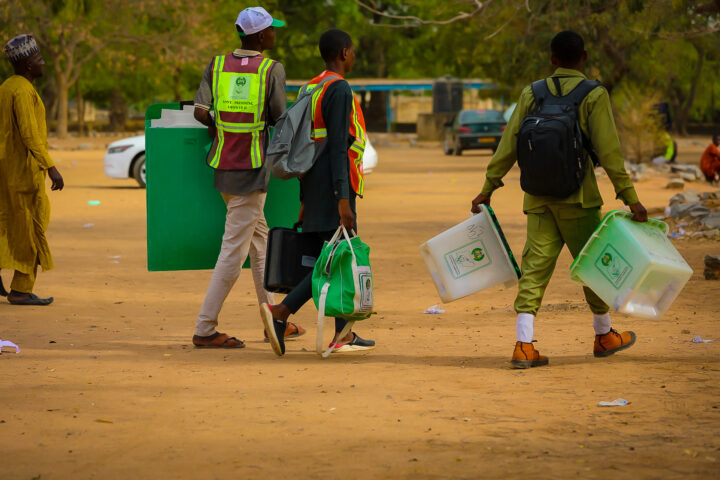
Just imagine two young Nigerians, eager to fulfil their civic responsibilities, standing at the same polling unit on election day. They grew up in the same neighbourhood, attended the same school, and their parents have known each other for years. For this election, one supports Candidate A while the other supports Candidate B. There is absolutely nothing wrong with that. That is, after all, the beauty of democracy. Everything was normal until perhaps a week before the election. One of them sits in church and listens to his pastor speak about the election. The language is fiery and completely partisan. The other candidate is described not as a political opponent but as someone who must be stopped “at all costs.” The congregation erupts as emotions rise, and the young man goes home convinced that something bigger than an election is at stake. His bosom and longtime friend equally has his own share of a fiery sermon, this time not from a church pulpit delivered by a pastor, but from a minbar while seated in the mosque listening to the Jummah sermon delivered by a cleric. The following week, they both arrive at the same polling unit in their neighbourhood, see each other, but somehow, no longer see the friendship they used to share. They now see supporters of opposing candidates. Each sees the other as someone whose candidate must be stopped at all costs. And suddenly, years of friendship acquire a new and dangerous label: “You’re one of them,” because two leaders with moral authority gave them a different lens through which to see the other. As Nigeria moves toward upcoming elections, we must come to the realisation that sometimes, violence does not begin with a stone, a machete or a gun. Many times, it does with a sentence – seeds sown in the hearts of people.

The uncomfortable reality is that Nigerians, by design or default, have handed a host of religious leaders the steering wheel and planted them in the driver’s seat – and there’s absolutely nothing wrong with that. The problem? Many of them simply cannot drive, and eventually we surrender possession of our collective national peace – as we become culpable in allowing the political chessboard to collapse and the temperature to go into a freefall. Possibly, the all-important question the broader Nigerian public should ask our religious leaders as we approach 2027 is not who will win or lose the election but what kind of country their words are helping to build and what kind of country would be left behind when this election is over?
At least we have seen time and time again – since the advent of the Fourth Republic- that candidates will come and go. It is like the Army barracks where soldiers come and go, but the barracks remain the same. Political parties will win and lose. Governments will change – we have seen five presidencies now since 1999, but one thing is ever certain: Nigeria will remain. We must recognise that the young man or woman who voted for one candidate will still live beside the man or woman who voted for another. Regular citizens will still share the same struggles and hopes – enduring bad roads and crippling traffic, particularly in parts of Lagos; feeling the weight of inflation; contending with the power outage we have been forced to endure; grappling with fuel subsidy adjustments; and living with the structurally weak fiscal policies and systemic vulnerabilities of many of our federating states. We should all know that the Christian will still share a market, an office or a neighbourhood with the Muslim. The north will still need the south, and the south will still need the north. We will still wake up in the same country. The pulpit or minbar, therefore, cannot afford to become another battlefield of sorts because politics and elections are temporary, but the community is permanent and being Nigerian is a daily and inescapable reality.
Interestingly, there are still several religious leaders who have understood this responsibility for years and who correctly epitomise the Yoruba adage which says, “Ahọn l’ó ń pa ènìyàn, ahọn náà l’òun gbé ènìyàn”: the same tongue that can destroy can also lift. Fortunately, one of those religious leaders in Nigeria who appears to consciously decide what his utterances will build is Pastor (Dr.) Wole Oladiyun, the Lead Pastor of Christ Livingspring Apostolic Ministry (CLAM), whom I first listened to in 2009. What has remained with me over the years is not merely the size of the ministry he leads or his profound influence on his followers, but his unwavering belief in the Nigerian project. He is an ardent believer in Nigeria and passionately teaches his congregation not just to pray for Nigeria, but to believe in her, love her and bless her at every chance they get. For more than two decades, he has steadfastly organised a monthly prayer summit dedicated exclusively to praying for Nigeria and her leaders at both the national and subnational levels – month after month, year after year, without fail. For me, that is a different kind of patriotism. Here is a religious leader, deeply nationalistic in nature, who recognises that he is not just preaching to a congregation, but speaking to citizens in a country where religion commands enormous influence and where what is said from the pulpit can sometimes determine what happens in the streets.
Therefore, as 2027 gradually approaches, perhaps Nigerians need to pause and reflect on something I believe is far more important than who eventually occupies Aso Rock. This election will come and go – it is like a high-stakes football match – fans may scream at one another during the 90 minutes, but when the final whistle blows, they all leave the same stadium and return to the same neighbourhoods. Inevitably, some political parties will celebrate, while many others will feel the bitter pain of defeat. Nevertheless, when those immaculately designed campaign posters, which would have cost several million naira, have been pulled down, the victory songs have faded, and the politicians have returned to their comfort zones – sharing drinks and negotiating alliances behind closed doors- Nigerians of different faiths, ethnicities and political persuasions and leanings will still wake up the following morning after the elections and continue to live in the same country. That is why those to whom we have, by design or default, handed enormous moral and spiritual influence must understand the weight of the steering wheel in their hands. They can help drive this country through one of its most delicate political moments, or drive it dangerously close to a ditch. And in a country where a sermon from a church and a khutbah from a mosque can shape the thinking of millions, religious leaders must decide what their words leave behind: will they build bridges, mend our seemingly fragile togetherness and remind us of what binds us as Nigerians, or will they burn those bridges and leave deeper divisions in their wake?
Perhaps the real test of spiritual leadership in the days and months ahead will not be the size of a church congregation or the number of worshippers gathered in a mosque. It will be whether, when the political temperature begins to boil, our religious leaders will have the courage to cool it. Nigeria does not need pastors, imams and other spiritual leaders who will turn the pulpit or minbar into another political battleground. The nation needs leaders who understand that faith should make us better Nigerians – igniting the unbreakable spirit of patriotism and oneness built by the founding fathers, and not seeing one another as political enemies. Our leaders must know that an election can be won in a day, but a country can take years to heal and rebuild after its people have been taught to see one another as enemies because of political offices. And maybe the knotty question I truly think every religious leader should ask themselves before speaking about 2027 from any platform is this: when the election is over, what exactly will my words have left behind? Will they mend fences by reminding Nigerians that citizenship is our shared civic identity, while faith remains a deeply personal journey? Or will they weaponise fear, create walls between neighbours, poison everyday friendships and disturb the peace of communities?
Ande, a financial and political economy analyst, writes from Lagos and can be reached via eyitayoande@gmail.com
Stay ahead with the latest updates!
Join The Podium Media on WhatsApp for real-time news alerts, breaking stories, and exclusive content delivered straight to your phone. Don’t miss a headline — subscribe now!
Chat with Us on WhatsApp