



Africa needs to urgently expand its fish-farming sector to meet its food needs, the head of the UN’s fisheries division said Tuesday, even as its latest report found record production levels globally.
Fish and seafood is now a $184-billion trade, according to the State of World Fisheries and Aquaculture report by the United Nations’ Food and Agriculture Organization (FAO), launched at the Our Ocean Conference in Kenya.
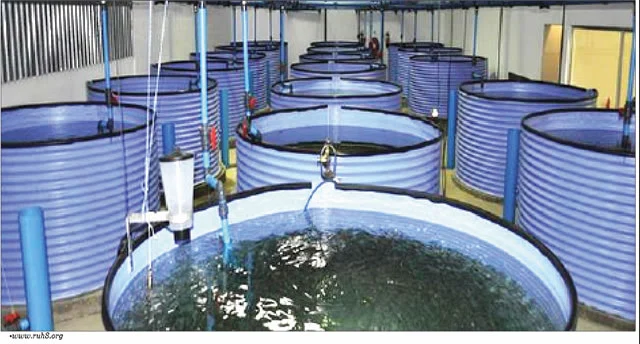
Fish-farming, or “aquaculture”, overtook traditional “capture” fishing as a source of food production in 2021 and has continued to grow — surpassing 100 million tonnes for the first time in 2024, the latest year for data.

But Africa is lagging behind the rest of the world, with only 18 percent of its fish coming from farms, compared to around half elsewhere.
Sub-Saharan Africa’s fish production will need to grow by 68 percent between now and 2050 to keep up with its rapidly growing population, the FAO said.
“It’s an opportunity waiting to be exploited… but it’s whether the timing is sufficiently fast to catch up with that demand,” Manuel Barange, director of the FAO’s fisheries division, told AFP.
“Aquaculture can actually be a game-changer,” he said. “If we manage to develop aquaculture in Africa, there’s a lot of opportunities.”
But governments urgently need to create regulations and incentives to attract investors, Barange added.
More than 700 different species of fish are raised for consumption on aquaculture farms around the world and the FAO argues it is a more predictable and sustainable approach than traditional fishing at sea.
It is also more manageable in the face of climate change, which is causing rapid changes in the volumes and locations of ocean fish.
Climate change is “a disruptor of everything that we do,” said Barange.
More work is also needed to reduce over-fishing: the report found that only 62 percent of global fisheries were sustainably fished.
The 11th edition of the Our Ocean Conference began in the Kenyan port city of Mombasa on Tuesday — its first time in Africa — bringing together politicians, NGOs, investors and innovators.
Since its first edition in 2014, organisers boast that it has led to more than 2,900 commitments valued at over $169 billion, covering marine conservation, sustainable fisheries, climate adaptation, security and pollution reduction.
Stay ahead with the latest updates!
Join The Podium Media on WhatsApp for real-time news alerts, breaking stories, and exclusive content delivered straight to your phone. Don’t miss a headline — subscribe now!
Chat with Us on WhatsApp