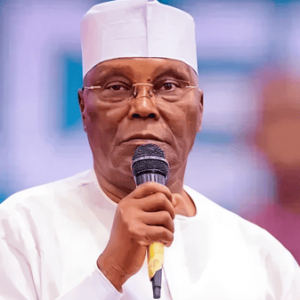

Did Shehu Dikko truly say that the Federal Government gave the Melvin Amaju Pinnick led NFF board N15 billion during its eight years tenure as the federation’s President? Is Dikko just knowing what the government gave to the board now that he is on the other side of the divide? So soon? Or was he quoted out of context as journalists have been routinely accused of doing?
What does Dikko want to achieve from the startling disclosures of N15 billion and N17 billion to the NFF in the last 12 years? Or is it not also true that as an important personality in the Pinnick-led board, he was privy of the audited accounts of the federation he served so diligently?
If yes, what were they saying during their meetings? Who drafted all those documents they presented and defended at the National Assembly and before the Presidency, most times? Does this N15 billion disclosure include the monies spent on at least 10 national teams in hard currencies on both foreign countries and here in Nigeria? Or it doesn’t?

Again, I don’t want to believe that Dikko put this revelation in public space. I say this with all sense of dignity; or was it a slip? In retrospect, Pinnick never failed to use part of his speeches at events to thank Dikko and all those who contributed to the success of the event in question? These are interesting times for sports in Nigeria. Isn’t it safe to say that the Pinnick-led NFF was free from some of the bickering that tore the federation’s boards before his to smitten?
How much of the N15 billion was done in dollars, Pounds, Euro e.t.c for simple and proper understanding? Ditto, what was the price differential between getting N15 billion eight years ago and N17 billion at the going of the naira today? Is it that Dikko forgot that governance is a continuum? This writer wasn’t surprised at the pot shots thrown at the NFF where Dikko served as Second Vice President eight years ago and apologists of the out-gone federation.
While not disputing the figures, the former board explained to The Nation in the newspaper’s September 10, 2026 edition that: ” a massive portion of the N17bn went directly towards settling unpaid liabilities left behind by the previous administration.
”Accordingly, key expenses included clearing a backlog in unpaid salaries for former coach José Peseiro, as well as settling long-overdue match bonuses and allowances for Super Eagles players dating back to the 2018 World Cup qualifiers.
“Of course, N17bn is a fairly tidy sum but don’t forget that the Gusau-led board inherited lots of debts from the previous board and one of those huge debts was the 23-month backlog of coach Jose Peseiro’s $70,000 a month salary. Peseiro’s unpaid salary alone gulped over a million dollars,” a close confidant of the immediate past NFF President explained. “Unfortunately, this was the same salary that the previous board claimed had been bankrolled by Aiteo; but that was not the case, it was the Gusau board that cleared the mess.”
This is one of the reasons that the NFF is always broke. No firm or deep pocket or sports philanthropists would stake his or her offices’ image funding a body that is perpetually in crisis?
According to The Nation newspaper’s source, the humongous debts inherited from the past board also included outstanding match allowances and bonuses due to Super Eagles players dating back to the qualifiers for the 2018 FIFA World Cup in Russia.
Stakeholders close to Gusau noted that Dikko served as Second Vice President under the immediate past board, making it unfair of him to distance himself from previous financial decisions. They maintained that receiving more funding isn’t proof of misconduct when the money was used to fix inherited problems.
“Some of these clarifications are necessary because receiving more funding than a previous administration isn’t, by itself, evidence of anything improper,” he said.
“Rather, the question that matters is how it was applied and without any contradiction, the Gusau-led board used major part of that N17bn fund to clear the debts left by the former board.”
Former officials also highlighted the drastic drop in the Naira’s value. The N15bn received under the immediate past federation came when the dollar traded between N200 and N600, giving it far greater spending power. By the time the N17bn was released under Gusau, the rate had soared to N1,500 per dollar, severely reducing its actual value.
Despite the dispute over past debts, sports stakeholders praised President Bola Tinubu for stepping up funding to support national teams and stabilise sports administration. One only hopes that the bodies responsible for such matters that require forensic auditing would act on this – that is if the issues are already with them but kept under wraps for a faultless prosecution if need be. We should have zero tolerance for malfeasance established by the relevant bodies. We should also abhor media trial for the good of the game.
Again, the drawing board syndrome, which we always refer to anytime things go awry, is the witch-hunt tool that our sports administrators use to further destroy what is already in tatters to create a vacuum for their friends to fill.

Our failure in sports should propel us to do things differently, ensuring that knowledgeable people man the key structures that will make the industry operate as a business.
A holistic approach to restructuring sports this year should include asking those who have failed us to resign from their jobs. We must scout for administrators who will see sports as the culmination of science and business at the helm of each sport to institute templates that will further challenge our athletes to be professional in their assignments.
These administrators must be tasked to take each game to any part of the country with the best comparative advantage to produce the athletes who must then be taught the rudiments of the game at the grassroots.
The criteria for picking administrators for each sport should include having the passion for the game. It is only when a person is passionate about a sport that he can appreciate the need to continuously provide new ideas to lift it from the doldrums.

For instance, a 2019 report by EY’s Economic and Social Impact Assessment said the English Premier League and its clubs supported close to 100,000 jobs and contributed £7.6 billion to the United Kingdom (UK)’s Gross Domestic Product (GDP).
In 2009, the rugby series between the Springboks and the British & Irish Lions boosted the South Africa economy by almost R1.5billion, a study commissioned by SA Rugby revealed.
This converts to nearly N36billion. In just one sport alone. The public interest in the ten-match series, and the impact of the arrival of 37,000 visitors from Britain and Ireland, generated R1.47bn in direct and indirect value to the travel and tourism gross domestic product (GDP) of South Africa.
The six-week tour produced close to a tenth (8,95%) of South Africa’s annual tourism GDP (based on 2008 figures) said the survey prepared by Octagon Marketing in conjunction with Kamilla-SA Sport and Tourism Consultancy and Umcebisi Business Advisors.
Why can’t Nigeria, with Africa’s biggest economy and population replicate this success in football, the king of sports?
Why, for instance, isn’t any of our clubs listed on the Nigerian Stock Exchange?

Stay ahead with the latest updates!
Join The Podium Media on WhatsApp for real-time news alerts, breaking stories, and exclusive content delivered straight to your phone. Don’t miss a headline — subscribe now!
Chat with Us on WhatsApp