




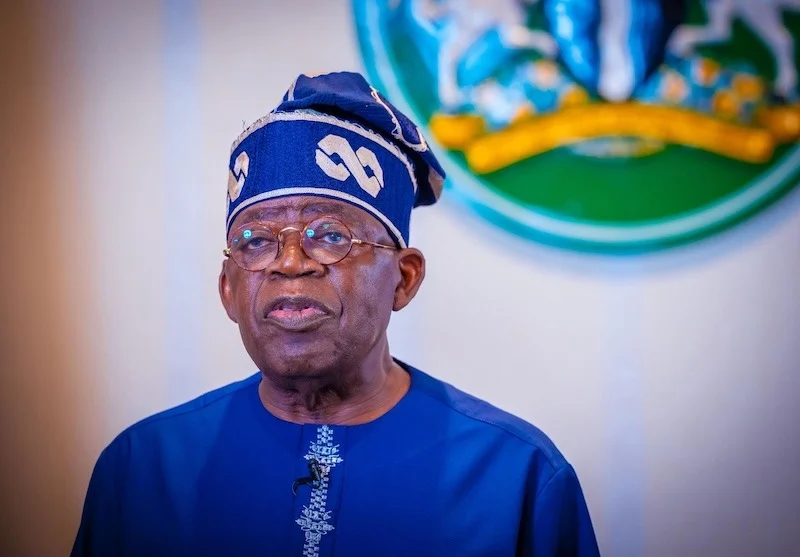
A Senior Advocate of Nigeria and member of President Bola Tinubu’s legal team in the United States, Wole Afolabi, has argued that the President would have been indicted, arrested and prosecuted if there were evidence linking him to drug trafficking in the United States.
Afolabi made the submission during an appearance on Channels Television’s Sunday Politics, while responding to questions about the ongoing legal battle over the release of records held by the United States Department of Justice, Federal Bureau of Investigation and Drug Enforcement Administration.
The records are the subject of a Freedom of Information Act lawsuit filed by Aaron Greenspan, who is seeking access to documents relating to Tinubu and past investigations.

The lawyer said the US government had already released thousands of pages of records but was seeking to keep some portions redacted, arguing that disclosure could compromise law enforcement methods, sources and agents.
According to Afolabi, the decision by Tinubu’s legal team to challenge the release of the redacted portions was based on rights available under US law and did not amount to an attempt to conceal incriminating information.
“This matter has been going on for quite some time, as you rightly said, and the DEA and other government agencies have produced documents and made available to Mr Greenspan.
“Now Mr Greenspan is asking that documents should be unredacted before they are handed over to him. The way the system works is this: it’s not what you want, it’s what the law stipulates.
“So precisely what we are doing is going under the coverage of the law. It’s what the law gives us the right to do. It would amount to professional malpractice on our part if we don’t take advantage of what the law offers,” he said.
Afolabi also dismissed the suggestion that the US government was withholding the records specifically to protect Tinubu.
He said a recent filing by the Department of Justice focused on protecting the methods used to gather information and the identities of sources and agents.
“In one of the recent filings that was made recently by the Department of Justice, it was stated in the footnote at page 24 that their concern is about the methodology by which information is gathered.
“No mention was made of any protection being offered to President Bola Ahmed Tinubu,” he said.
‘If there was evidence, Tinubu would have been indicted’
Afolabi argued that drug trafficking was treated as a serious offence by US authorities and questioned why Tinubu would have been allowed to enter and leave the country without being arrested or prosecuted if there had been sufficient evidence against him.
He cited the cases of former Panamanian leader Manuel Noriega and former British Virgin Islands Premier Andrew Fahie as examples of individuals who faced prosecution over alleged drug-related offences.
He also referred to US action against Venezuelan officials and extradition cases involving Nigerians accused of drug trafficking.

“So the question that should be asked reasonably is this: what’s so special about President Bola Ahmed Tinubu that he would be coming into America and leaving America without being arrested, detained or interviewed for anything?” he asked.
Afolabi said the absence of an indictment against Tinubu was significant, stressing that the principle of presumption of innocence also applied.
Asked directly whether he was saying Tinubu had never taken drugs, had never been caught with heroin and had never been involved in drug trafficking, Afolabi responded that he was relying on the evidence available.
“What the evidence shows,” he said.

The lawyer was also questioned about the $460,000 that was forfeited to the US authorities in the 1990s and the circumstances surrounding the civil forfeiture proceeding.
Afolabi maintained that a civil forfeiture did not mean that Tinubu had been found criminally culpable.
“If he was culpable, he simply would have been indicted. There’s no shortcut around it. He would have been indicted,” he said.
He, however, declined to disclose details of Tinubu’s account of the matter, citing lawyer-client confidentiality.
“I’m acting as his lawyer, and as a lawyer, there is what you call attorney-client privilege, and it’s taken very seriously over here. One can lose one’s licence very easily.
“Unfortunately, I can’t divulge any information that my client had disclosed to me confidentially. I’m sorry,” he said.

Why Tinubu wants some records withheld
The interview also focused on why Tinubu’s legal team was opposing the release of portions of the records if, as Afolabi maintained, they contained no incriminating evidence against the President.
Afolabi said the legal action was not aimed at preventing the release of all the records, noting that the FBI and DEA had already produced thousands of pages.
He said the US government’s concern, as contained in its filings, was that releasing certain information could expose confidential sources and investigative techniques.
According to him, the government had cited instances in which members of the public allegedly targeted FBI agents after their identities were disclosed.
He added that the case would ultimately be decided according to the law and not political considerations.
‘Anyone can be investigated’
When asked whether Tinubu had ever been investigated by the FBI or DEA, Afolabi declined to give a direct yes-or-no answer.
He explained that law enforcement agencies could investigate individuals without those individuals necessarily being guilty of an offence.
He cited former FBI Director J. Edgar Hoover’s investigations of prominent Americans, including civil rights leader Martin Luther King Jr., to illustrate his point.
“Anyone can be a subject of investigation. That’s just how it goes. I mean, there’s a presumption of innocence,” Afolabi said.
He also distinguished between the existence of an investigation and the contents of investigative files, arguing that the presence of a person’s name in law enforcement records should not automatically be interpreted as evidence of criminal wrongdoing.
‘The President is entitled to privacy’
Afolabi further defended the legal team’s reliance on privacy protections, despite Tinubu being the President of Nigeria.
He compared the situation with US President Donald Trump’s efforts to prevent the release of some of his academic records.
According to Afolabi, Trump had invoked the Family Educational Rights and Privacy Act in relation to records from institutions he attended, arguing that his status as president did not automatically eliminate his privacy rights.
“The President of the United States, Donald J. Trump, wrote letters to the schools that he attended, Fordham, University of Pennsylvania, the business school, and even his high school, telling them that he was taking cover under FERPA, Family Educational Rights and Privacy Act.
“That is, academic records should not be released. And his records were not released. He won the presidency. So President Bola Ahmed Tinubu is not doing anything new. It’s been done here,” he said.
The lawyer argued that public office holders in the US also routinely exercised legal protections relating to personal and financial information.
“Everybody takes advantage of it. Everybody. If the law offers you protection, there’s a reason why the law is there,” he said.
‘2027 election will not be decided by documents’
Afolabi also rejected suggestions that the legal battle over the records could determine Tinubu’s political future ahead of the 2027 presidential election.
He said Nigerians already knew the person they voted for and argued that the next election would ultimately be determined by the President’s performance, promises and political campaign.
“The Nigerian people knew who they voted for, and they know who is canvassing for re-election.
“At the end of the day, the election will not be decided on what document exists where. At the end of the day, it’s going to be decided by promises made, promises kept,” he said.
Asked whether the continued withholding of records could create the impression that Tinubu was hiding something, Afolabi maintained that there was nothing new in the controversy.
He pointed to Tinubu’s eight years as Governor of Lagos State, arguing that there had been no evidence that the absence of access to such records affected his governance.
The lawyer said the legal team would continue to rely on the protections available under US law while awaiting the court’s decision.
The case remains before a US federal court, where the parties are expected to make further submissions before the court determines what portions of the records, if any, should be released.
Stay ahead with the latest updates!
Join The Podium Media on WhatsApp for real-time news alerts, breaking stories, and exclusive content delivered straight to your phone. Don’t miss a headline — subscribe now!
Chat with Us on WhatsApp