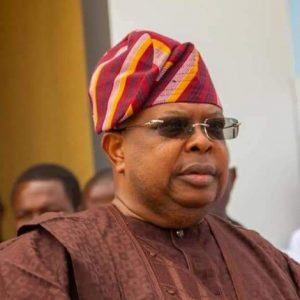




The Chief Executive Officer of KAINOS Edge Consulting Limited, Dr. Doyin Salami, has said Nigeria’s next phase of economic growth will depend largely on how quickly the country creates an enabling environment for private capital.
The Chief Executive Officer of KAINOS Edge Consulting Limited, Dr. Doyin Salami, has said Nigeria’s next phase of economic growth will depend largely on how quickly the country creates an enabling environment for private capital.
He stated this while speaking at Anchoria’s The Quorum Investor Forum, arguing that government alone cannot provide the investment needed to transform the economy.

Salami said the success of ongoing economic reforms would ultimately be measured by their ability to attract domestic and foreign private investment into key sectors of the economy.
According to him, stronger private capital inflows would spur growth across Nigeria’s equity, debt and foreign exchange markets while providing the financing required for long-term economic expansion.
What Dr. Salami is saying
Salami said while global developments continue to shape economic outcomes, Nigeria’s growth trajectory will be determined primarily by domestic policies that encourage private investment.
- “What is going to drive growth in Nigeria at the heart of it is going to be whether Nigeria very quickly recognizes the imperative of private capital and moves to encourage private capital into Nigeria,” he said.
He argued that the government’s fiscal limitations make private sector participation indispensable.
He added that the inability of the government to make that capital happen on its own means it is imperative to create the right conditions for private capital to play effectively in this economy.
According to Salami, once this happens, all segments of Nigeria’s capital markets stand to benefit.
- “If that happens, all the markets for capital will thrive. It doesn’t matter whether it’s equity markets, debt markets or foreign exchange markets,” he said.
Reform agenda should shift to growth
Salami said Nigeria has made meaningful progress in restoring macroeconomic stability through recent reforms, describing the first phase of the reform programme as largely successful.
He noted that stabilisation was a necessary foundation but warned that policymakers must now focus on accelerating economic growth.
- “For me, the first piece of reform is about ensuring economic stability and I would argue that from where we started, a lot of progress has been made,” he said.
However, he stressed that the country could not remain in a stabilisation phase indefinitely.
- “The next key piece of the puzzle is how do we grow this economy rapidly, sustainably, in a sustained fashion and inclusively,” Salami said.
He added that policymakers appear to understand the importance of this transition, as reflected in recent policy pronouncements, but said implementation would be critical.
Nigeria needs faster growth
Salami argued that Nigeria needs significantly stronger economic growth over the next decade to improve living standards and create enough opportunities for its rapidly expanding population.
According to him, the economy should be growing at roughly twice the country’s population growth rate for at least the next 10 years.
He explained that growth only slightly above population expansion would not generate sufficient improvements in income and welfare.

- “Unless you grow faster than population, your output is not going to leave enough room for people to feel the benefits of growth,” he added.
Salami noted that Nigeria’s economy has recently expanded within a range of about 2.5% to 4%, only marginally outpacing estimated population growth, underscoring the need for stronger investment-driven expansion.
What you should know
According to the latest data from the National Bureau of Statistics (NBS) Nigeria’s economy recorded a real Gross Domestic Product (GDP) growth of 3.89% year-on-year in the first quarter of 2026.
This came as an improvement from the 3.13% growth recorded in the corresponding period of 2025. However, Q1 growth declined compared with the 4.07% recorded in the fourth quarter of 2025.
The World Bank estimates Nigeria’s annual population growth rate at 2.1%, with a total population of over 242 million people as of mid-2026.

Stay ahead with the latest updates!
Join The Podium Media on WhatsApp for real-time news alerts, breaking stories, and exclusive content delivered straight to your phone. Don’t miss a headline — subscribe now!
Chat with Us on WhatsApp