



I was about ten or eleven years old when I heard my mother and a friend talking about Mrs X. Her husband had divorced her soon after she had given birth. The couple had at least seven other children after about 20 years of marriage. Everybody liked Mrs X who was said to be a good and virtuous woman, so the discussions were laced with outrage. Apparently, the marriage had ended after the husband had taken up with another woman.
In the following years, I saw breakups repeated in some of our family friends’ homes. From Mrs Y whose marriage ended after about 30 years, to Mrs Z after about the same duration, and so on.
Underlying many of these divorces were women who had married young without much of a formal education and invested almost entirely in their roles as wives and mothers, often without building independent careers, assets, income streams or financial security of their own. They expected to hopefully live to a ripe old age enjoying financial and emotional stability.

Fantasy: Exit Stage Left
Reality: Enter Stage Right
Women who still hold such views need to confront reality and take a hard look at the evidence around them.
If there is one thing that is certain in this world, it is that we cannot predict the future. However, we can learn from precedent and statistics to determine the likelihood of certain events occurring.
In all these, what is heartbreaking is the utter disregard and lack of support for such women in our society. After decades of cooking, cleaning, washing, running the house, and helping build a life for the family they are often left without an income, sometimes nearly destitute, after divorce from even well-to-do husbands, particularly in certain segments / communities in Nigerian society.
Mrs Y’s adult son, who was a man of means, bought her a small house near her former matrimonial home. Her children ensured that she could continue to maintain a similar lifestyle that she was accustomed to.
Mrs Z, who had no biological children, moved from her lavish matrimonial home to a small house in one of the most disadvantaged areas of the city. The difference was so stark that every time we visited, I would remember her former lovely house with its expansive grounds and garden; I seem to recall that it also had a swimming pool, though unused. With no children to provide for her, except a younger half-sister that she had raised and who had also married young and was not working, that pitiful abode was all she could manage after the divorce. Her husband continued to live in opulence.
I remember as a child how my mother and her friends kept praising Mrs A’s husband who had divorced her after over twenty years of marriage, and had bought her a nice house. He was likely providing a regular income for her too. This gesture of his was so unheard of that it stood out.
Too often, women’s groups, particularly some faith-based ones, seem reluctant to confront these realities directly, even when such women are almost ostracized from society with little or no support from institutions that might be expected to advocate for them.
The ‘solution’ that some state governments offer is to organize mass weddings for divorcées, rather than addressing the underlying causes of their vulnerability
As an adult, I have seen friends from my childhood fall victim to similar circumstances due to divorce or widowhood.
Example: Mrs B, a good-natured woman who called me recently because she needed help to buy some medication for herself and her mother. The amount was not huge, but not having worked since she married, and having little or no passive income, she was in dire straits she told me. She had been married to a traditional-titled man who had three other wives when he passed a few years ago, and dozens of children. I assume she inherited next to nothing.
Example: Mrs C, my smart and beautiful friend, inside and out, who came from a loving and nurturing home. I remember how attentive her father was and how he would often come to school to visit her. Her mother had passed and he was a single parent at the time. She went on to university, graduated with honours, and got married. She had children in quick succession. A beautiful and stylish woman, I assumed she had a loving marriage. Until she confided in me that her husband would beat her up over the slightest perceived infraction. She was feeling humiliated that he had begun to beat her in front of the help. He had made her give up her job at a school, thereby rendering her completely dependent on him. She said when he was angry with her, he would not give her money even to buy bathing soap or sanitary towels.
The man expected her to come to him as soon as he called her. She told me he once dragged her naked out of the shower and beat her up because he had called her and she had not come immediately. Though she explained that she was already in the shower and was trying to finish quickly, he ordered that whenever he called, she must leave whatever she was doing and go to him immediately.

Remember the time of the stock market boom of over a decade ago when people were taking those controversial so-called ‘share purchase loans’? I received a call from Mrs C asking to borrow a substantial amount. This was so out of character for her that I had to probe. It turned out she wanted the money to give to her husband who wanted to buy some shares. Imagine that.
They are still together to this day. I had hoped the marriage would have improved over the years, but when I had a call with her not long ago, she said she would have preferred to do a video call since we had not seen each other in a while, but she was embarrassed about how “wretched” she looks now. She said the emotional and psychological toll that the marriage had taken and was still taking on her was immense.
The modus operandi of an abus3r is control. And it is easier to control a person who is dependent (e.g., for sustenance or social standing), which is why they may prevent the person from gaining an education, earning an income, or cut them off from friends and loved ones.
My view, from experience and observation, is this: When one cannot rely on systems, family or community to support or protect one, one must find a way to raise oneself, love oneself, and find the courage to take actions for one’s own future and well-being. While we continue to demand better systems, stronger legal protections, and more supportive communities, every woman should also strive for a degree of personal agency and financial independence.

I do not know why I woke up today thinking about these matters. Forgive my long reflection (rant? 😇). Perhaps I am just hungry. I had better go and have breakfast.
Happy Sunday.
SundayReflection #lifelessons #OwnYourJourney #financialindependence
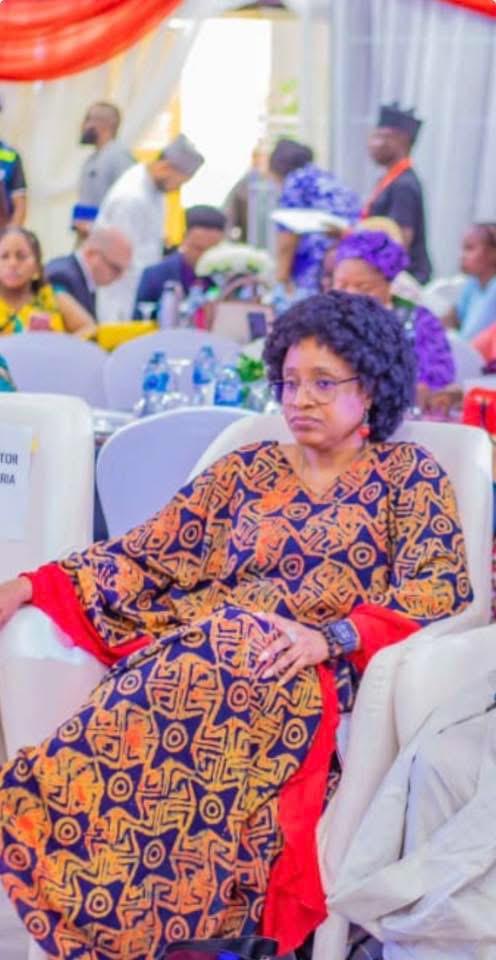
(The photo was taken at a Women’s Voice and Leadership event. Fittingly, the project focuses on supporting women to exercise voice, agency and leadership in their own lives and communities.)
Stay ahead with the latest updates!
Join The Podium Media on WhatsApp for real-time news alerts, breaking stories, and exclusive content delivered straight to your phone. Don’t miss a headline — subscribe now!
Chat with Us on WhatsApp