


The 2027 presidential election will not be won by popularity alone or be lost by public policy. It will be won by the candidate who best combines identity with capacity and be lost by those who don’t.
- By identity, I mean the three forces that have historically shaped Nigerian presidential elections more than any manifesto or policy: ethnicity, religion and region! Capacity, on the other hand, is the practical ability to convert political support into electoral victory: the ability to mobilise voters, organise them, finance the electoral machine, persuade or induce voters, deploy agents, protect votes, defend results and, where electoral malpractice occurs, either prevent it or withstand it, and ultimately convert political support into actual electoral numbers! In the Nigerian context, therefore, popularity alone does not win elections. A candidate must possess both support base and the capacity to convert that support base into votes.
- This distinction is crucial because Nigeria has repeatedly demonstrated that having supporters is not the same thing as having votes, and having votes is not the same thing as being able to protect them. We have seen that time and again in the various elections cycles in the past. A typical example was my contest in Adamawa in the 2023 gubernatorial election. In terms of popularity, I can safely assert that nobody was more popular than me in the state. But to convert that popularity into concrete electoral victory became impossible.
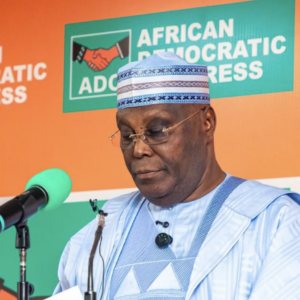
- Viewed from this perspective, the 2027 contest becomes particularly interesting because the three principal contenders – Bola Tinubu of the APC, Atiku Abubakar of the ADC and Peter Obi of the NDC – each possess important elements of identity advantage, but in different geographical and demographic configurations. Even though each has an identity advantage, but not all of them have the same capacity. And in the forthcoming presidential election, that difference could determine everything.
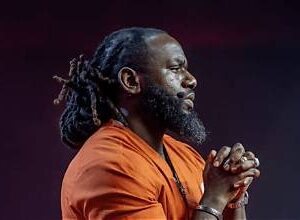
- Of the three, Peter Obi arguably enters the race with the most powerful identity advantage. The South-East is his natural fortress. He is likely to command the overwhelming majority of the Igbo vote, not merely in the South-East but among substantial sections of the Igbo population outside the region and across the entire country. The quest for Igbo presidency as a rectification of the perceived political injustice against the Igbos is the major driver of this movement.
- More importantly, Obi’s appeal extends beyond ethnicity. He has developed a remarkable following among Northern Christians, particularly among younger and politically conscious voters. This gives him an electoral bridge extending from the South-East into parts of the North that no other candidate can easily replicate or replace.
- Then comes the South-South. This is where the 2027 election could become particularly interesting. The APC may control the state governments in the region, but presidential elections are not necessarily referendums on state-government control. Where ethnic, regional and religious considerations become dominant, political party machinery can encounter powerful countervailing forces that it cannot overcome. With the deeply pronounced consciousness of these cleavages in the zone, without doubt, Obi will predictably become the principal beneficiary of the significant portions of the South-South sentiment.
- But this does not mean that Obi will sweep the zone easily. Tinubu will fight for those votes – and he will fight hard. The real question is how much of Obi’s identity advantage can survive the APC’s superior political capacity. That will be the major test of the electoral battle of the 2027 presidential election in the zone.
- It is in Tinubu that identity meets capacity. If Obi possesses the strongest identity coalition, Tinubu possesses perhaps the most formidable combination of identity and electoral machinery. The South-West is overwhelmingly his natural political identity territory. As a Yoruba candidate from the South-West, sitting president and leader of the ruling APC, Tinubu begins with a formidable regional base. Not withstanding his narrow defeat in Lagos in 2023, neither Obi nor Atiku is likely to make a sufficiently deep penetration into the core Yoruba vote to seriously threaten Tinubu’s dominance there.
- But Tinubu’s real strategic advantage extends beyond the South-West. It lies in the Muslim North. And this is where the election becomes much more complicated. Atiku’s greatest identity advantage is in the Muslim North. His northern background, religious identity, political history and extensive networks naturally make him a formidable candidate in that region. But Atiku does not have the Muslim North to himself. Tinubu is also a Muslim.
- And his decision to retain a Muslim running mate in Kashim Shettima gives the APC something extraordinarily valuable in a predominantly Muslim region: a ticket that carries no religious contradiction. This is where identity meets capacity. The Muslim North, unlike the South East, the South West and the Christian North, will not vote as a single bloc to a single candidate. Here, Tinubu can compete for its Muslim vote without having to overcome a religious barrier. At the same time, he possesses something Atiku and Obi do not: the machinery of the Federal Government and the political structures of the governing party! Also, all the governors in the Muslim North are APC governors. That matters.
- These governors have their own political futures to protect. Their political structures, local organisations and electoral interests are deeply intertwined with the presidential contest. Their own electoral victories are contingent on the victory of their party in the presidential contest. Consequently, Tinubu does not enter the Northern battlefield alone. He enters it with governors, legislators, party structures, political networks, unlimited resources and incumbency. This is what I mean by capacity.
- On the other hand, Atiku will be facing a dilemma. No doubt he remains a serious contender. His political experience, national network and strong northern appeal cannot be dismissed. But his central problem is that his greatest advantage is contested by a sitting president who shares the same broad religious identity. Atiku can appeal to Northern Muslims on the basis of being a northerner and a Muslim. Tinubu can equally make exactly the same appeal, as a Muslim and his running mate also a Muslim and a northerner. Tinubu additionally possesses incumbency and the machinery of the governing party. That could make the difference. Atiku on the other hand can only hope on Muslims’ dissatisfaction and dissent against the incumbent to win. This is far-fetched.
- The question is therefore not whether Atiku will win substantial Muslim votes. He almost certainly will. The question is how much of those votes can he take away from Tinubu? That is a very different question.
- And here is the great paradox of the 2027 presidential election. Obi may have the strongest identity advantage but the weakest electoral capacity of the three. Tinubu may have the strongest electoral capacity of the three but a less naturally dominant identity coalition nationally. Atiku may have the strongest traditional northern political identity outside the incumbent’s coalition, but he must fight the incumbent for the very constituency in which that advantage matters most.
- This is why those who analyse the 2027 election exclusively through social-media popularity, rallies, defections or opinion polls may be badly surprised. The real election is happening beneath the noise. It is an election of geographical arithmetic, identity and machinery.
- Could Obi and Tinubu emerge as the final two? Most likely! My reading is that the election could ultimately narrow into a contest between Obi and Tinubu. Atiku will remain highly competitive, particularly in the Muslim North. But Obi’s potential strength in the South-East, among Igbos nationally, in the South-South and among Northern Christians gives him a possible route into the top two.
- Tinubu, meanwhile, has the South-West almost naturally within his coalition and has sufficient identity, electoral capacity and organisational advantages to remain competitive across the North and the South-South. The consequence could be an extraordinary first ballot in which Tinubu and Obi emerge as numbers one and two but neither obtains the constitutionally required spread. This is likely to happen, and for the first time Nigeria could face a presidential runoff.
- And that is where the mathematics of 2027 could become truly fascinating. The runoff changes everything. In the first round, the candidates will largely be fighting to consolidate their natural constituencies. In a runoff, they will be fighting for everybody else’s votes, and a simple majority wins the race.
- The South-East will already have largely declared itself. The South-West will already have largely declared itself. The critical question will then become: Where are the votes that can still change the outcome? The answer is likely to be the North. And more specifically, the Muslim North. This is where Tinubu’s Muslim-Muslim ticket could become decisive.
- Again, this does not mean that every Muslim will vote for Tinubu. Nigerian Muslims are not a voting monolith, but when two candidates are locked in a close contest, religious identity can become a powerful electoral tiebreaker. And when religious identity is reinforced by incumbency, party machinery, governors, local political structures, superior organisational capacity and unlimited resources, its effect can become even greater.
- This is the scenario that should concern Obi’s strategists most. Obi may win the argument of identity in the South-East. He may win the argument of identity among most Northern Christians. He may perform exceptionally well in the South-South. But can he compensate for what he lacks in traditional electoral machinery when the contest reaches the polling unit? That is the question. And it is not a question that social media can answer.
- The election may therefore have two stages – and two different logics! The first stage may be decided principally by identity. The second may be decided principally by capacity and coalition. That distinction could prove decisive. In the first round, candidates will seek to maximise their natural ethnic, religious and regional constituencies.
- In the runoff, the surviving candidates will need to persuade voters who did not initially belong to their coalition. At that point, political organisation, resources, alliances, governors, party structures and the ability to negotiate with other political interests become enormously important. This is why the most consequential question of 2027 may not be: Who is the most popular candidate? It may be: Who can convert popularity into protected votes?
- That is a much harder test. And on that test, Tinubu enters the race with a significant advantage, and the uncomfortable arithmetic. If the first ballot produces Tinubu and Obi as the final two, the election will have entered a completely different phase. Obi would possess a formidable coalition. Tinubu would possess another. But the decisive votes could belong to neither. They could belong to the Muslim North.
- And unless something dramatic changes between now and then – an extraordinary political realignment, a major collapse in the APC’s northern support, a powerful opposition coalition, a significant change in public sentiment or some unforeseen national event – the Muslim-Muslim ticket gives Tinubu an important structural advantage in that final battle. This is not a prediction of certainty. It is an argument from electoral arithmetic.
- The 2027 election is still nearly two months away. Candidates will make mistakes. Alliances will change. New coalitions will emerge. Governments will perform – or fail to perform. Economic conditions will influence voters. Security, inflation, unemployment and the general state of the country will all matter. But beneath all these variables will remain two enduring forces. Identity will tell us where the votes naturally lean. Capacity will determine how effectively those votes are mobilised, captured and defended. That is why 2027 may produce one of the most fascinating presidential contests in Nigeria’s democratic history.
- Obi may have the most compelling identity coalition. Atiku may have the most formidable alternative northern network. Tinubu may have the most powerful combination of incumbency, identity and electoral capacity. And if, as likely, the election eventually comes down to Tinubu versus Obi, the final question will not be who has the louder crowd, the more passionate supporters or the stronger social-media army. It will come down to something much more fundamental: Who can assemble the winning coalition – and who has the capacity to turn that coalition into votes on Election Day and defend those votes afterwards?
- In Nigerian elections, that difference can be the difference between winning the argument and winning the presidency. And that is why the real battle for 2027 may have already begun.
Stay ahead with the latest updates!
Join The Podium Media on WhatsApp for real-time news alerts, breaking stories, and exclusive content delivered straight to your phone. Don’t miss a headline — subscribe now!
Chat with Us on WhatsApp