


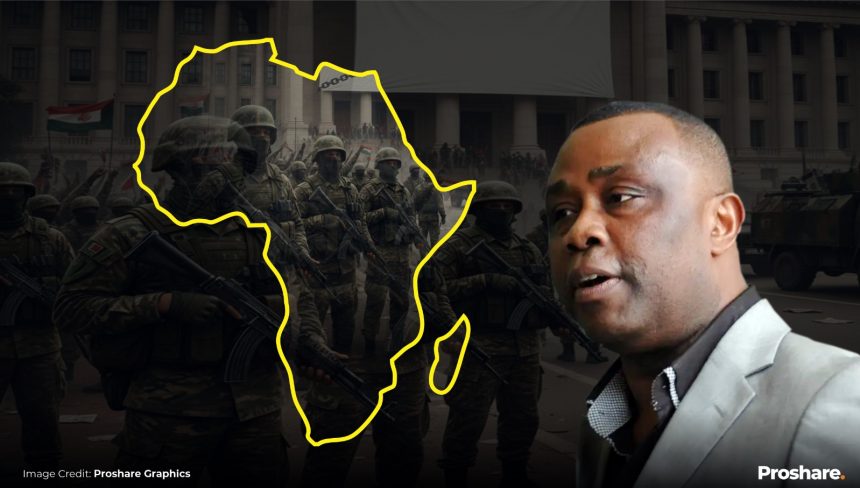
For much of the early 2000s, there was a hopeful narrative that Africa had outgrown the era of military coups. Multiparty elections were spreading. Constitutions were being rewritten and regional bodies were drafting democratic charters. Yet, recent events in Guinea-Bissau once again expose the uncomfortable truth: military coups in Africa are not fading threats. They are evolving risks, adapting to new political, economic, and social realities.
Guinea-Bissau is not an exception; it is a warning. Since independence, the country has lived with fragile civilian institutions, politicised armed forces, and a political culture where power is contested not just at the ballot box but through the barrel of a gun. The latest military intervention is not merely a sudden rupture. It is the consequence of years of constitutional erosion, elite mistrust, and governance systems that have failed to build credible authority. It was predictable.
What makes today’s coups more dangerous than those of the Cold War era is their new legitimacy strategy. Earlier juntas ruled through fear alone. Today’s coup leaders often wrap themselves in the language of patriotism, anti-corruption, nationalism, and even popular frustration. They exploit real grievances to justify suspending democracy in the name of rescuing it. These real situations they point to are unemployment, poverty, insecurity, and elite arrogance. This paradox is what makes modern military takeovers harder to resist and easier to sell to weary populations.

Another reason coups remain a persistent threat is the weakening of regional enforcement mechanisms. ECOWAS, once feared for its swift interventions, now faces credibility challenges. Sanctions have become inconsistent, military threats lack follow-through, and regional solidarity against unconstitutional changes of government appears fractured. Each time a coup succeeds without serious consequences, it signals to other ambitious officers across the continent that power can still be seized without a prohibitive cost.
The deeper tragedy is that recent African coups are no longer just about control of power. They have become part of a wider political economy. In countries like Guinea-Bissau, state fragility often overlaps with transnational criminal networks, especially drug trafficking and illicit resource flows. When soldiers enter politics, they do not just inherit political problems — they often inherit criminal economies, further blurring the line between state authority and organised crime.
This persistence of coups also reflects a failure of civilian political leadership. Where constitutions are manipulated, elections are perceived as cosmetic, and corruption becomes structural, the moral authority of civilian rule collapses. In that vacuum, the military begins to see itself as a corrective force instead of a constitutional subordinate. The gun, once again, becomes louder than the vote.
Crucially, Africa’s coup problem is not only a military problem. It is a governance problem. Until political systems become more inclusive, transparently managed, and responsive to citizens’ needs, soldiers will continue to find social space to intervene. And as long as citizens view coups as relief rather than rupture, democracy will remain negotiable.
Guinea-Bissau’s latest crisis therefore matters far beyond its borders. It is a reminder that democratic backsliding is not a distant threat. It is an active process already unfolding in real time across parts of the continent. Military coups persist not because Africa has failed to learn the lessons of history, but because those lessons have not been fully institutionalized.
Stay ahead with the latest updates!
Join The Podium Media on WhatsApp for real-time news alerts, breaking stories, and exclusive content delivered straight to your phone. Don’t miss a headline — subscribe now!
Chat with Us on WhatsApp