



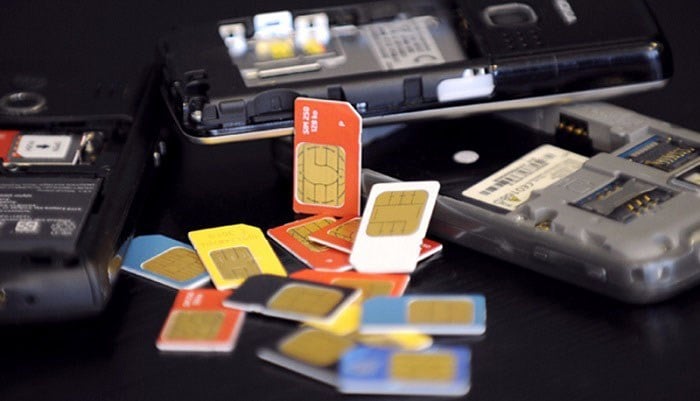
What do linking a SIM card, opening a bank account, and registering for an examination have in common in Nigeria today? They all start with the same requirement: digital proof of identity.
Many people may not remember when this shift happened. At some point, access to everyday life began to depend on whether a digital system could recognise you. You transfer money between banks in seconds. You register for exams online. You renew documents, make payments, or submit forms without stepping into an office.
These activities are not isolated digital services. They are built on a shared system known as digital public infrastructure (DPI). This explainer breaks down what this term means, how it already shapes daily life in Nigeria, and why it matters.

THE SYSTEMS RUNNING QUIETLY BENEATH DAILY LIFE
Digital public infrastructure refers to the foundational digital systems that enable governments, citizens, and businesses to interact. The World Bank describes DPI as consisting of core layers such as digital identity systems, digital payment systems, and data exchange and verification platforms.
These systems are meant to function like public roads or electricity. They are shared, reliable, and essential, designed to serve many people simultaneously. Good DPI follows principles such as openness, modularity, inclusivity, user-centric design, interoperability, privacy by design, and strong governance.
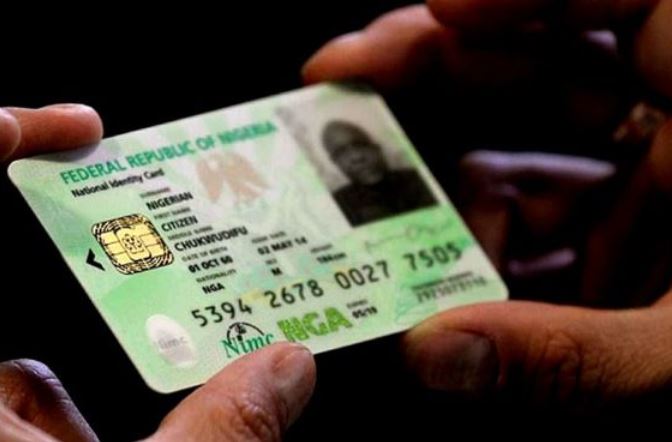
In Nigeria, DPI is already part of daily life, even if the term itself rarely appears in public conversation. The National Identification Number (NIN), issued by the National Identity Management Commission (NIMC), serves as the country’s primary digital identity system. The Bank Verification Number (BVN) underpins identity and security in the financial system. Payment infrastructure operated by the Nigeria Inter-Bank Settlement System (NIBSS) enables instant transfers between banks.
Government payment platforms managed under the Treasury Management and Revenue Assurance Service (TMRAS) allow individuals and businesses to pay government fees through multiple Payment Solution Service Providers (PSSPs), including Remita. In the health sector, the Nigeria Digital Health Initiative (NDHI) aims to build a national digital health architecture that enables interoperable electronic medical records and secure data sharing among healthcare providers, insurers, and government systems.
These systems are designed to work together. When one system verifies your identity, another can accept that verification. This ability to share data securely across platforms — known as interoperability — is what gives DPI its power. It is also what makes failures in one system ripple across many others.
“Interoperability sounds like a technical word, but in reality, it’s about time, trust, and dignity,” said Muhammed Bello Buhari, a Nigerian-based digital rights activist, in an interview with HumAngle.
Broadly, Nigeria’s national digital public infrastructure framework and the emerging Nigerian data exchange standards, coordinated by the National Information Technology Development Agency (NITDA), aim to establish shared digital rails for public service delivery, with a focus on interoperability, data security, and seamless service integration across government systems.
Speaking at a stakeholder review session during the Digital Public Infrastructure Live Event in September 2025, Salisu Kaka, director of e-government and digital economy at NITDA, said the agency was laying the groundwork for responsible rollout.
“We are laying the foundation with the right regulation, framework, and guidelines. This process is co-created with stakeholders to ensure that what we roll out reflects the needs and expectations of Nigerians,” he said.
According to Kaka, data exchange sits at the heart of trust in digital governance.
“What is central is the data exchange — how to get the design right, how to guarantee privacy, how to ensure interoperability and security. These are the things that make citizens trust government digital services,” he added.
IDENTITY AS THE GATEWAY TO EVERYTHING ELSE

Nigeria’s digital identity system shows how central DPI has become.
As of October 2025, NIMC reported that over 123.9 million Nigerians and those in diaspora had been enrolled in the national identity database, making it one of the largest digital identity systems in Africa.
This scale reflects deliberate policy choices. The federal government has positioned the NIN as a requirement for accessing a growing number of services, including SIM registration, banking and financial services, examination registration, passport applications, and, in some cases, social and health intervention programmes.
In July 2025, NIMC began transitioning Nigeria’s identity system to the open-source Modular Open Source Identity Platform (MOSIP). The move is part of the World Bank-supported Nigeria Digital Identity for Development (ID4D) programme, which allocates $430 million to modernising Nigeria’s identity infrastructure. The programme has since issued an $83 million tender to appoint a system integrator for the deployment of Nigeria’s next-generation National Identity Management System (NIMS 2.0) on MOSIP.
Victor Ejechi, a data-rights advocate and head of insights and storytelling at SBM Intelligence, said a centralised digital identity system can significantly improve access to public and private services.
“By relying on a single, shared form of identification, governments and service providers can reduce duplication, lower costs, and streamline processes such as opening bank accounts, registering SIM cards, sitting for examinations, or accessing social programmes,” he said.
“In Nigeria, the scale of NIN adoption shows how digital identity has become a core layer of the country’s digital public infrastructure, with the shift to an open-source platform aimed at improving flexibility and long-term sustainability.”

However, he warned that centralisation also concentrates risk.
“When one identity becomes the gateway to multiple services, technical failures, data breaches, or enrolment errors can quickly translate into exclusion from everyday economic and social life,” Ejechi said.
“There are also legitimate concerns around data protection, governance, and potential misuse. Without strong legal safeguards, independent oversight, and clear mechanisms for redress, a centralised digital identity system risks deepening inequality and undermining public trust rather than expanding access.”
PAYMENT PLATFORMS AND THE INVISIBLE RAILS OF THE ECONOMY

Another major pillar of Nigeria’s DPI is digital payments. Every time money moves between banks, fintech apps, or government platforms, it travels through shared infrastructure largely managed by NIBSS.
According to NIBSS, the total value of electronic transactions grew from N280 trillion in August 2024 to N384 trillion by July 2025. In November 2025, the platform became the first payment system in Africa to reach a mature inclusivity level on the AfricaNenda Inclusivity Spectrum. Government-approved payment platforms such as Remita sit on top of this infrastructure. They allow individuals and businesses to pay taxes, levies, school fees, and regulatory charges digitally.
While these platforms are often criticised for extra fees or technical hiccups, their broader significance lies in what they represent: a move away from fragmented, agency-by-agency payment processes towards centralised, interoperable public payment rails.
The same logic underpins the launch of the e-Naira, Nigeria’s central bank digital currency, in October 2021, making Nigeria the first country in Africa to introduce a central bank-backed digital currency. The e-Naira is the digital equivalent of the naira. While adoption faced challenges and public scepticism, the Central Bank of Nigeria (CBN) frames it as part of a broader digital financial infrastructure aimed at expanding inclusion and reducing transaction costs.
Another critical component of Nigeria’s digital payment layer is mobile money. Mobile money services allow individuals to store, transfer, and pay with digital money through apps or USSD, without requiring an internet connection.

The CBN released its guidelines on Mobile Money Services in 2009, with subsequent updates, to promote financial inclusion. The framework defined key players, outlined bank-led and non-bank-led models, and set rules to ensure orderly sector development and reduce reliance on cash. Mobile money operators in Nigeria include fintechs, digital and traditional banks such as OPay, PalmPay, Kuda, Moniepoint, and Paga, First Bank, etc., alongside telecom operators like MTN (MoMo) and Airtel Money.
For business owners like Akinrinade Hauwa, a fabric seller at Ago Market in Ilorin, Kwara state, mobile money has transformed daily operations.
“I used to travel by road to Kano six or seven years ago to buy fabrics in bulk, carrying cash with me,” she said.
“But with the insecurity on those routes, I had to adapt. Now I receive payments directly into my bank account, choose fabrics from suppliers over WhatsApp, pay through a mobile money app, and get the goods delivered days later. It is safer, more efficient, and less stressful.”
Speaking to Radio Nigeria Harmony FM, Khadijat Yahaya, a professor of accounting at the University of Ilorin and coordinator of Women in Taxation in Kwara state, said fintech wallets are especially convenient for traders.
“They eliminate the financial burden of transporting cash and queuing in banks just to carry out transactions,” she said.
However, Yahaya warned that gaps in digital literacy could limit inclusion.
“Some people cannot even recite their phone numbers, which often serve as their account numbers,” she said, while calling for sustained public enlightenment.
DATA EXCHANGE: THE MISSING LINK IN NIGERIA’S DIGITAL SYSTEMS
If digital identity establishes who you are, and digital payments determine how money moves, data exchange defines how information travels across systems. It allows government agencies, banks, and service providers to communicate securely without repeatedly asking citizens for the same documents.
Nigeria does not yet have a fully operational national data exchange layer as part of its DPI, but it is in the final stages of development, with initial use cases expected in early 2026. NITDA has developed the draft technical standards for the Nigerian Data Exchange (NGDX) platform and has held stakeholder consultations to refine the framework in preparation to adopt the X-Road model, an open-source data exchange framework used in countries such as Estonia and Finland, with the support of the European Union (EU). The system enables secure, real-time, consent-based data sharing between institutions without direct access to each other’s databases.
For citizens, this could mean fewer forms, faster approvals, and less friction. A student registering for an examination would not need to resubmit identity details already verified elsewhere. A patient moving between hospitals would not have to start their medical history from scratch. Applicants for permits would not need to upload documents already held by another agency.
On governance and public trust, the Nigeria Data Protection Act 2023 has set legal standards for how personal data can be collected, processed, and shared, while the National Cloud Policy 2025 has also introduced data residency and hosting requirements aimed at protecting sensitive sovereign data.
WHY UNDERSTANDING DPI MATTERS
Understanding DPI matters because it shapes who gets access, how easily services are delivered, and who is excluded when systems fail. When designed well, DPI can reduce corruption, cut costs, expand inclusion, and make government services more responsive. When poorly governed, it can increase inequality, concentrate power, and lock citizens out of essential services.
In Nigeria, DPI is no longer a future concept and as new layers like data exchange come online, the stakes will only grow higher.
The question is no longer whether Nigeria will build digital public infrastructure, but how transparently, how inclusively, and how safely it will be governed.
This report is produced under the DPI Africa Journalism Fellowship Programme of the Media Foundation for West Africa and Co-Develop.
Stay ahead with the latest updates!
Join The Podium Media on WhatsApp for real-time news alerts, breaking stories, and exclusive content delivered straight to your phone. Don’t miss a headline — subscribe now!
Chat with Us on WhatsApp